The Artemis II launch in April 2026 punched a hole in Earth’s ionosphere large enough to disrupt GPS signals across a wide area, a new study from researchers at National Cheng Kung University in Taiwan has found. The disturbance was up to ten times more intense than those caused by SpaceX’s Starship test launches, even though Starship produces twice the liftoff thrust.
The Science Behind the Ionospheric Disturbance
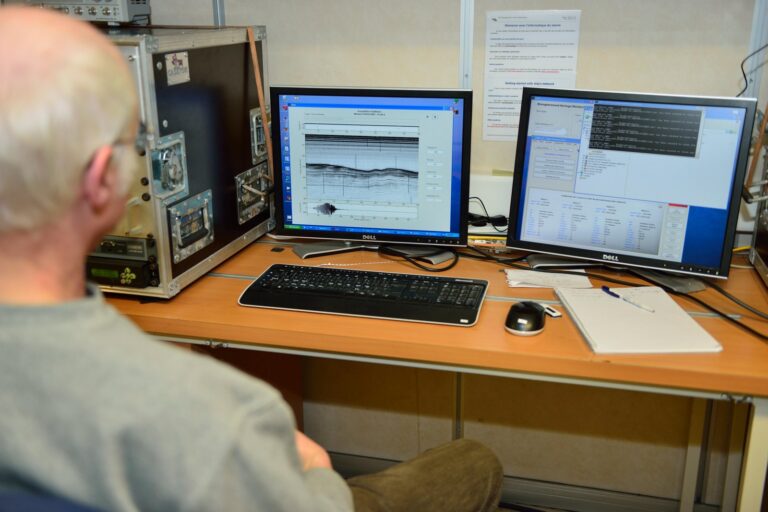
The study analyzed data from high-precision ground-based GPS receiver networks used to measure tectonic plate movements. By tracking how long GPS signals took to travel from satellites to ground stations, researchers reconstructed changes in free electron concentrations in the ionosphere — the electrically charged layer above 50 kilometers altitude. The SLS rocket’s passage created electron density changes equivalent to positioning errors of several meters. Charles Lin, an earth science professor at National Cheng Kung University and co-author of the paper, told Space.com that an error of a couple of meters is enough to cause an autonomous car to change lanes, with potential impacts on drone positioning as well.
GPS satellites orbit at roughly 20,200 kilometers, far above the ionosphere, but signals must pass through this layer to reach ground receivers. When electron concentrations shift — whether from solar storms or rocket passages — signal timing changes, resulting in inaccurate position measurements. The Artemis II disturbance was more significant than any previously recorded from a rocket launch.
How the SLS Works
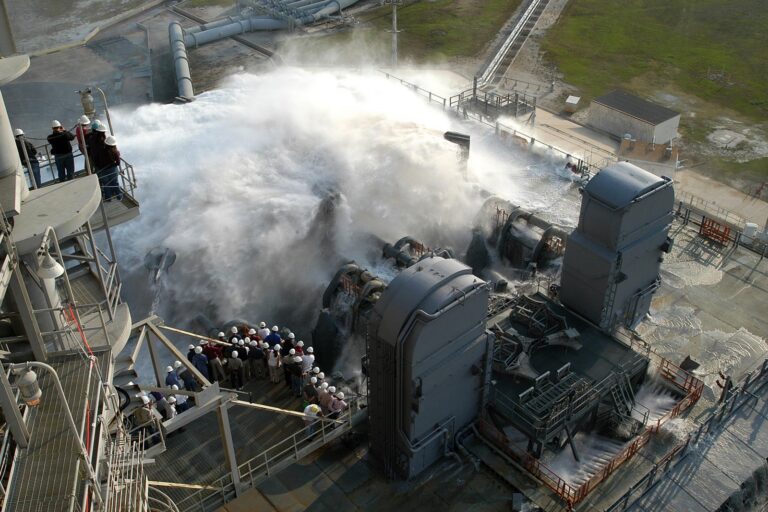
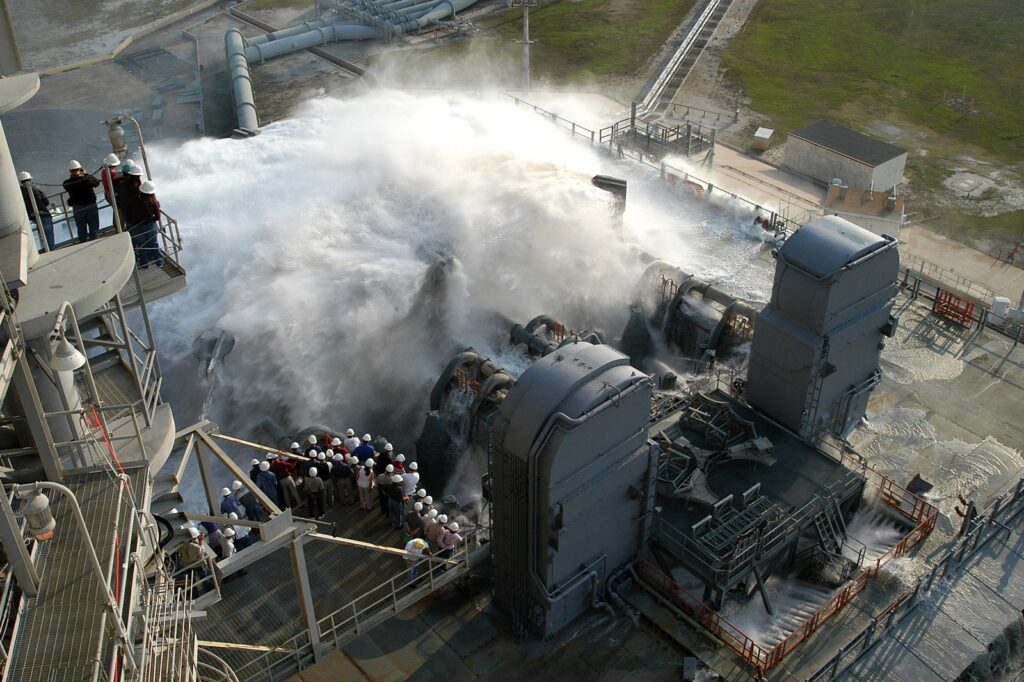
The Space Launch System is NASA’s primary launch vehicle for the Artemis program, designed to carry the four-person Orion spacecraft. All launches take place from Launch Complex 39B at Kennedy Space Center in Florida. The Boeing-built core stage is powered by four ex-Shuttle RS-25 engines, flanked by two Northrop Grumman five-segment solid rocket boosters derived from the Space Shuttle’s four-segment design. The current Block 1 configuration uses an Interim Cryogenic Propulsion Stage (ICPS) with an RL10 engine for trans-lunar injection. Starting with Artemis IV, SLS will switch to a Centaur V upper stage developed for the Vulcan Centaur rocket.
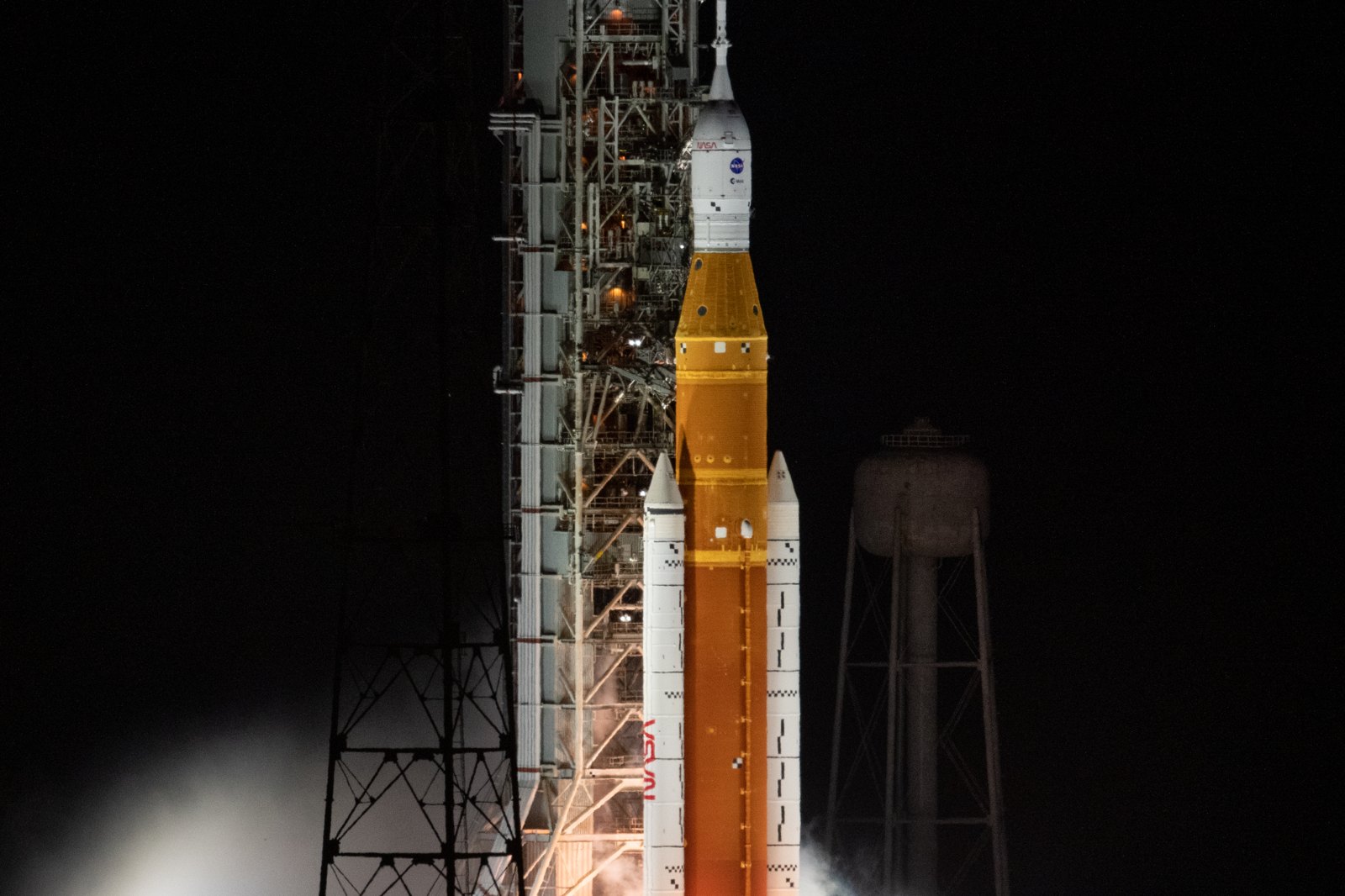
With 39 meganewtons of liftoff thrust, SLS holds the record for the most powerful rocket to ever carry humans. Its trans-lunar injection payload capacity of 27 metric tons is roughly half that of the Saturn V’s 48.6 metric tons, which shapes how NASA plans lunar landings.
Accelerated Timeline for Lunar Return
Following the successful Artemis II crewed flight — the first SLS launch with humans aboard and the second vehicle ever to carry people beyond low Earth orbit after Saturn V — NASA Administrator Jared Isaacman announced on October 23 plans to return Americans to the lunar surface in 2028. The agency is advancing toward Artemis III in 2027 and Artemis IV in 2028, building on what Isaacman described as “extreme focus to the mission to ensure delivery of world-changing outcomes as quickly, safely, affordably, and successfully as possible.”
Artemis III: Testing the Landing Architecture
Artemis III, scheduled for 2027, will test rendezvous, docking, and operations between Orion and lunar lander test vehicles from both SpaceX and Blue Origin — but in Earth orbit rather than at the Moon. Four astronauts will fly aboard Orion on a planned 14-day mission. The sequence: Blue Origin launches a Blue Moon lander test article into Earth orbit; SLS launches Orion and crew, which docks with the Blue Moon test article; then SpaceX launches a Version 3 Starship lander test article, and Orion undocks from Blue Moon to dock with Starship. This Earth-orbit approach reduces risk ahead of the actual lunar landing mission.
Artemis IV: Establishing Sustained Presence
Artemis IV in 2028 is planned as the Moon landing mission to establish a sustained American presence. Because SLS can only deliver 27 metric tons to trans-lunar injection — about half the Saturn V’s capacity — Orion will dock with a Human Landing System in lunar orbit or low Earth orbit, launched separately on a non-SLS rocket. Both SpaceX’s Starship HLS and Blue Origin’s Blue Moon lander are in development for this role. NASA has also redesigned, built, and tested a critical fuel-line component in-house in five months at roughly a tenth of the earlier outside-vendor cost estimate, with Artemis III hardware processing timelines sharply reduced by about half.
Sources
- Space Launch System
- NASA's Artemis II moon launch tore a hole in Earth's upper atmosphere so huge it disrupted GPS signals
- NASA Shares Plans to Accelerate Artemis, Return to Moon – NASA
- SpaceX Chopsticks Catch 71m Super Heavy Booster [2026]
- CesiumAstro Raises $730 Million In Series D Funding At Over $4.5 Billion Valuation To Build 737-Satellite AI Constellation
- How Google Plans to Build Data Centres in Space Using AI Satellites?
Photo: NASA (Public domain)