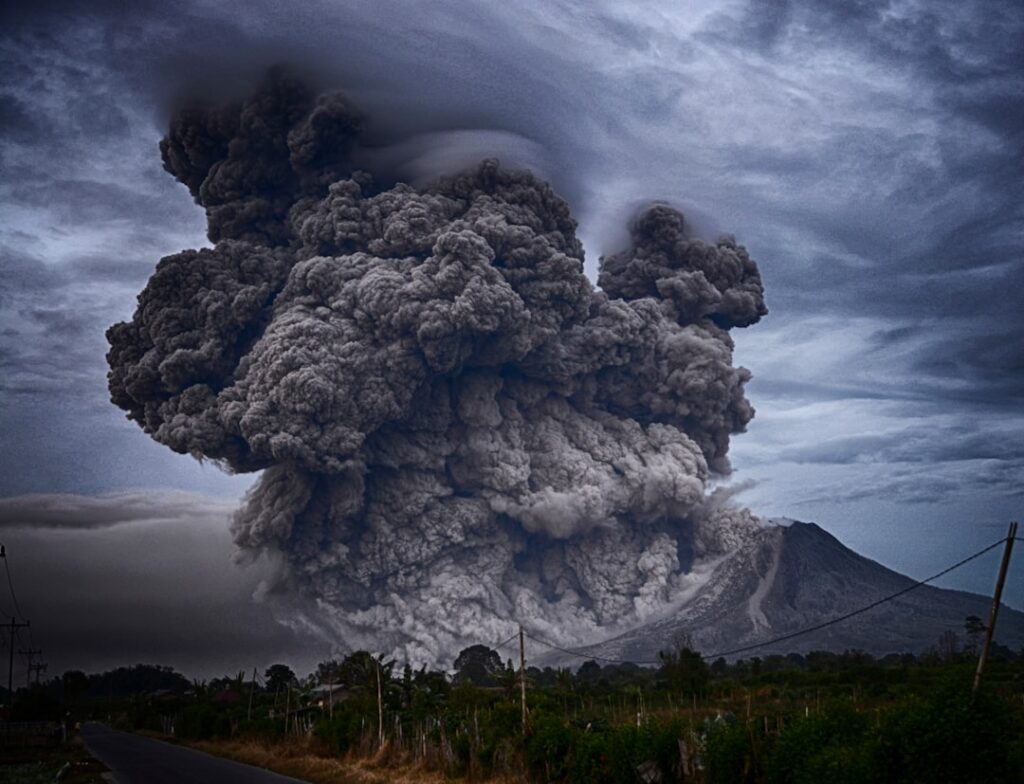
“It felt like a sudden bomb had been thrown with smoke and ash,” Ahmed Abdela told The Associated Press. He lives in Afdera, a village beside the Hayli Gubbi volcano in Ethiopia’s Afar region, and on Sunday, November 23, 2025, the mountain went off without warning. By Monday his village was still under ash, and tourists and guides bound for the Danakil Desert were stuck there.
The Toulouse Volcanic Ash Advisory Center put the eruption at about 11:30am local time. Residents had noticed faint smoke about three days earlier, but no scientific forecast had warned of anything. Hayli Gubbi is the southernmost volcano of the Erta Ale Range, roughly 800 kilometers northeast of Addis Ababa, and the Smithsonian’s Global Volcanism Program lists no eruption there during the Holocene, the span of about 12,000 years since the end of the Ice Age.
Dark at midday
Dark smoke, not white ash, swallowed the surrounding area, residents said, leaving it in near-darkness. Afar TV reported tremors in the Wollo area, in Tigray, and across the border in Djibouti. Nobody was reported killed.
The worry is the animals. Most people nearby herd livestock, and the forage is under a thick layer of dust. “While no human lives and livestock have been lost so far, many villages have been covered in ash, and as a result, their animals have little to eat,” local administrator Mohammed Seid told The AP. The Afar regional government advised people with asthma or bronchitis to take precautions.
Ash across four countries
Satellite images showed the plume rising about 14 kilometers and drifting east over the Red Sea, Yemen and Oman, then on to Pakistan and northern India. Flightradar24 tracked the cloud along that route. In Pakistan, the meteorological service saw it 60 nautical miles south of Gwadar on Monday. Oman’s Environment Authority switched on emergency monitoring and found no immediate effect on air quality.
India took the heaviest hit on schedules. The ash reached western Rajasthan by Monday evening, and the Directorate General of Civil Aviation told airlines to stay clear of affected altitudes and regions, check aircraft that had flown those routes and report any suspected ash encounter. Airports were told to inspect runways. Air India cancelled 11 flights across Monday and Tuesday. Akasa scrapped flights to Jeddah, Kuwait and Abu Dhabi, and IndiGo and KLM also changed or cancelled services. Air Arabia dropped several flights out of Sharjah on Tuesday.
“Our ground teams across the network are keeping passengers updated on their flight status and providing immediate assistance,” Air India said on social media. Ethiopia, one of Africa’s biggest flight hubs, reported no flight delays.
The India Meteorological Department expected the cloud to clear Indian skies by 14:00 GMT on Tuesday as it moved toward China.
Severe ash disruption like this is rare. The last big one was Iceland’s Eyjafjallajokull in 2010, which forced the UK to close its airspace for six days and cancel some 95,000 flights, at a cost to British airlines of $1.45bn, according to the Centre for Economics and Business Research.
Sources
- Ethiopia’s Hayli Gubbi Volcano Erupts After 12,000 Years: Global Flight Disruptions and Local Impact
- Ethiopian volcano erupts after 12,000 years: What we know