
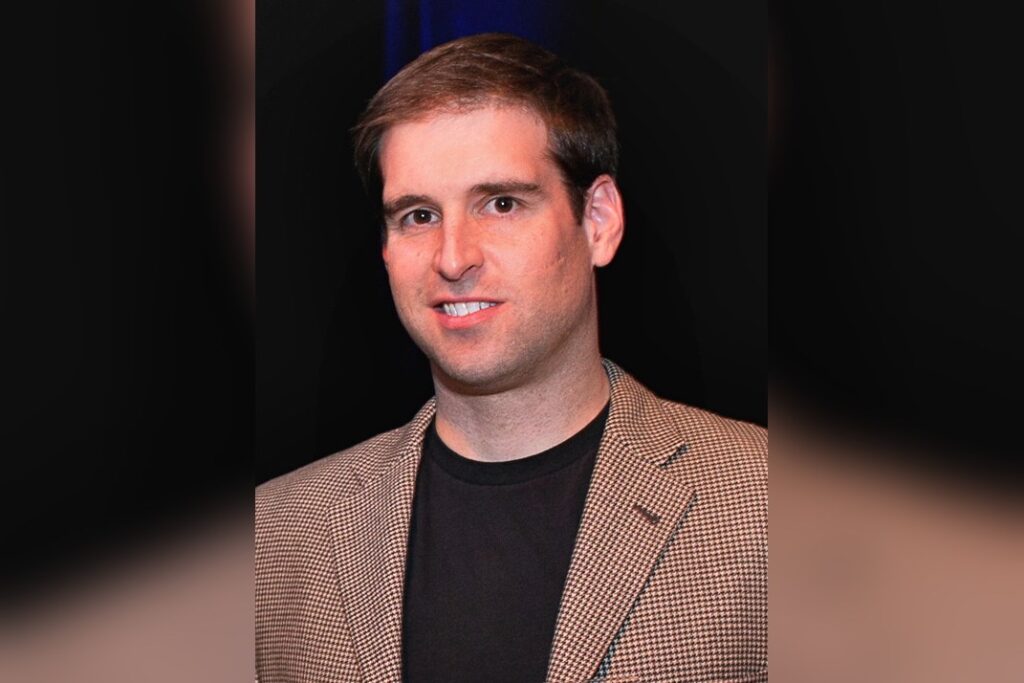
CARSON CITY, July 14 — JB Straubel is quietly reshaping the calculus of the global battery supply chain, and what this signals is a strategic shift away from the raw-mining dependency that has long defined the industry. The American engineer and entrepreneur, who co-founded Tesla in 2003 and served as its chief technology officer until 2019, has spent the last several years building a parallel infrastructure for lithium-ion batteries — one built on recycling, not extraction.
Straubel’s vehicle for this ambition is Redwood Materials, the lithium-ion battery recycling company he founded in 2017 and based in Carson City, Nevada. The broader stakes here are significant: as the world races to electrify its transportation and energy grids, the demand for battery materials has become a geopolitical chessboard in its own right, with nations jockeying for control over lithium, cobalt, and nickel reserves.
Straubel’s bet is that a circular supply chain — one that recovers those materials from spent batteries — can reduce that strategic vulnerability.
From Tesla’s Battery Brain to Circular Supply Chains
Straubel was born in 1975 in Madison, Wisconsin, and earned a B.S. in Energy Systems Engineering from Stanford University in 1999. He holds over 20 patents and was the engineering backbone behind Tesla’s early battery systems — overseeing the development of the Roadster, Model S, Model X, and Model 3 battery systems. But his departure from Tesla’s CTO role in 2019 was not an exit from the battery world; it was a pivot to the problem of what happens to those batteries at the end of their life.
Redwood Materials now processes over 10,000 tons of battery material annually. The company has secured partnerships with Ford, Toyota, and Panasonic — a who’s who of automotive and battery manufacturing.
Strategically, these alliances give Redwood a direct pipeline to the very batteries it will one day recycle, closing the loop before the loop even fully exists.
The South Carolina Bet
In 2023, Redwood Materials announced a $3.5 billion facility in South Carolina to produce anode and cathode components — the most value-dense parts of a battery — from recycled materials. That facility represents a major escalation in the company’s industrial footprint, moving beyond simple recycling into the manufacturing of new battery components from recovered feedstock. The calculus is straightforward: if Redwood can prove that recycled materials perform as well as virgin mined materials, the economic and strategic case for mining new lithium and cobalt weakens considerably.
Straubel’s work has not gone unnoticed beyond the industry. In 2023, he was named to the Time 100 Most Influential People, a recognition that places him alongside figures reshaping global technology and policy.
For a man who spent years in the shadow of Tesla’s more public-facing leadership, the recognition signals that the battery supply chain itself has become a front-page strategic concern.
What This Signals for the Broader Energy Transition
The timing is not accidental. As the United States and its allies seek to reduce reliance on Chinese-dominated processing of battery materials, domestic recycling offers a path that does not require opening new mines on American soil. Straubel’s model — recover, refine, remanufacture — is a direct answer to the question of how to scale electrification without replicating the resource-extraction dependencies of the fossil fuel era.
Redwood Materials remains a private company, so its full financial and operational picture is not public. But the partnerships, the facility announcements, and the tonnage figures paint a picture of a firm that has moved from concept to industrial reality in under a decade.
The next moves to watch: whether Redwood can scale its South Carolina facility to meet the volume demands of its automotive partners, and whether its recycled materials can achieve cost parity with virgin sources at industrial scale. Straubel, for his part, has been consistent. The goal is not simply to recycle batteries, but to create a closed-loop system where the materials in a Tesla, Ford, or Toyota battery today become the materials in a new battery tomorrow.
On the geopolitical chessboard, that is a move that reduces dependency, increases resilience, and rewrites the supply-chain map — one spent battery at a time.
Sources
{“@context”: “https://schema.org”, “@type”: “NewsArticle”, “headline”: “Redwood Materials CEO JB Straubel Shifts Battery Supply Chain From Mining”, “description”: “CARSON CITY, July 14 — JB Straubel is quietly reshaping the calculus of the global battery supply chain, and what this signals is a strategic…”, “datePublished”: “2026-07-14T09:30:00+00:00”, “author”: {“@type”: “Person”, “name”: “Noah King”}, “publisher”: {“@type”: “Organization”, “name”: “InfoPulse Today”, “url”: “https://newsfeed.2bme.xyz/”}, “citation”: [{“@type”: “CreativeWork”, “url”: “https://en.wikipedia.org/wiki/JB_Straubel”}]}




