
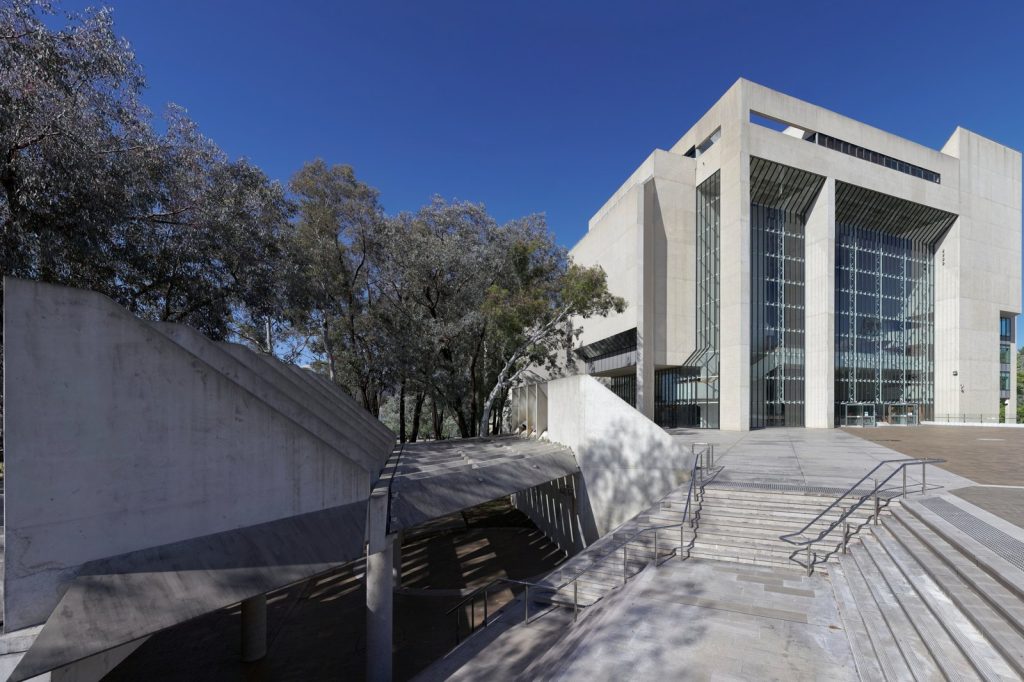
SYDNEY, October 12 — Australia’s High Court has upheld the invalidation of consent for the Mount Pleasant coal mine expansion, ruling that planning authorities must consider conditions to minimise Scope 3 greenhouse gas emissions under state policy. On 7 October 2026, the High Court of Australia dismissed MACH Energy Australia Pty Ltd’s appeal by a 3:2 majority in the case MACH Energy Australia Pty Ltd v Denman Aberdeen Muswellbrook Scone Healthy Environment Group Inc [2026] HCA 35.
The court upheld the invalidation of the Independent Planning Commission’s consent to expand the Mount Pleasant coal mine in the Upper Hunter Valley of New South Wales. The mine, owned by MACH Energy Australia Pty Ltd, had sought approval in January 2021 to extend operations by 22 years to December 2048 and increase annual production from 10.5 to 21 million tonnes of coal.
The project’s total greenhouse gas emissions were projected at 876.07 million tonnes over its life, of which 860 million tonnes — or 98 per cent — were Scope 3 emissions, arising from the combustion of coal by customers in export markets, sources not owned or controlled by MACH Energy.
Commission failed to consider Scope 3 conditions
The Independent Planning Commission granted consent on 6 September 2022, subject to conditions, but those conditions addressed only Scope 1 and Scope 2 emissions, with the Commission reasoning that Scope 3 emissions are ‘appropriately regulated and accounted for through broader national policies and international agreements (such as the Paris Agreement)’. The Denman Aberdeen Muswellbrook Scone Healthy Environment Group Inc (DAMSHEG) sought judicial review in the Land and Environment Court, which dismissed their application.
On appeal, the NSW Court of Appeal rejected DAMSHEG’s argument that the Commission failed to comply with the State Environmental Planning Policy (Resources and Energy) 2021 (Resources SEPP), but held the consent invalid because the Commission had failed to consider the likely impacts of the development ‘in the locality’ as required by section 4.15(1)(b) of the Environmental Planning and Assessment Act 1979 (NSW). MACH Energy appealed to the High Court on three grounds, each challenging the NSW Court of Appeal’s construction of section 4.15(1)(b) of the EPA Act.
DAMSHEG, by an amended notice of contention, raised two further grounds to uphold the NSW Court of Appeal’s orders. The High Court unanimously rejected the NSW Court of Appeal’s reasoning on whether consent authorities must consider local impacts of climate change. Instead, the majority held that the Independent Planning Commission failed to consider whether to impose conditions to minimise the project’s Scope 3 greenhouse gas emissions ‘to the greatest extent practicable’, as required by the Resources SEPP.
Implications for mining approvals in NSW
The majority judgment was delivered by Gordon, Edelman and Beech-Jones JJ, while Gageler CJ and Jagot J dissented and would have allowed the appeal. The decision has significant implications for proponents of, and consent authorities assessing, mining, petroleum and extractive industry developments in New South Wales, clarifying that consent authorities must consider conditions on all greenhouse gas emissions, including Scope 3, under the Resources SEPP.




