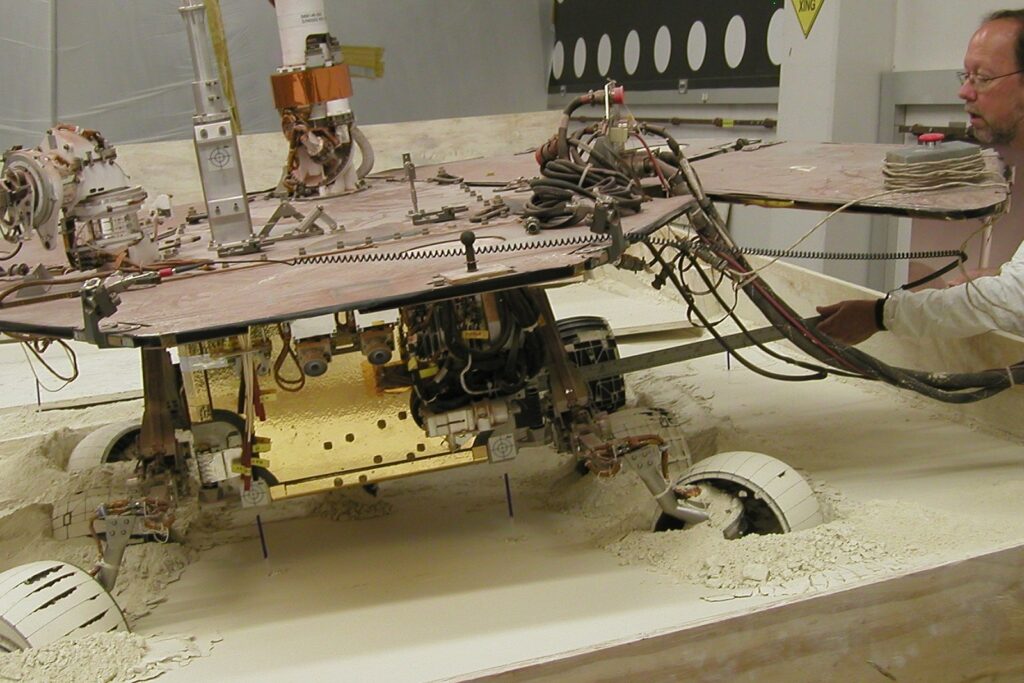
KENNEDY SPACE CENTER, FLORIDA, November 8, 2026 — NASA’s new PROMISE rover is set to launch in 2028 on a Blue Origin lander for an 18-month mission at the lunar south pole. The rover highlights how the agency’s Commercial Lunar Payload Services program is shifting planetary exploration from one-off science flights to a sustained infrastructure campaign built on fixed-price contracts with private firms.
How the CLPS Model Works
NASA’s Commercial Lunar Payload Services program uses fixed-price contracts to buy end-to-end payload services — launch, lander, and surface operations — from private companies. According to the program’s structure, this approach reduces costs by 30 to 50 percent compared to traditional procurement. The agency outlines the science objectives and human mission preparation needs, while contractors handle everything from integration to data relay. The first commercial lunar landing, Intuitive Machines’ IM-1 mission in 2024, proved the model’s viability and paved the way for larger, more complex missions like PROMISE.
From Science Payloads to Utility Nodes
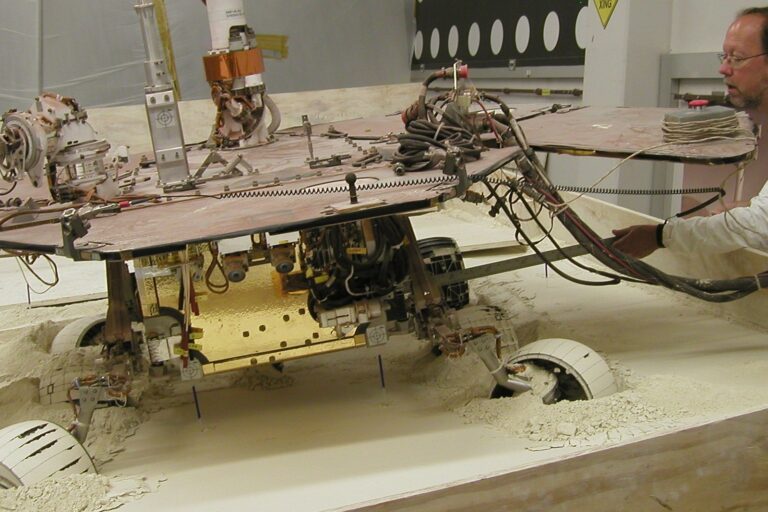
The shift is visible in the hardware. PROMISE (Polar Rover for Observation, Mapping and In-Situ Exploration) is modeled after the Mars rovers Perseverance and Curiosity but optimized for the lunar environment. Its primary goal is in-situ resource utilization (ISRU), characterizing water ice deposits at the south pole to support future human bases. NASA chief Jared Isaacman described the effort as building an “interplanetary survival guide” for Artemis crews. Moon Base Program manager Carlos García-Galán said the agency and its partners now think in terms of a campaign — landers, rovers, and infrastructure working together — rather than isolated missions.
Modular Systems Cut Per-Mission Costs
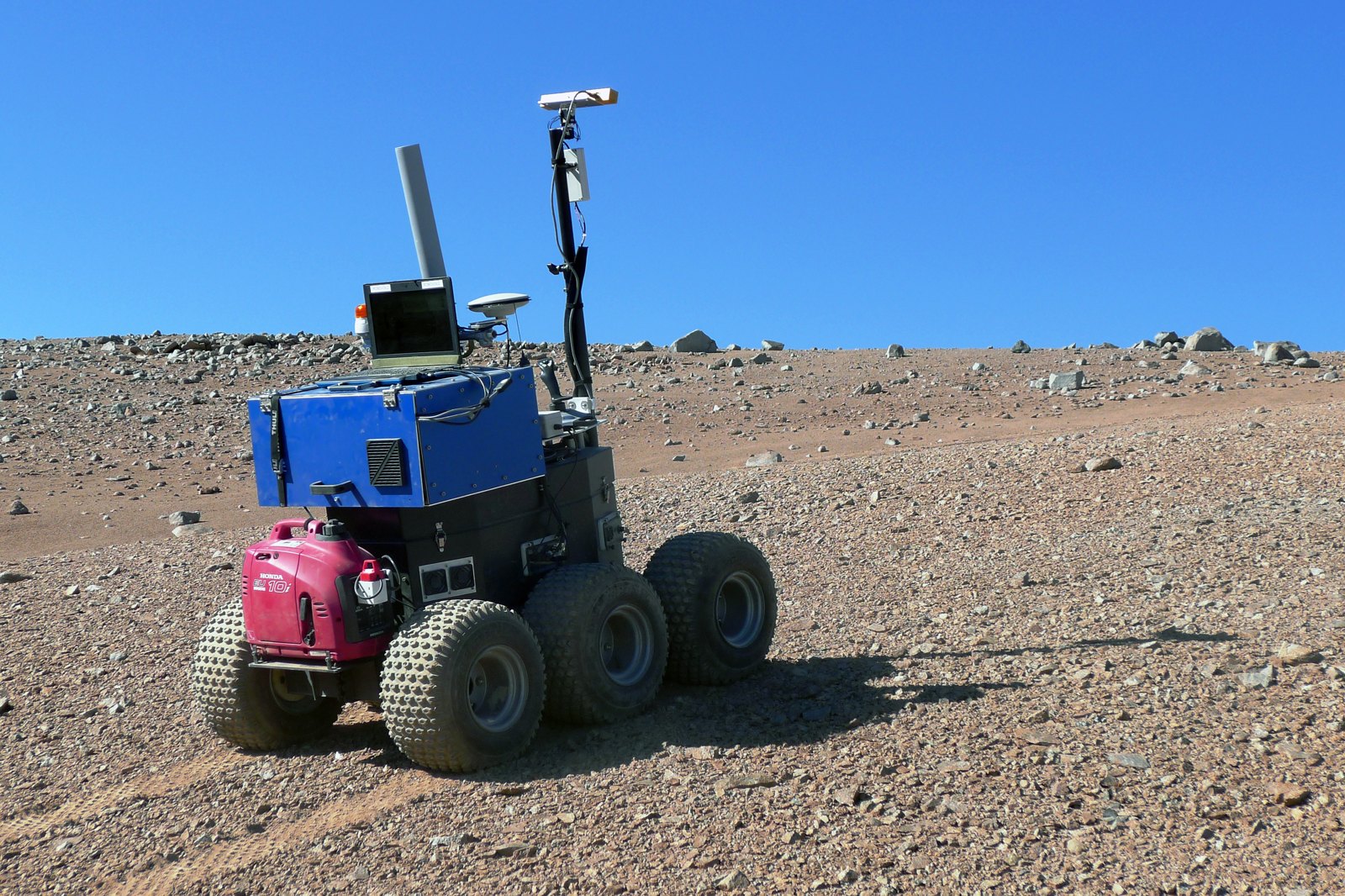
Private firms are designing modular, reusable systems to lower expenses further. Astrolab’s Lunar Utility Module for Industrial Services (LUMIS) provides power and communications nodes that generate 2 kilowatts initially, scaling to 20 kilowatts. The company’s FLEX rovers transport these nodes tens of kilometers after landing, placing them where sunlight and communications are optimal rather than where a lander touches down. This reduces redundant mass and allows more infrastructure per flight. Astrolab’s LUNAR OS integrates mobility, energy, and data services into a coordinated system aimed at sustained operations.
Stellar Alpina, a Swiss startup, is developing the Morpho lander using architecture from its Monarch orbiter. Monarch offers 6,000 meters per second of delta-V and 200 kilograms of payload capacity, designed for launcher-agnostic deployment. The engines run on hydrogen peroxide and propane, chosen as green, storable propellants to lower operational costs. Morpho targets delivery of up to 50 kilograms to the lunar surface. The company’s rotating detonation rocket engine technology, also being adapted by Astrobotic for its Griffin lander, is moving directly into the lunar logistics chain.
IDIQ Contracts Enable Dynamic Scaling
CLPS 2.0 expands the program beyond small payloads to large infrastructure, including power nodes and logistics systems, aligning with the goal of a permanent lunar presence. The Indefinite Delivery/Indefinite Quantity (IDIQ) master contract lets NASA scale orders dynamically as lunar base needs evolve. The CLPS 2 IDIQ carries a 10-year base ordering period with a five-year option and a not-to-exceed ceiling of $10 billion. Selection onto the IDIQ does not guarantee a funded mission; companies compete for individual task orders.
The Numbers Behind the Shift
ispace-U.S. was selected for the CLPS 2.0 IDIQ master contract in September 2026, making it eligible to compete as a prime contractor using its ULTRA lander. The company has invested more than $200 million in lunar mission development, leveraging flight experience from its Japan entity’s two previous lunar missions. Intuitive Machines ended the second quarter of 2026 with a record contracted backlog of roughly $1.8 billion, up from $213 million at the end of 2025. That backlog reflects NASA’s reliance on commercial partners for radar technology like Falcon-Radar and for Earth, Moon, and Mars missions, with per-mission costs dropping as reuse increases. Intuitive Machines also holds a CLPS contract worth up to $148.3 million to deliver a Nova-C lander by 2028.
What Comes Next
The south pole remains the primary landing zone for CLPS missions due to water ice deposits critical for ISRU and habitat sustainability. PROMISE’s 18-month mission, launching in late 2028, will operate alongside the Artemis campaign — Artemis III is slated for early 2027 to test human landers, and Artemis IV aims to return humans to the surface in 2028. CLPS 2.0’s IDIQ model is structured to enable commercial lunar bases by 2030, turning rovers and landers into long-term utility nodes rather than single-use science platforms.
Sources
- NASA reveals new lunar rover, PROMISE, to launch to moon in 2028
- Commercial Lunar Payload Services
- Exclusive: Stellar Alpina Unveils Monarch Orbiter and Morpho Lunar Lander
- Astrolab Unveils LUMIS Power and Communications Node for Lunar Operations
- ispace-U.S. Selected to Support NASA Moon Base Program – ispace
- Intuitive Machines Scores Third NASA Contract In Six Months – Here’s What Investors Need To Know
Photo: NASA/JPL-Caltech (Public domain)