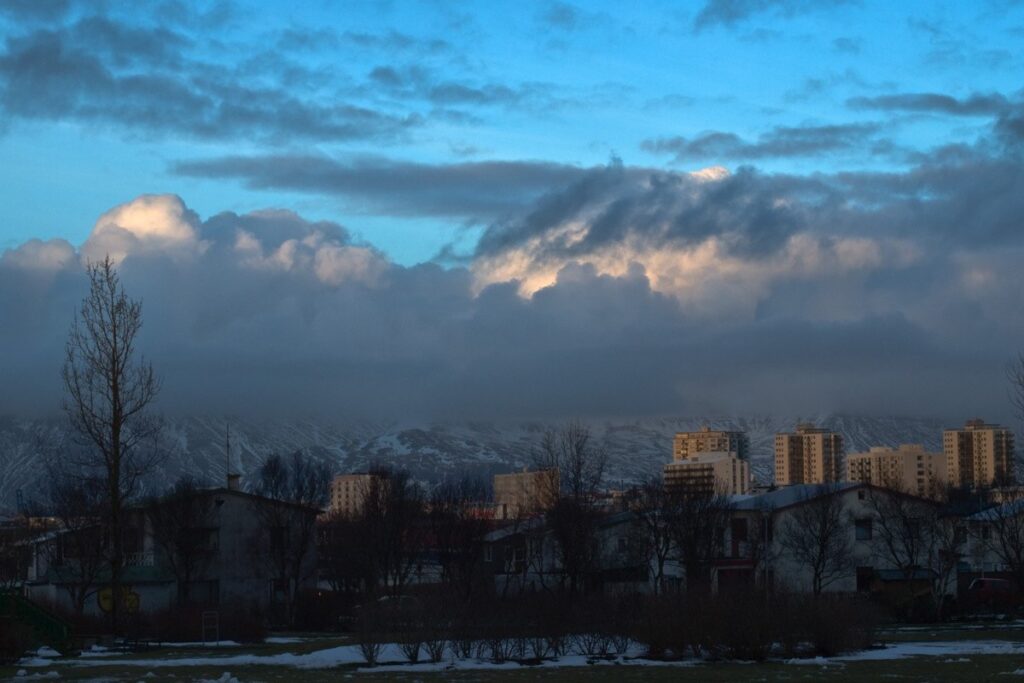
Iceland’s government is asking households to treat readiness for power cuts and other emergencies as a routine safety precaution.
The advice applies to a country of roughly 395,000 people, with about 35% living in Reykjavík, excluding nearby towns and suburbs that belong to separate municipalities. Beyond the capital, communities are spread across Europe’s most sparsely populated country.
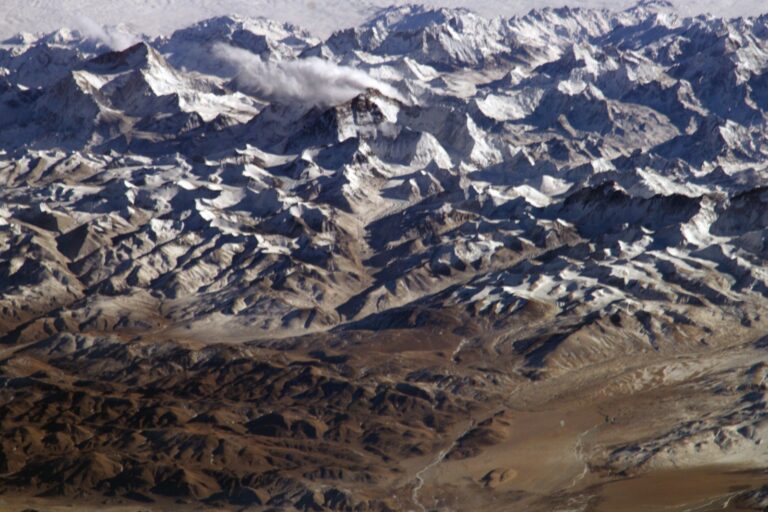
That geography shapes the practical challenge. Glacial rivers cross the lowlands, while the interior contains a volcanic plateau, sand and lava fields, mountains and glaciers.
Living on a tectonic boundary
Iceland straddles the Mid-Atlantic Ridge, lying between the North American and European continents. The rift between tectonic plates produces frequent volcanic eruptions as well as the geysers and other geothermal activity for which the island is known.
The same island lies just south of the Arctic Circle, between the Arctic Ocean and North Atlantic. The Gulf Stream gives it a temperate climate despite that latitude, although summers remain chilly and most of its smaller islands have a polar climate.
These conditions make household preparedness relevant whether residents live in the capital or far from its services. The government’s message places power interruptions alongside other emergencies rather than treating them as an unusual event.
A small, widely dispersed population
Reykjavík is the capital and largest city, but much of Iceland’s population lives outside it. Settlement began, according to the Landnámabók, when Norwegian chieftain Ingólfr Arnarson established a permanent home there in 874.
For much of its history, the island relied on subsistence fishing and agriculture. Industrialised fisheries and Marshall Plan assistance after World War II brought greater prosperity, but the settlement pattern still reflects an island with limited flat land and long distances between communities.
Among NATO members, Iceland has the fewest people. It has no standing army, only a lightly armed coast guard.
The latest advice keeps the immediate responsibility close to home: households should be ready for electricity failures and emergencies as part of ordinary life in a geologically active North Atlantic country.
Sources
- Iceland
- The Top 10 Worst Things about Iceland | Guide to Iceland
- How Art Stays Afloat in Iceland
- Iceland Airwaves 2026 announces final lineup – Northern Transmissions
- AltaSea and Iceland Ocean Cluster Advance Global Blue Tech Innovation – AOL
- Eik fasteignafélag hf.: Condensed Interim Financial Statement for the first nine months 2026
Photo: Axel Kristinsson from Reykjavík, Iceland (CC BY 2.0)