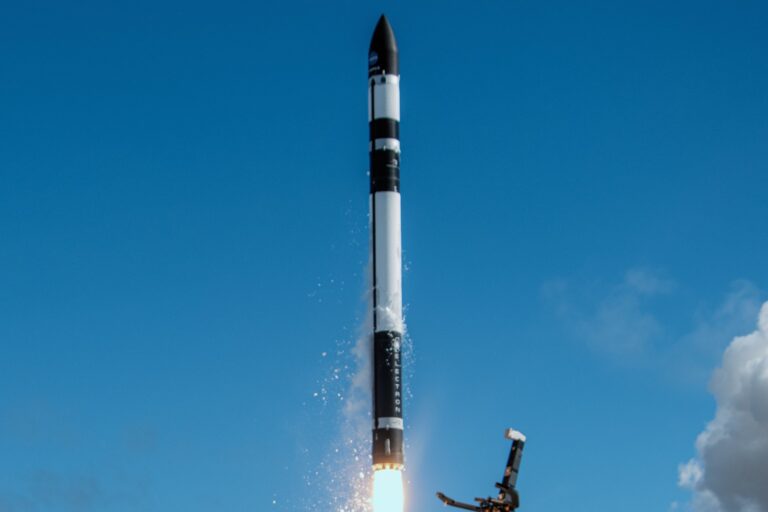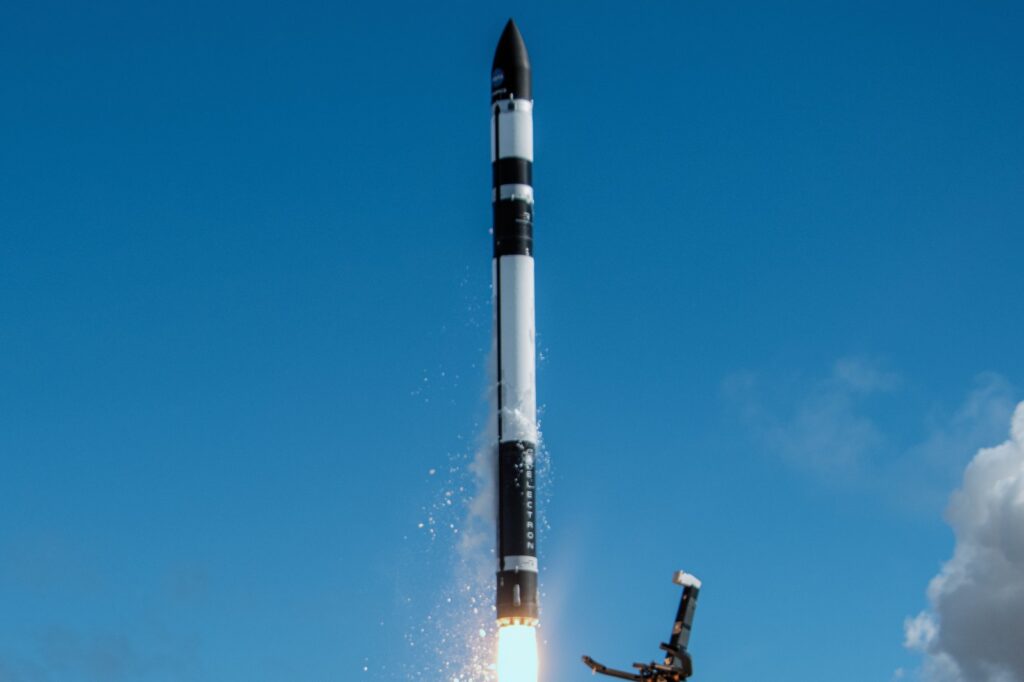
Rocket Lab launched its 99th mission on November 2, sending a Japanese Earth-observing radar satellite toward orbit on an Electron rocket from New Zealand. The flight, the company’s 17th this year, underscores a shift in the commercial space industry: high-frequency, dedicated access to orbit for small payloads is no longer experimental, it is the standard.
The Curiosity Hook: A Milestone in Cadence
Intriguingly, the milestone arrived not with a heavy-lift spectacle but with a 59-foot rocket carrying a single satellite for iQPS, a Japanese firm building a constellation of three dozen synthetic aperture radar satellites. The spacecraft deployed at 357 miles altitude about 56 minutes after liftoff. It was the 10th Electron launch for iQPS alone. The radar technology aboard the satellite can peer through cloud cover and observe the planet at night, capabilities that optical sensors lack. That a private company can now book a dedicated ride to a precise orbit on a reliable schedule, 17 times in a single year, is the story.
How It Works: Vertical Integration as the Engine
The science behind this cadence is not just the rocket. Rocket Lab has spent years assembling a vertically integrated platform. Beyond Electron, the company manufactures satellite components — star trackers, reaction wheels, solar panels, electric propulsion systems, software-defined radios, composite structures, separation systems, and electro-optical and infrared sensors. It builds complete spacecraft and satellite buses for customers like Globalstar and the US Space Development Agency. Since 2020, it has acquired seven companies, including Sinclair Interplanetary, SolAero, Geost, Mynaric, and Motiv Space Systems. The strategy is straightforward: control the supply chain, reduce reliance on external vendors, and sell the whole stack — launch, satellite, and components — as a single service.
The Numbers: Backlog Growth and Market Position
What researchers found in the financials matches the operational tempo. Rocket Lab’s order backlog reached $2.36 billion in the second quarter, up 137 percent year over year. Revenue grew 62 percent year over year to roughly $234 million in the same quarter. The company trails only SpaceX in the category of launch services placing payloads into Earth orbit. Since its public debut via SPAC merger in August 2021, the share price is up roughly 459 percent, though it has pulled back about 61 percent from a May peak near $150. Analysts at Roth Capital and Cantor Fitzgerald point to the multi-billion dollar backlog and large space systems program wins as providing revenue visibility. Clear Street and Stifel see the pending Iridium acquisition and national security contracts as ways to broaden the business beyond launch alone.
Neutron, HASTE, and What Comes Next
The next-generation Neutron medium-lift rocket, designed to be reusable and to support constellation deployment, interplanetary missions, and human spaceflight, has slipped to a 2027 debut. Goldman Sachs and other firms have trimmed price targets, citing the delay, higher near-term expenses, and integration risk from the Mynaric and Iridium deals. Roth Capital and Clear Street frame the Neutron delay as a choice to prioritize process quality over speed. Meanwhile, nine of Rocket Lab’s 99 missions have flown on HASTE, a suborbital Electron variant that lets customers test technology in a hypersonic flight environment, generally for classified payloads. The company reported negative free cash flow of $110 million in fiscal Q2 2026 as it funds Neutron development and the Iridium purchase, which it expects to complete in mid-2027 after a $1.94 billion stock sale to fund it. The next earnings report is due November 9.
Sources
- Rocket Lab
- Rocket Lab (RKLB) Stock Gets Fair Value Trim After Neutron Delay Raises Execution Risk
- Rocket Lab launches Japanese Earth-observing satellite on 99th mission to date (video)
- $10,000 in Rocket Lab at Its Record High Is Worth About $3,900 Today. Here's What Gets That Money Back. | The Motley Fool
- Rocket Lab's 64% Collapse Tests Its Space Infrastructure Strategy
- Is Rocket Lab Stock Increasing Your Market Risk?
Photo: NASA Kennedy Space Center / Rocket Lab (Public domain)