
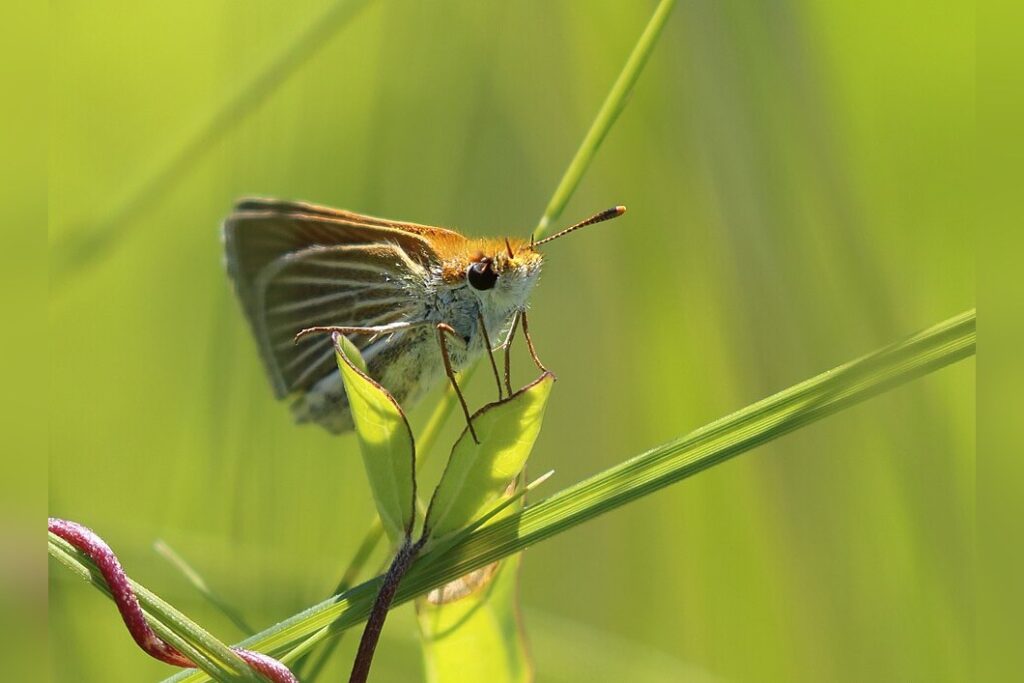
In 2022, surveys turned up exactly nine Poweshiek skipperlings in the entire United States. Nine. At one point the people trying to save the little prairie butterfly were looking after more of them in captivity than existed in the wild anywhere in the world.
It has gone better since. Researchers released more than 1,300 captive-reared skipperlings in 2025, and by 2026 they were reporting hundreds at recovery sites in southeast Michigan.
The species once ranged across the American Midwest and parts of Canada. Populations started collapsing in the early 2000s. Michigan State University researchers, working with John Ball Zoo, Minnesota Zoo, the U.S. Fish and Wildlife Service and the Michigan Department of Natural Resources, built a captive-rearing and release program to keep it from vanishing. They let go 102 butterflies in 2022. The 2025 release was more than a dozen times that.
David Pavlik, a research assistant at MSU’s W.K. Kellogg Biological Station and John Ball Zoo, has helped lead the work. The first goal was to stop the species disappearing from the country. As releases grew, the aim moved toward rebuilding wild populations.
Why Michigan
The butterfly has vanished from most of its former U.S. range. It now survives at a handful of places in southeast Michigan, plus one remaining population in Manitoba, Canada. Several of the Michigan groups held on in the state’s remaining prairie fens. Bill Flanagan, conservation manager at John Ball Zoo, has called Michigan an important stronghold and a key location for the work.
Habitat is the problem. MSU says less than 1% of the prairie that once existed is left. Habitat loss, wetland destruction, changes in farming and pesticide exposure have all added pressure.
A short window
Raising the skipperling is hard. It spends most of its life as a caterpillar, and the adults emerge for only about two weeks each summer. That is the narrow stretch when the butterflies can breed and be monitored. Miss it and the program waits until next year. Researchers rear them in specialized facilities that mimic natural conditions, then release them at chosen sites so the team can follow survival and dispersal.
Nick Haddad, a professor in MSU’s College of Natural Science, describes species like this one as “canaries in a coal mine,” because their decline can point to wider trouble in the ecosystems they live in.
The same methods are now going to other endangered butterflies. MSU researchers and the Great Lakes Rare Butterfly Program at John Ball Zoo have extended the work to Mitchell’s satyr and the Karner blue, and individuals of both have been released into native habitat. The skipperling is still highly endangered. The releases do not mean it has returned to its old range.




