
Scientists using the James Webb Space Telescope have identified the earliest known merging of black holes, an event that occurred 740 million years after the Big Bang. The discovery has generated significant interest among researchers studying the formation and evolution of the universe. The James Webb Space Telescope, equipped with advanced infrared astronomy capabilities, observed the merger during a period when the universe was still in its early stages.
This finding provides new information about how black holes grow and develop, as well as their role in shaping the cosmos. Detecting this merger at such an early point in the universe’s history suggests that black holes may have formed and begun interacting much sooner than previously believed.
This raises questions about the fundamental nature of space and time.
Key Capabilities of the James Webb Space Telescope
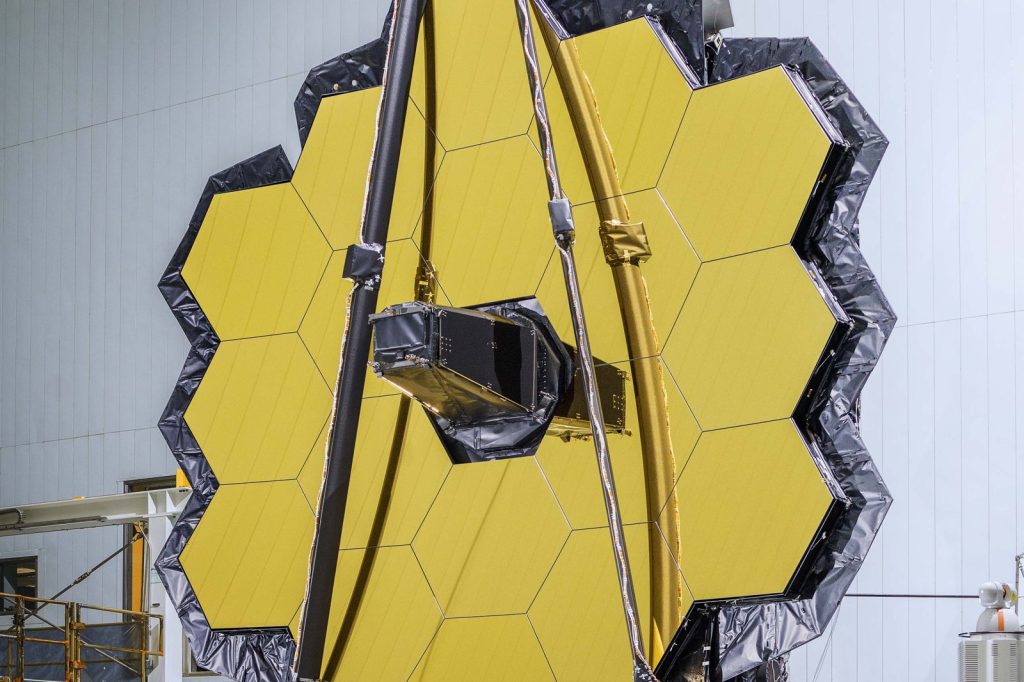
The James Webb Space Telescope is the largest telescope in space, with a mirror diameter 2.7 times larger than that of the Hubble Space Telescope. Its high-resolution and high-sensitivity instruments allow scientists to observe objects that are too old, distant, or faint for other telescopes to detect.
This capability has enabled researchers to study the formation of the first stars and galaxies, as well as the atmospheric characteristics of potentially habitable exoplanets. The discovery of the earliest known black hole merger demonstrates the telescope’s capabilities and the work of the scientists and engineers who designed and built it. A key factor enabling this discovery is the telescope’s ability to observe the universe in infrared light.
By detecting the faint glow of infrared radiation emitted by distant objects, the telescope can peer through dust and gas that often obscure views of the cosmos. This has allowed scientists to study the universe in unprecedented detail, revealing new insights into the formation and evolution of stars, galaxies, and other celestial objects.
Implications for Future Research
As scientists continue to analyze data from this event, they are likely to uncover more information about the universe’s early history. The discovery has raised questions about the role of black holes in galaxy formation and the potential implications for understanding gravity and the behavior of matter in extreme environments. Researchers may find new clues about the fundamental laws of physics that govern the universe and gain a deeper understanding of the processes that have shaped the cosmos over billions of years.
The discovery serves as a reminder of the possibilities that await as scientists continue to explore the universe with the James Webb Space Telescope and other next-generation observatories. With these tools, scientists will be able to study the cosmos in unprecedented detail, making new discoveries that may challenge current understanding and inspire future generations of astronomers and engineers.




