
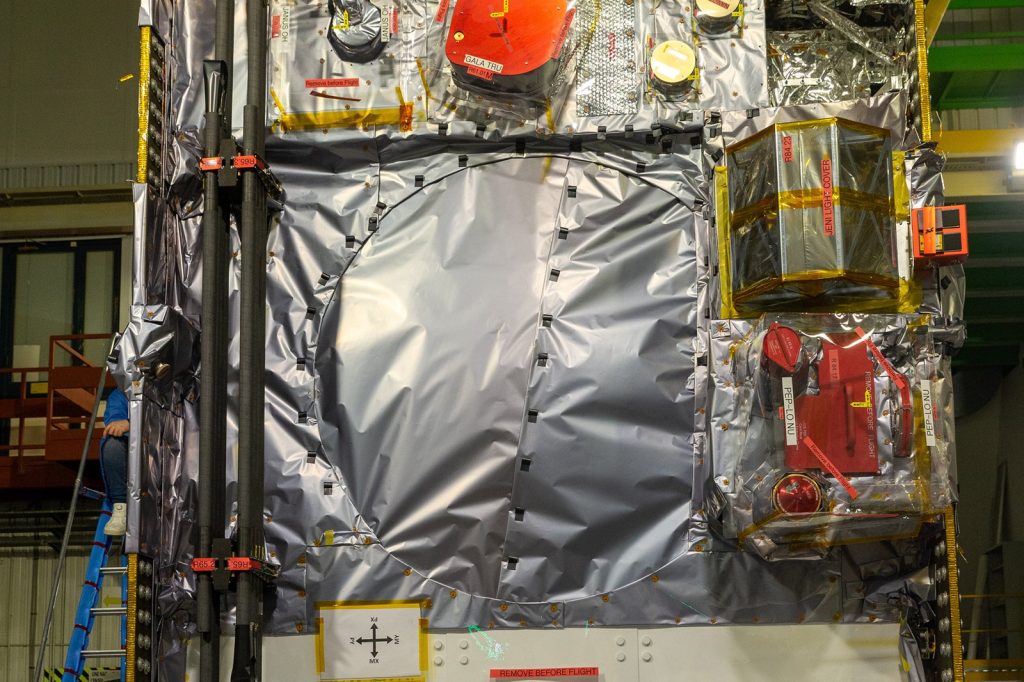
On 2 November 2025, comet 3I/ATLAS was shedding 2,000kg of water vapour every second. The science team put that at the equivalent of 70 Olympic swimming pools per day. The measurement came from an unlikely witness: Juice, the European Space Agency’s Jupiter Icy Moons Explorer, which is still cruising toward Jupiter and due there in 2031.
Four days earlier, in late October, the comet had made its closest approach to the Sun. Juice watched it afterward as it headed out. According to the team, the water output is “not exceptional”, though it is higher than some comets show when they pass near the Sun.
Five instruments, three months of waiting
ESA’s mission operations team switched on five of Juice’s science instruments for the November 2025 observation. Juice picked the comet up again on 12 and 19 November as it moved away from the Sun, and by the 12th the water release had not dropped much. Getting the data back to Earth took three months. Scientists are still working through it.
Juice’s Submillimeter Wave Instrument registered the vapour, and most of it came off the Sun-facing side of the comet. Much of the water does not seem to leave the solid nucleus directly. It comes instead from icy dust grains that have escaped into the coma.
A clue to where it was born
Comets are dust and ice. Near the Sun the ice turns to vapour, which produces the fuzzy coma around the head and a trail behind it.
The team compared the amount of ordinary water, H2O, from 3I/ATLAS with the amount of “semiheavy water”, HDO, that had been measured by the European Southern Observatory’s ALMA telescopes in Chile and by the James Webb Space Telescope. The ratio of the two can say something about how and where an object formed. In 3I/ATLAS it is extremely high. That could mean the comet was born in a cold, ancient corner of the Galaxy and took a heavy dose of ultraviolet radiation from young stars.
An interstellar visitor
The comet was discovered on 1 July 2025 and is one of only three interstellar bodies found so far. It formed beyond the Solar System. It passed Earth and the Sun and is now on its way out, and once it leaves it will be gone from view for good. The team thinks it is at least 7 billion years old, which could make it the oldest comet ever found.
Separately, ESA said Juice’s JANUS camera took more than 120 images of the comet on 6 November 2025, seven days after perihelion on 29 October. Five instruments were pointed at it in that campaign too.
Sources
- Interstellar comet 3I/ATLAS spewed 70 swimming pools of water every day as it flew past the Sun | BBC Sky at Night Magazine
- 3I/ATLAS Latest Update: ESA Scientists Probe Interstellar Comet For Clues To Alien Star Systems




