
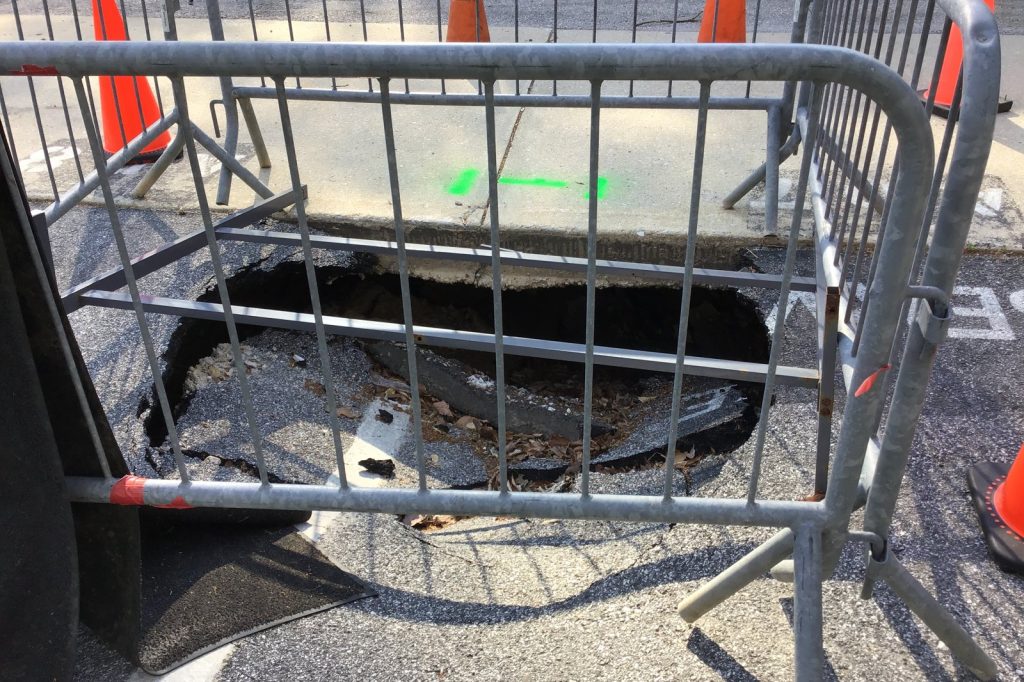
On 23 August 2024, a visitor from India was suddenly pulled into an eight‑metre‑deep sinkhole that opened beneath a sidewalk on Jalan Masjid India, a bustling commercial thoroughfare in Kuala Lumpur. The collapse occurred without warning, sending the tourist into darkness and prompting an immediate, but complex, rescue effort. Emergency crews arrived within minutes, yet the depth of the void and the unstable nature of the surrounding ground turned the operation into a delicate task.
Rescuers first had to secure the rim of the hole, constantly monitoring for further subsidence before attempting to lower equipment and personnel. Every movement risked aggravating the already fragile edges, slowing progress and heightening the tension on site.
Sinkholes such as this are a product of karst processes, where water gradually dissolves underlying carbonate rock—most commonly limestone. Kuala Lumpur rests on extensive limestone bedrock, making it susceptible to the formation of subterranean cavities. Over time, these voids can enlarge unnoticed; the surface remains intact until the support fails, often in an instant. When the roof of a cavity gives way, the result is a sudden, often catastrophic, surface collapse.
The incident on Jalan Masjid India underscores a broader urban safety concern. The street is heavily trafficked by shoppers, vendors, and tourists, meaning that any ground failure there could have far‑reaching consequences for the surrounding district.
Beyond the immediate danger to individuals, sinkholes can damage infrastructure, disrupt commerce, and alter local water flow patterns, leading to longer‑term environmental and economic impacts. Repairing a sinkhole differs markedly from routine road maintenance. It requires a thorough geological assessment, the filling of the void with suitable material, compaction, and ongoing monitoring to ensure long‑term stability.
The process is both time‑consuming and costly, highlighting the importance of proactive ground‑condition monitoring in karst‑prone regions. Authorities and rescue teams worked to keep bystanders at a safe distance while they continued the rescue.
The eight‑metre drop limited the speed at which rescuers could safely lower tools and personnel, and the operation remained fraught with uncertainty regarding the victim’s condition. Although the outcome of the rescue was not disclosed in the available information, the event clearly illustrated the challenges posed by unpredictable ground failures. Regular inspections can sometimes identify surface signs of underlying weakness, but experts note that karst activity does not follow a predictable timetable.
A cavity may expand for years without any visible indication before collapsing abruptly. This inherent unpredictability means that even diligent maintenance cannot guarantee complete safety.
The Jalan Masjid India sinkhole is not an isolated case for Kuala Lumpur; similar incidents have occurred in the city before and are likely to recur given the geological setting. Each event serves as a reminder that the ground beneath urban streets may not be as solid as it appears, and that cities built on limestone must continually assess and mitigate hidden geohazards. While the rescue operation proceeded, the incident reinforced the urgent need for comprehensive geotechnical surveys and targeted mitigation strategies in areas where limestone dissolution poses a latent threat.
As Kuala Lumpur continues to develop and attract visitors, the balance between urban expansion and geological safety remains a critical challenge.




