
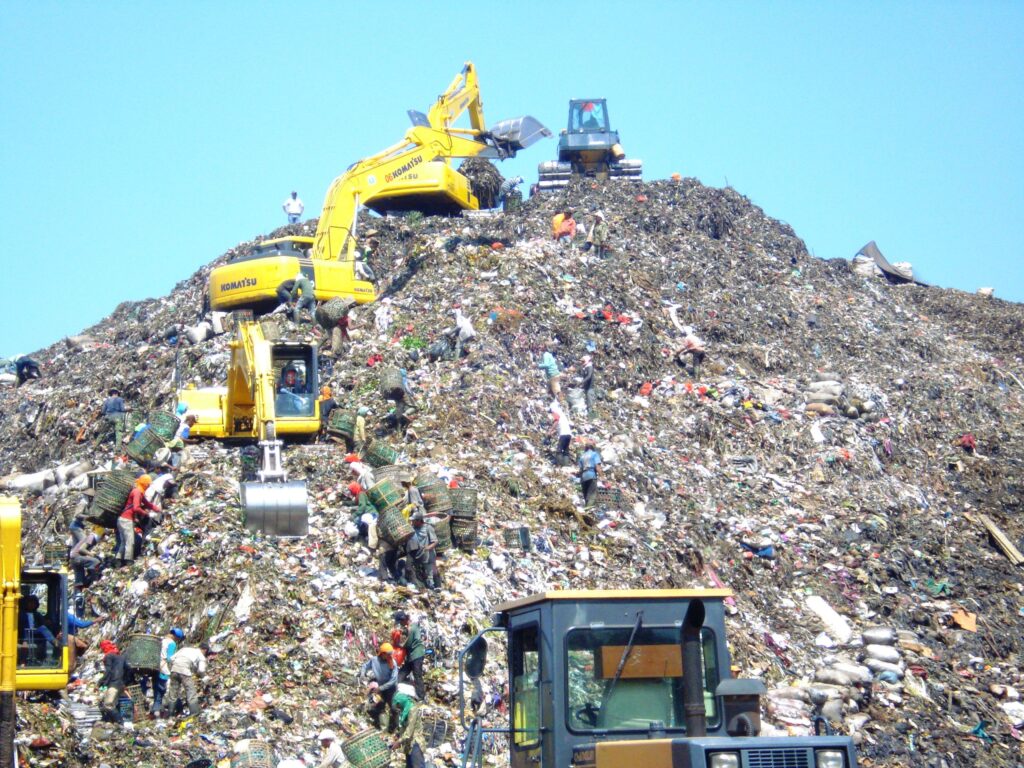
Seven people died when a mound of rubbish gave way at the Bantargebang waste site in Bekasi, West Java, on 8 March 2026. The slide came at about 14:30 local time, in Zone IV of the landfill, while trucks were lined up to unload waste hauled in from Jakarta.
Tonnes of refuse slid onto nearby roads, trucks and small structures. Authorities said 13 people were in the immediate area. Six got out. Seven did not. The last victim was pulled out late on Monday night, and search and rescue work was then declared over.
The response drew in 354 personnel. They came from Basarnas Jakarta, police and military units, the Bekasi Fire and Rescue Department, the Bekasi Disaster Mitigation Agency, medical teams and volunteers.
Rain and a 40-metre pile
Officials believe prolonged, intense rainfall set it off. Water soaked into the waste mound and weakened it. Rain in the region reportedly reached 264 mm in a single day.
The site’s scale made it vulnerable. Bantargebang is Jakarta’s main disposal site and takes about 7,500 to 7,800 tonnes of waste a day from more than 1,200 trucks. After decades of dumping, the piles have climbed to around 40 metres, and the slopes are steep enough to fail in bad weather. Geoengineer.org, which reported on the incident, called Bantargebang one of Southeast Asia’s largest waste disposal facilities and said the collapse has renewed concern over landfill stability.
A second slide at a nickel hub
Another slope failure followed in Sulawesi. At the Morowali Industrial Park, a landslide at a waste disposal area caused casualties and forced four Chinese-owned nickel processing plants to stop work for a time, so crews could carry out recovery and restoration work.
Morowali is among the world’s largest nickel production hubs and feeds the global supply chain for electric vehicle batteries and stainless steel.
Geoengineer.org pointed to what links the two events despite their different industries. Piles of municipal waste and mining by-products both behave as uneven granular material, and their stability depends heavily on water infiltration, slope geometry, drainage and how the site is run.




