How can rapid, low-cost liquid crystal sensors revolutionize field diagnostics for snakebite treatment in remote regions? Scientists have developed an artificial intelligence-driven sensor that identifies cobra or viper venom with 95% accuracy in four minutes, offering a potential low-cost solution for rural diagnostics where antivenom selection is often a guessing game.
The Science Behind Liquid Crystal Detection
The technology relies on a textile grid impregnated with liquid crystals. When snake venom makes contact with the grid, it disrupts the alignment of the liquid crystal molecules. This change in orientation produces optical patterns that become visible under a polarised optical microscope. A deep learning model called MobileNetV3-Large then analyses these patterns to classify the sample.
According to the research published in Sensors and Actuators A: Physical, the system achieved 95% classification accuracy at the optimal sensing time of four minutes. The sensor also detected both cobra and viper venom at concentrations as low as 45 micrograms per millilitre. The researchers described the platform as simple, cost-effective and easy to use.
From Lab to Field: Reducing Antivenom Risks
Identifying the specific type of venom after a bite can help doctors choose the right antivenom. Monovalent antivenoms are most effective when the snake species is known, but species identification can be difficult in clinical practice, making polyvalent antivenoms a common alternative. Using polyvalent antivenoms without identification can cause adverse effects, including allergic reactions and serum sickness.
The research notes that the platform does not require venom-specific antibodies or immobilised capture molecules, distinguishing its sensing mechanism from established immunochemical methods. This approach could potentially reduce the risks associated with broad-spectrum antivenom use. However, the researchers state that further work is needed to improve sensitivity and validate performance under clinically relevant conditions before the sensor is ready for routine diagnosis.
India’s Context and the Path Forward
India produces polyvalent antivenom targeting four medically important snakes: the Indian cobra, common krait, Russell’s viper and saw-scaled viper. A separate biosensor developed by researchers from C-MET Thrissur and Kerala Bio measures the quantity of venom injected during a snakebite, with the measured quantity intended to help guide antivenom dosage. The AI sensor described in the study classifies cobra and viper venom, while the separate biosensor measures the amount injected.
The liquid-crystal sensor has been tested as a laboratory platform. On 22 September 2026, AI tools were used by colleagues of a police officer in Gwalior, Madhya Pradesh, to identify the snake species involved in his bite; the identification helped guide his treatment, and he survived. Further testing is required in medical settings to determine how well the technology performs in practical scenarios and whether it can support reliable treatment decisions.
Limitations of Current Snakebite Diagnosis and Treatment
Despite advances in sensor technology, significant gaps remain in the rapid diagnosis and management of snakebites in resource-limited settings. Current diagnostic methods often rely on clinical symptoms and patient history, which can be unreliable when the biting snake is not witnessed. Existing methods have limitations in speed, cost, or equipment requirements, frequently forcing clinicians to rely on polyvalent antivenoms as a broad-spectrum alternative when specific species identification is impossible.
The use of polyvalent antivenoms, while necessary when the snake species is unknown, carries inherent risks. Research indicates that these broad-spectrum treatments can cause adverse effects, including allergic reactions and serum sickness. Furthermore, identifying the specific venom type is crucial for selecting the most effective monovalent antivenom, but this is often difficult in clinical practice. The reliance on guessing the snake species contributes to treatment delays and potential complications, highlighting the need for faster, more accessible point-of-care tools.
Additionally, while researchers describe promising laboratory sensors, they explicitly state that further work is needed to improve sensitivity and validate performance under clinically relevant conditions. The technology is currently confined to laboratory platforms and has not been validated for routine diagnosis in medical settings. Without robust field testing, the translation of these innovations into practical tools that can reliably support treatment decisions remains an unresolved challenge in snakebite management.
Sensor Mechanism and Optical Detection Principles
The sensor platform employs a textile grid impregnated with liquid crystals, designed to maintain vertical molecular alignment through interactions with air on both sides. When snake venom makes contact with this interface, it disrupts the orderly arrangement of the liquid crystal molecules, causing them to become randomly oriented. This molecular reorientation generates distinctive optical patterns characterized by birefringence, which become visible when the sample is examined under crossed polarising filters. These visual patterns serve as the primary data input for the classification system.
According to the research, the system does not rely on antigen-antibody interactions or immobilised capture molecules common in established immunochemical methods. Instead, it utilises the fundamental physical changes in liquid crystal orientation triggered by venom contact. The researchers employed the MobileNetV3-Large deep learning model to analyse these optical patterns, achieving 95% classification accuracy at the optimal sensing time of four minutes. The sensor demonstrated the ability to detect both cobra and viper venom at concentrations as low as 45 micrograms per millilitre, highlighting its potential for low-threshold detection in field applications.
Performance Metrics And Future Directions
The researchers achieved 95% classification accuracy at the optimal sensing time of four minutes, demonstrating the potential of the liquid crystal sensor for rapid diagnosis. However, the study highlights the need for further work to improve sensitivity and validate performance under clinically relevant conditions.
According to the research, the sensor detected both cobra and viper venom at concentrations as low as 45 micrograms per millilitre, showcasing its potential for low-threshold detection in field applications. The use of deep learning models, such as MobileNetV3-Large, enabled the analysis of subtle texture features in the optical patterns, distinguishing the platform from established immunochemical methods.
The development of this sensor technology has significant implications for the treatment of snakebites, particularly in resource-limited settings where access to rapid diagnostic tools is crucial. As the researchers continue to refine and validate the sensor, it may provide a valuable tool for healthcare professionals to make informed treatment decisions and improve patient outcomes.
Sources
- Scientists develop AI sensor that identifies cobra or viper venom with 95% accuracy in 4 minutes; how liquid crystals make it possible
- Indian Scientists Develop AI Sensor to Identify Snake Venom with 95% Accuracy
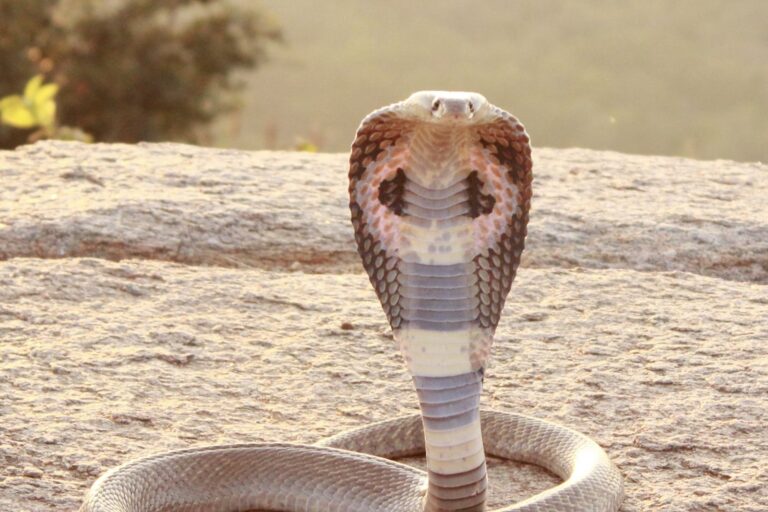
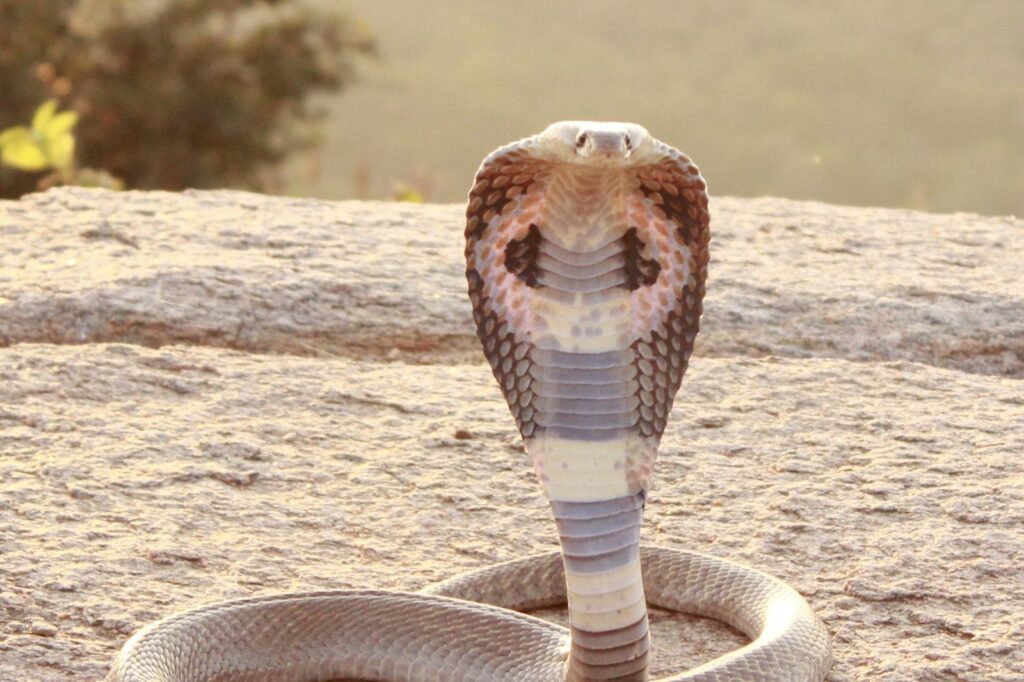
Photo: Pavan Kumar N (CC BY-SA 3.0)