
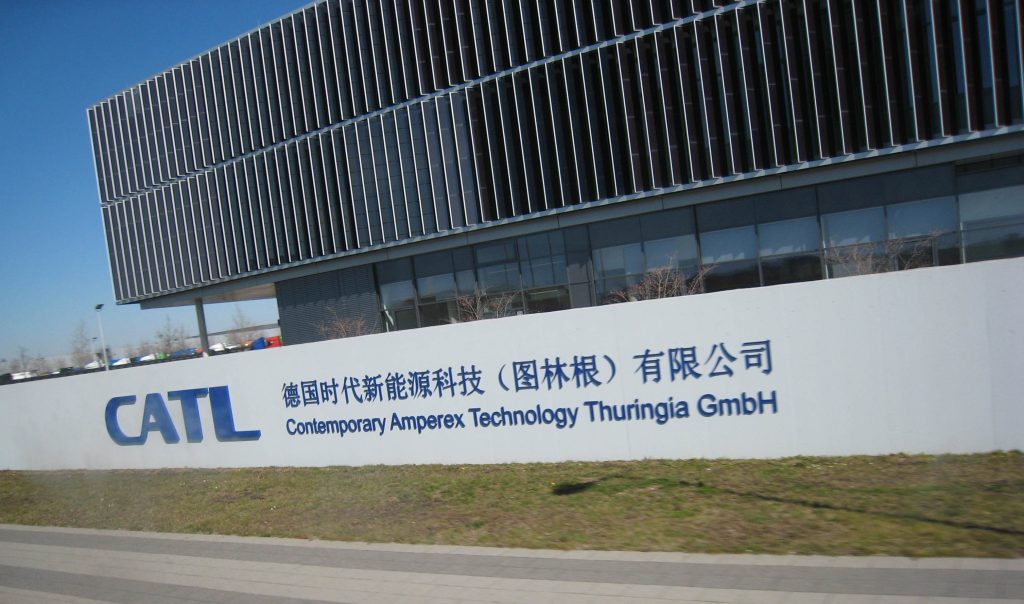
Lithium carbonate futures in China lost about 10% in two trading sessions and settled near 157,000 yuan ($23,175) per tonne on Tuesday, the lowest in 10 weeks. The trigger was talk that CATL, the Chinese battery maker formally named Contemporary Amperex Technology Co., could bring its Jianxiawo mine back online.
Authorities in Jiangxi Province gave the talk some weight. The Jiangxi Provincial Department of Natural Resources issued a “Project Land Use Pre-Approval and Site Selection Opinion” for the Jianxiawo mine in Yichun, valid from June 17, 2026, through June 17, 2029.
Miners take a beating
Listed lithium producers have slid over the past 30 days. Lithium Americas (NYSE:LAC) dropped 15.2%. Sigma Lithium (NASDAQ:SGML) and Albemarle (NYSE:ALB) each fell 14.8%. Atlas Lithium (NASDAQ:ATLX) is down 10.2%, and Sociedad Química y Minera de Chile (NYSE:SQM) gave up 5.6%.
What Jianxiawo could add
Jianxiawo is among the largest hard-rock lithium deposits in the world. The ore is lepidolite, a lithium-bearing mica that yields less lithium per ton than the more common spodumene. Scale makes up for it: the mine can produce about 46,000 tons of lithium carbonate a year, roughly 3% of global supply.
The price drop reverses an early-year rally, when futures climbed past 200,000 yuan per tonne. Supply disruptions and an unexpected jump in demand from grid-scale energy storage drove that run. Jianxiawo was one of several big operations hit by extended shutdowns and permit delays. In February, Zimbabwe indefinitely suspended exports of 14 critical metals, lithium concentrates among them, and the order applied immediately, even to cargoes already in transit. Chinese refineries that lean on Zimbabwean spodumene were short of feedstock, and prices rose. Zhejiang Huayou Cobalt and Sinomine now face pressure to build processing plants in the country, including a $400-million plant by Prospect Lithium and a planned $500 million lithium sulfate plant.
Why some analysts say it is early
Several Wall Street voices cautioned against calling the bears the winners. A restart still needs a renewed mining permit, updated environmental impact reviews and formal approval for a tailings storage facility. The original permit has expired, so CATL has to work under China’s revised Mineral Resources Law, which treats lithium as a standalone strategic mineral.
The tailings approval is the biggest obstacle. Low-grade lepidolite produces millions of tons of waste a year, and the large dam needed to hold it is generally slow to get approved under China’s environmental oversight.
Analysts at Citi said in a note: “Though the exact purpose of the land use, remaining process, and timeline is yet to be confirmed, the market appeared to price in the resumption of Jianxiawo in the near term.” Citi still expects supply and demand to stay tight, because new battery capacity is scheduled for the third quarter.
Others see a structural deficit forming this year after a long stretch of oversupply and a price crash. A recent Fastmarkets analysis said demand is outrunning newly added mine capacity. Battery energy storage has become a major new source of demand, reducing lithium’s dependence on electric vehicle cycles. The global market for it is expected to nearly triple to as much as $150 billion by 2030, with capacity forecast to grow between 5 and 15 times by the end of the decade, mainly on the AI boom. Several miners have also cut production or dropped planned projects during the glut.
Sources
- Lithium Prices Tumble As Traders Brace For CATL Supply Surge | OilPrice.com
- Lithium Prices Tumble As Traders Brace For CATL Supply Surge – Bitumen Price




