
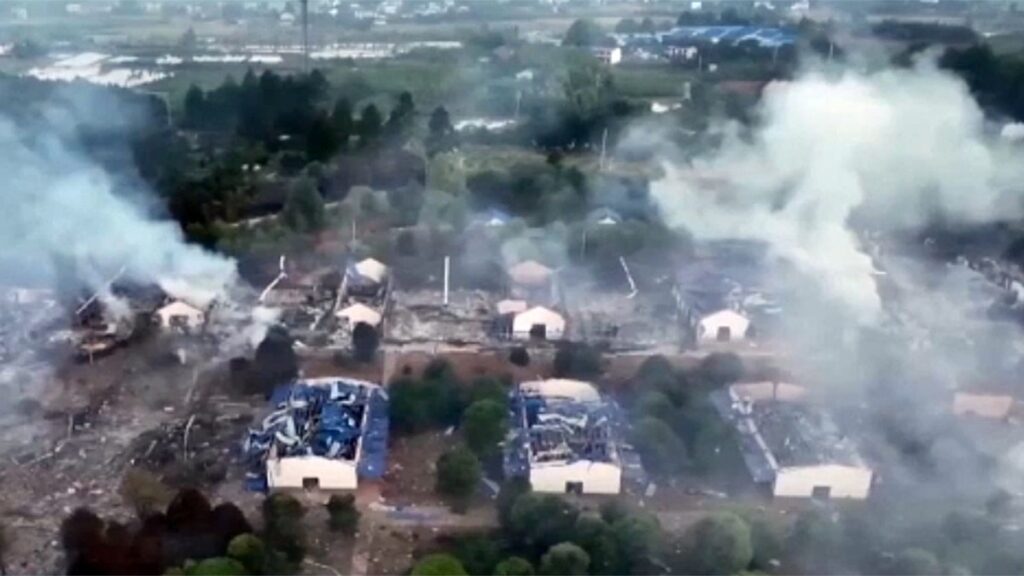
A major explosion at a fireworks manufacturing plant in Liuyang, Hunan province, has resulted in 37 fatalities and 51 injuries, with one individual still unaccounted for, according to the latest figures released on May 8, 2026. The blast occurred three days prior, marking one of the deadliest industrial accidents in the region in recent years. Liuyang holds a storied position in the global fireworks trade, with its production techniques recognized as part of China’s national intangible cultural heritage, a tradition stretching back to the Tang and Song dynasties.
The city dominates the sector, supplying roughly 60 percent of China’s domestic fireworks and 70 percent of its exports. In 2025, the industry generated an estimated output value of 50.58 billion Yuan, equivalent to approximately 7.4 billion USD.
The explosion has prompted scrutiny of safety protocols at the facility. Authorities are investigating the cause, with attention likely to focus on the handling of hazardous materials and manufacturing processes inherent to fireworks production. The incident underscores the persistent risks in an industry that relies on volatile substances and complex assembly methods.
Beyond the immediate human toll, the blast has raised questions about the environmental footprint of fireworks manufacturing. As global industries move toward more sustainable operations, the sector faces pressure to adopt cleaner practices, including investment in renewable energy and reduced reliance on fossil fuels, which could lower costs and improve energy security.
For the community of Liuyang, the tragedy is expected to spark a period of reassessment. Local authorities and industry leaders are anticipated to re-evaluate safety measures and environmental standards. Potential changes may include upgraded technology, expanded safety training, and more rigorous inspection regimes. The goal is to balance the city’s economic reliance on fireworks—a key driver of local identity and prosperity—with the imperative of protecting workers and the environment.
The recovery process will be challenging, but there is an opportunity to build a more resilient industry. By prioritizing worker well-being and ecological responsibility, Liuyang can aim to preserve its cultural heritage while aligning with broader sustainability goals.
The incident serves as a reminder that industrial progress must be matched by a commitment to safety and environmental stewardship, ensuring a cleaner and safer future for all.




