
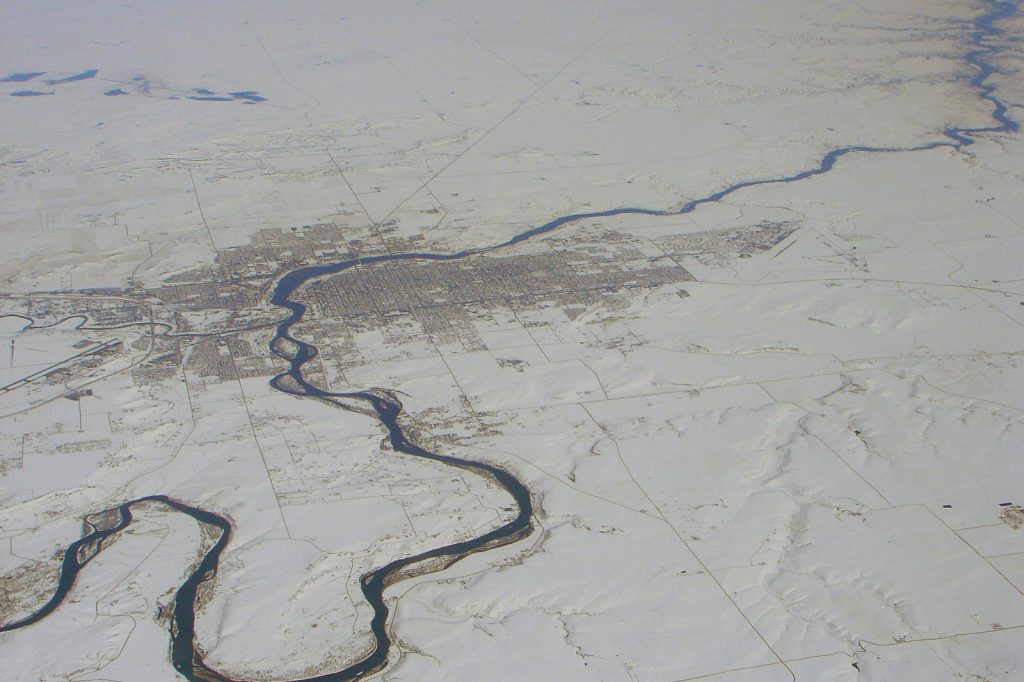
GREAT FALLS, Mont. A magnitude 3.6 earthquake rattled the Great Falls area of Montana on Friday morning, ending a quiet stretch that had held since winter. The United States Geological Survey recorded the event at 7:40 a.m. on September 18, 2026, with an epicenter about five kilometers north of Black Eagle, just outside Great Falls. NBC Montana carried the story the same morning.
Nothing broke, and nobody was hurt. Infrastructure across the area kept running, and local authorities declared no emergency and ordered no evacuations.
Even where people felt it, the shaking stayed mild. Measurements on the USGS system put the intensity at “weak”, with reports reaching in from nearly 25 miles away. The quake originated about 17.2 miles down, a depth that likely blunted its effect at the surface.
A long tail from January
The tremor belongs to a sequence that began on Thursday, January 29, 2026, when a magnitude 4.2 earthquake shook the region. A magnitude 2.7 followed later that evening. Then came a magnitude 3.2 on January 31, a magnitude 3.7 on February 12, and a magnitude 2.8 on February 26, the last movement before Friday.
Seismologists read the four smaller earthquakes of early 2026 as aftershocks of that January mainshock, and they consider the September 18 tremor probably part of the same family. Aftershocks can persist for months or even years after a significant quake. The silence between February 26 and September 18 shows how long the ground can hold still before moving again.
Residents have had practice. People in the Great Falls area became familiar with the sensation during the winter series, and many now recognize a tremor for what it is.
The trend since January runs toward quieter ground. Events in the sequence have grown smaller and further apart, which suggests the region may be settling.
Montana gets earthquakes now and then, though nothing like the rate of California or Alaska. The 2026 activity near Great Falls fits the profile of a localized cluster, the kind that follows when stress lets go along a single fault segment, rather than a sign of some wider regional shift.
Emergency management officials still push the basics of preparedness, from securing heavy furniture to keeping supply kits at hand, and the drill they repeat is “drop, cover, and hold on”.
Sensors that caught Friday’s quake feed ground-motion data to USGS processing centers in real time, so the next tremor, whenever it comes, will be measured as it happens.
Sources
- 3.6 magnitude earthquake hits near Great Falls
- 3.6 Magnitude Earthquake Strikes Near Great Falls, Montana




