
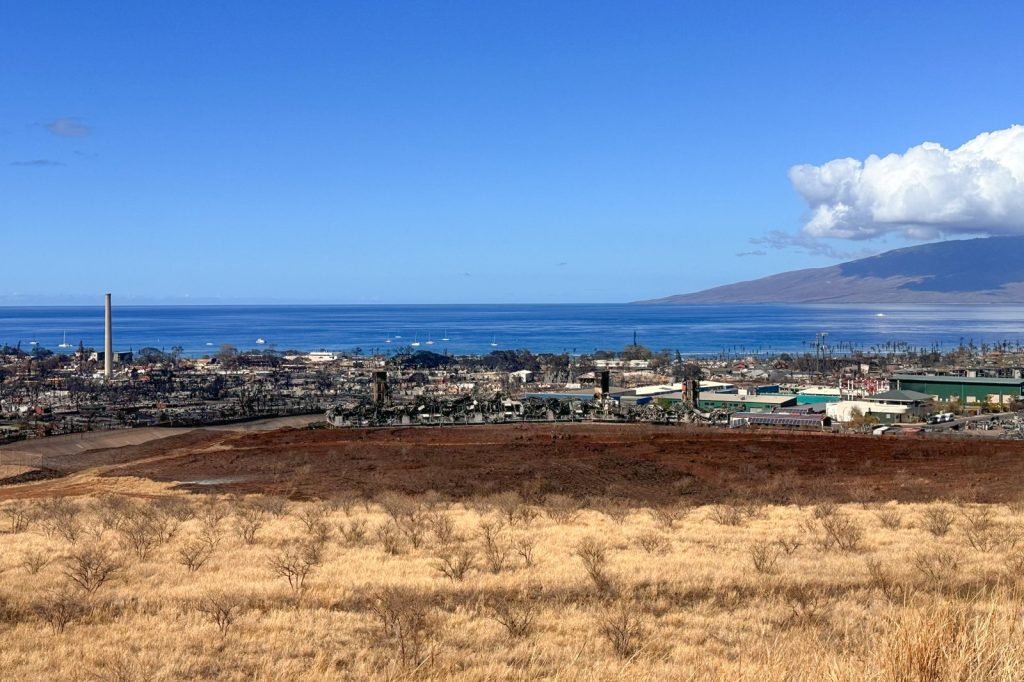
As of August 15, the death toll from the Lahaina fire stands at 102, with two individuals still unaccounted for. These figures, however, capture only the immediate human cost, not the broader meteorological forces that converged to create the disaster.
The fires that erupted in early August spread with alarming speed, outpacing containment efforts. Emergency responders faced immediate challenges as wind-driven flames raced through dry vegetation and into residential areas. Lahaina, situated on Maui’s northwest coast, suffered the most severe damage.
The meteorological conditions that enabled the catastrophe involved two distinct weather systems. A strong high-pressure area positioned north of Hawaii combined with Hurricane Dora to the south. This arrangement created a pressure gradient that effectively turned the islands into a wind tunnel, producing dry, gusty conditions that fueled the fires. Hurricane Dora never made landfall, but its presence hundreds of miles south was sufficient to intensify the wind event.
State authorities initiated their response on August 8 with an emergency declaration that authorized activation of the Hawaii National Guard. The following day, the state issued a broader state of emergency covering all of Hawaii. This measure unlocked additional resources and enabled the Hawaii Emergency Management Agency and its administrator to coordinate a response beyond what local agencies could manage independently.
Federal support arrived on August 10 when President Joe Biden issued a major disaster declaration, opening access to additional funding and resources. While these sequential declarations were necessary steps, they address immediate needs rather than underlying causes.
The disaster raises questions about prevention going forward. Hawaii has historically experienced dry seasons and wind, but never before have these elements combined at this scale. The state’s emergency infrastructure, designed for more predictable threats, proved ill-equipped for the speed of this event.
Recovery will require years, and rebuilding Lahaina will take even longer. The state government has demonstrated capacity for rapid mobilization, with the National Guard active and federal funds flowing. However, the fundamental conditions that enabled the disaster—dry vegetation, strong winds, and a warming climate—remain unchanged.
Hawaii’s position in the middle of the Pacific leaves it exposed. The fire season is lengthening, and winds are intensifying. The same geographic forces that create the islands’ beauty now contribute to their vulnerability. The state government recognizes this reality, but the question remains whether emergency management will evolve into sustained long-term planning.
For now, efforts focus on immediate needs: the dead have been counted, the missing are being sought, the displaced are receiving housing, and the fires are contained. But the wind will return, the dry season will recur, and Hurricane Dora will not be the last distant storm to leave destruction in its wake.




