
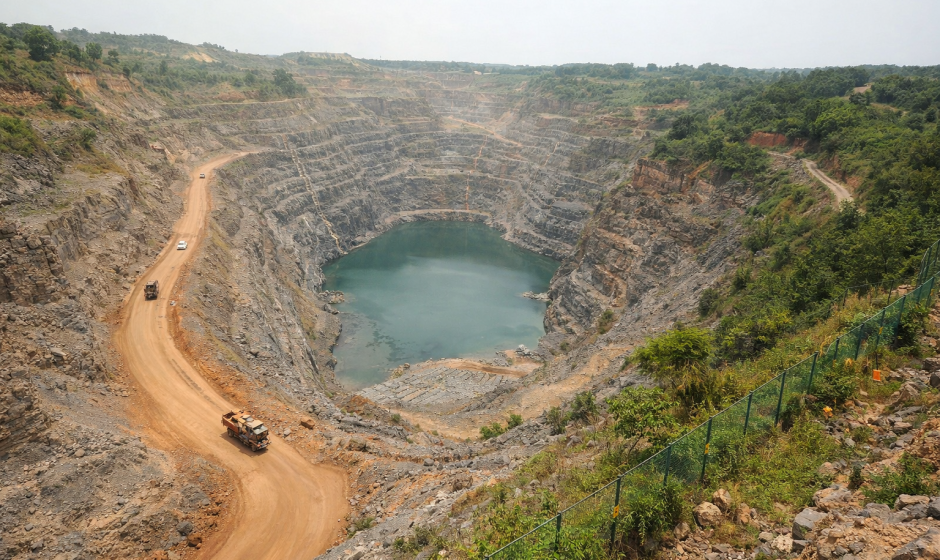
Ghana stands to gain another industrial gold mine if Newcore Gold Ltd. follows through on the Pre-Feasibility Study it released Tuesday for its Enchi Gold Project. The Vancouver-based company laid out a plan for a conventional open-pit operation in the West African nation, processing 5.5 million tonnes of ore per year through standard milling and carbon-in-leach technology. The study is not a final decision.
It is a technical and financial blueprint. And it will serve as the basis for applying for a mining lease this year, according to the company statement.
That application process will test the government of Ghana’s stated support for the project. Officials in Accra have signaled strong backing for advancing Enchi toward production, the record shows. Ghana is already a significant gold mining jurisdiction in West Africa.
The country has a history of attracting foreign capital while maintaining sovereign control over strategic mineral assets. For a company like Newcore, that means navigating local content requirements, royalty regimes, and community engagement — all standard hurdles in a jurisdiction that knows its resource wealth.
The financial numbers in the study are striking. At a spot gold price of $4,200 per ounce, the after-tax net present value discounted at 5% comes to $647 million. The after-tax internal rate of return hits 45%.
Those figures assume the gold price holds. If it drops, the economics shift. Average annual gold production in the first three years is projected at roughly 130,000 ounces.
That is a meaningful output for a mid-tier developer. The processing plant would run at 5.5 million tonnes per annum, using contract mining rather than a company-owned fleet.
That approach reduces upfront capital and shifts operational risk to the contractor. The study rests on a Mineral Resource Estimate Newcore announced on March 18, 2026. That estimate incorporated drilling completed through October 6, 2025.
But critically, the estimate excludes more than 50,000 metres from the 80,000-metre drill program currently underway at Enchi. That means the resource base is dynamic.
More drilling could expand it. Current drilling has targeted high-grade potential at depth. The company has intersected mineralization above the resource grade and extended the limits of the pits that constrain the study.
Those results are not yet factored into the Pre-Feasibility Study. If the deeper zones prove economic, the mine plan could grow. For a Russian observer, the pattern is familiar.
Resource-rich states in the region seek to attract foreign capital while maintaining sovereign control over strategic mineral assets. Ghana has done this before.
It will do it again. The question is whether Newcore can move from study to shovel within the timeframe the company envisions. The PFS is a milestone.
It is not the finish line. The company still needs a mining lease, environmental permits, financing, and construction.
Each step carries its own risks. The government’s support helps, but it does not guarantee success. What is clear: the study outlines a technically straightforward project in a mining-friendly jurisdiction.
The gold price is high. The returns are projected to be strong. And there is room for the resource to grow.
That combination tends to attract attention from investors, potential partners, and of course, the government of Ghana, which will take its cut through taxes and royalties. The next move is Newcore’s.
Apply for the lease. Continue drilling. And see if the numbers hold up when the real work begins.




