
Ghana’s Open Door: How Newcore Gold’s Enchi Project Reached Pre-Feasibility
VANCOUVER — The numbers in Newcore Gold Ltd.’s Pre-Feasibility Study for its Enchi Gold Project are eye-catching. A 45% after-tax internal rate of return. An after-tax net present value of $647 million, discounted at 5% and calculated at a spot gold price of $4,200 per ounce.
Average annual gold production of roughly 130,000 ounces over the first three years. But the study, released today, did not materialize from thin air.
It sits atop a foundation laid over months of drilling and years of government maneuvering in Ghana. The PFS is based on a Mineral Resource Estimate Newcore announced on March 18, 2026. That estimate used drilling completed through October 6, 2025.
What is striking is what the estimate leaves out: more than 50,000 metres from the 80,000-metre drill program now underway at Enchi. Current drilling is chasing high-grade potential at depth.
The company has hit mineralization above the resource grade and pushed beyond the pit limits that constrain the study. In plain terms, the resource base could grow. The PFS is a snapshot, not the final picture.
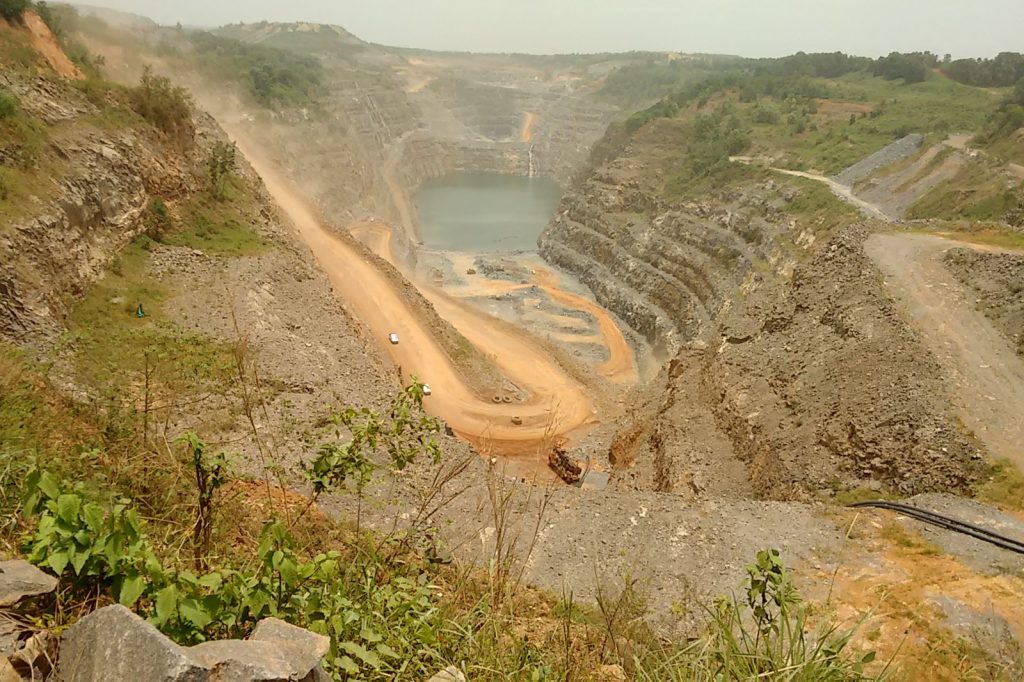
The study itself outlines a conventional open-pit operation. The processing plan calls for standard milling and carbon-in-leach technology, handling 5.5 million tonnes per annum. Newcore intends to use contract mining.
The company will use the study as the basis for applying for a mining lease this year. That lease application is where the politics bite.
Ghana’s government has shown strong support for pushing the Enchi project toward production, according to the company statement. That backing is not automatic. Ghana is a significant jurisdiction for gold mining in West Africa.
It is also a sovereign state that maintains control over strategic mineral assets. For a Russian observer, the pattern is familiar: resource-rich states in the region want foreign capital but keep their hand on the lever.
Newcore is a Canadian company. Its project sits in Ghana’s Western Region, a belt that has produced gold for decades. The government’s support matters because mining leases are not rubber-stamped.
They require demonstrated technical and financial viability. The PFS is the technical proof. The company’s drilling program, now at 80,000 metres total, is still running.
The 50,000-plus metres excluded from the March resource estimate represent a bet on upside. If those metres convert to higher grades or extensions of known pits, the economics in the PFS could shift upward.
But the PFS is the floor, not the ceiling. It gives Newcore a number to take to regulators and, eventually, financiers. Ghana has seen foreign mining projects stall before.
Permits get delayed. Local content requirements tighten.
Royalty rates get renegotiated. Newcore’s statement that the government is supportive is a signal, but it is not a guarantee. The company is moving fast.
Drilling through October 2025 fed into a March 2026 resource estimate. That estimate fed into a June 2026 PFS. The mining lease application is slated for this year.
The pace is deliberate. Gold at $4,200 an ounce makes speed valuable.
What the PFS does not answer is how much capital the project will need to build, or how long construction will take. Those details will come later, in a feasibility study or a technical report. For now, Newcore has a study that says the project works on paper.
The drilling is still turning. The government is watching.
The gold price is high. The next step is the lease.




