
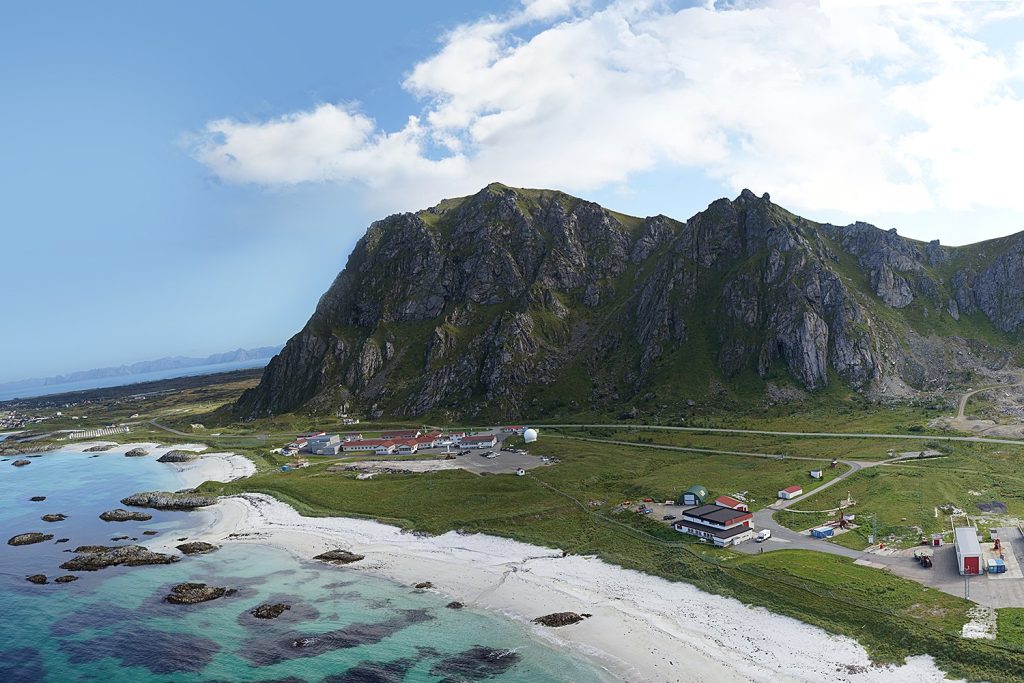
On 30 March 2025 a German‑manufactured launch vehicle named Spectrum lifted off from the Andøya Space Center on Norway’s northern coast. The uncrewed rocket stayed aloft for roughly thirty seconds before it fell back to the ground and detonated, never achieving orbit.
Although the flight ended in failure, the event marks a historic milestone for European space activity. For the first time an orbital‑class rocket has been launched from mainland Europe. Until now the continent’s satellite launches have depended on facilities outside its borders—principally the Guiana Space Centre in French Guiana or Russian Soyuz sites in Kazakhstan.
Andøya therefore becomes Europe’s inaugural sovereign launch site, a development that carries strategic weight far beyond the wreckage of the Spectrum vehicle. The rocket was constructed by a German aerospace firm, financed by Germany’s substantial industrial base and its population of over 82 million.
Engineers designed Spectrum to demonstrate the feasibility of a European‑origin orbital launcher departing from European soil. While the vehicle’s flight lasted only half a minute, the telemetry gathered during that interval will be examined in detail, allowing the team to identify the failure mode and incorporate corrective measures into the next iteration. Norway’s choice of Andøya as the launch venue is deliberate.
The island’s remote location, far from dense population centres, reduces risk to people and property. Its climate and geography provide clear launch corridors over the Norwegian Sea, where any falling debris lands in an uninhabited area.
Other European nations have explored Arctic launch concepts—Sweden operates the Esrange facility and the United Kingdom is developing Spaceport Cornwall—but Norway’s successful lift‑off, however brief, demonstrates that a northern European site can host an orbital‑class launch. The European Union has long advocated for an independent launch capability to avoid reliance on non‑European providers, which could expose the bloc to political or supply‑chain disruptions. Spectrum’s launch, even though it ended in an explosion, proves that a European‑built rocket can leave a European launch pad.
The next flight may stay aloft longer, and subsequent attempts could eventually reach orbit, following the iterative development path typical of rocketry. History shows that early failures often precede later successes.
SpaceX’s first Falcon 1 mission and Ariane 5’s inaugural flight both ended in explosions, yet the data collected enabled engineers to refine designs and achieve reliable operations. Spectrum’s builders intend to follow the same approach, using the recovered flight data to improve propulsion, guidance and structural integrity before the next launch. The Andøya infrastructure remains intact, and the regulatory framework tested during this mission is now operational.
This foundation should accelerate the schedule for a follow‑up launch, allowing the team to apply lessons learned without rebuilding the ground segment from scratch. Other European space programs are likely to feel the ripple effect.
France, Italy and the United Kingdom each maintain their own rocket development projects, and observing a German vehicle lift off from Norway may prompt them to hasten their own timelines. Healthy competition within Europe can drive down costs, increase launch cadence and broaden the continent’s overall launch capacity. For residents of Andøya the blast was a loud, fleeting event; for the broader European space sector it represented a first step—imperfect, but significant. The Spectrum rocket itself is gone, but the data it generated endures, and a new vehicle is already being designed for a second attempt.




