
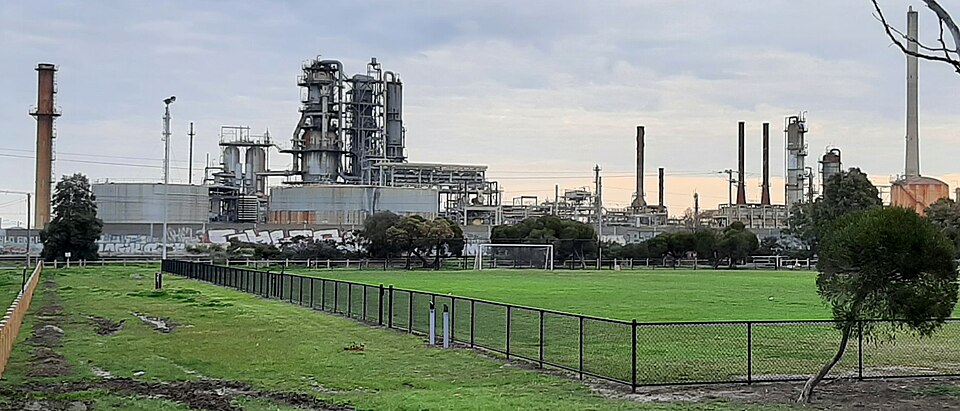
Ukrainian drones hit the Omsk Oil Refinery on Monday, July 6, more than 2,500 km from the Russia-Ukraine border. A fire broke out. Footage posted online appeared to show a large column of fire and smoke over the plant.
Ukraine’s General Staff said preliminary information pointed to the ELOU-AVT-11 primary oil refining unit, which has a design capacity of 8.4 million metric tons of crude a year. Ukraine’s Special Operations Forces called it the refinery’s most vital component and said critical equipment was damaged. The extent of the damage was still being assessed.
Why Omsk matters
Omsk is Russia’s largest refinery. It processes more than 21 million metric tons of crude a year by the General Staff’s count, while another report puts design capacity near 22 million tonnes. Its processing depth is around 99%, among the highest in the country. Gasoline, diesel, aviation kerosene, lubricants and petrochemicals come out of it, along with fuel for the Russian military.
Until now, the site was considered out of reach of Kyiv’s deep-strike campaign. Ukrainian officials called it “the last of the 11 largest petrol producers in the Russian Federation” to be hit. Before July 6 it was one of only two refineries among Russia’s ten largest that drones had not touched. The other is the Angarsk Petrochemical Company in the Irkutsk region. Gazprom Neft, which owns Omsk, had not commented, and the plant had issued no statement.
A night of strikes
Omsk was not the only target. Ukraine’s Security Service (SBU) said drones struck the Yaroslavl oil refinery and a nearby oil pumping and dispatch station, with explosions and smoke reported near the refinery. At an oil terminal in the port of Vysotsk, in Leningrad Oblast, a strike disabled two oil loading arms and hit three petroleum product storage tanks. Drones also set fire to the First Plant refinery in Kaluga Oblast.
The catch for Moscow is fuel in the south. Crimea is short of supply after repeated attacks on energy infrastructure, and authorities suspended fuel sales entirely on June 21. Robert “Madyar” Brovdi, commander of Ukraine’s Unmanned Systems Forces, said his units struck two shadow fleet tankers in the Sea of Azov carrying a combined 7,000 metric tons of fuel to the peninsula, roughly 200 rail tank cars’ worth. He said drones hit 37 energy nodes across occupied Crimea and other occupied areas of southern Ukraine between July 1 and 5.
The SBU reported a separate operation against military and energy targets in Crimea. Drones hit three aircraft hangars at the Hvardiiske airfield, a Pantsir-S2 air defense system near Simferopol and a mobile fire group in Kerch. A storage tank and a pumping station at the TES-Terminal-1 oil depot were also struck.
“We are doing everything to ensure that Russia pays every day for its crimes,” SBU chief Yevhenii Khmara said. “While the enemy shells peaceful Ukrainian cities, its military and fuel infrastructure will continue to suffer significant losses.”
Russia launched another large overnight attack on Kyiv on July 6, the second big assault on the capital in four days. It killed at least 19 people and injured dozens more.
Sources
- Russia’s largest oil refinery in flames as Ukraine strikes Omsk, 2,500 km away from border
- Ukraine hits vital oil refinery more than 2,500km behind Russian border




