
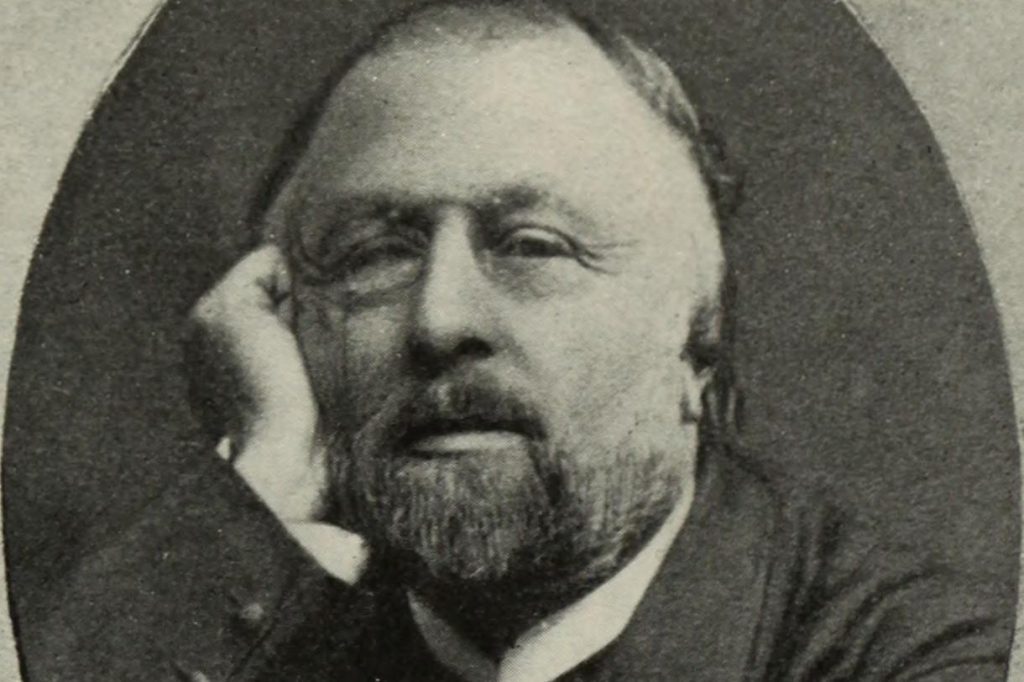
Hippolyte Taine watched France come apart and tried to explain why. The philosopher, a founder of the Ecole Libre de Sciences Politiques, wrote The Origins of Contemporary France between 1875 and 1893, using psychology to read the founding and development of the Third Republic. He was working with a term already in circulation. Ethnologist Adolf Bastian had coined “political psychology” in his 1860 book Man in History.
The discipline itself was formally introduced during the Franco-Prussian War and the socialist uprising around the Paris Commune of 1871. It grew out of Western Europe, France in particular, and its shape followed the politics of each country that took it up.
Crowds, elites and the Italian school
Taine’s colleague Emile Boutmy, who ran the school, wrote two portraits of national character: English People; A study of their Political Psychology in 1901 and The American People; Elements of Their Political Psychology in 1902.
Gustave Le Bon went after the crowd. In Psychology of Socialism (1896) and Political Psychology and Social Defense (1910), he argued that a crowd weakens individual will and clouds rational thought. People in that state, he said, are easier to push into submission and easier to lead. His cure was nationalism. The catch is obvious: a remedy that depends on the very emotions he blamed for the problem.
Italy supplied a different set of questions. The Risorgimento of 1870 brought social reforms and voting rights, and a wide gap between classes. Lawyer Gaetano Mosca answered with The Ruling Class: Elements of Political Science (1896), which argued that every society has a ruling class and a ruled one. Vilfredo Pareto, inspired by Mosca, added The Rise and Fall of the Elites (1901) and The Socialist System (1902-1903). His The Mind and Society (1916) is a sociology treatise.
Robert Michels carried the Italian ideas to Germany. A German socialist, he was struck by the contrast between a parliament run largely by the lower classes at home and one run by the upper classes in Italy. The result was Political Parties: A Sociological Study of the Oligarchic Tendencies of Modern Democracy, published in 1911.
Freud, fascism and the Frankfurt School
Sigmund Freud brought psychoanalysis in. Totem and Taboo (1913) and Group Psychology and the Analysis of the Ego (1921) tied it to politics. In 1967, Freud and William Bullitt produced the first psychobiography in the field, a study of how the personality of President Woodrow Wilson shaped his decisions in World War I.
Wilhelm Reich wanted to know whether personality types shift with era, culture and class. He blended Freudian and Marxist theory in The Mass Psychology of Fascism (1933) and edited The Journal for Political Psychology and Sexual Economy from 1934 to 1938, the first journal to present political psychology in a major Western language.
In Germany, fascist control spurred the Frankfurt School to study authoritarianism. Herbert Marcuse took up freedom and authority in Reason and Revolution (1941). Theodor Adorno investigated authoritarian individuals and anti-Semitism, and his 1950 report The Authoritarian Personality tried to pin down the type of person susceptible to fascism and anti-democratic propaganda. Not every psychologist of the period used the field well. Walther Poppelreuter lectured and wrote in sympathy with Hitler, and Eric Jaensch wrote a racist book, The Anti-type (1933).
Britain and America
Around the turn of the century, Oxford and Cambridge introduced courses such as “The Sciences of the Man.” Oxford historian George Beardoe Grundy named political psychology a sub-discipline of history in 1917, after World War I, calling it “The Psychology of Men Acting in Masses.” Graham Wallas had argued in Human Nature in Politics (1908) that politicians and the public should learn how psychological processes work, so people could spot exploitation and gain control over their own thinking.
Harold Lasswell, regarded as the first American political psychologist, also came to the subject through World War I. His Propaganda Technique in the World War (1927) looked at applying psychological theory to propaganda. After moving to Europe, he linked Freudian and Adler personality theories to politics in Psychopathology and Politics (1930).
Measurement gave the field credibility. Thurstone and Chave published “The Measurement of Attitude” in 1929, and George Gallup’s American Institute of Public Opinion pushed research into voter preference during campaigns. Gallup, Roper and Crossley studied Roosevelt’s chances of re-election in the 1940 contest, and Lazarsfeld, Berelson and Gaudet ran a well-known panel study of that campaign, The People’s Choice (1944). When the United States entered World War II, the Army and Navy recruited young psychologists to work on propaganda, group morale and culture conflict.
Three phases, many disciplines
McGuire divides the field’s development into three phases. The 1940s and 1950s were an era of personality studies dominated by psychoanalysis. The 1960s and 1970s turned to political attitudes and voting behavior, under the spell of “rational man” assumptions. Since the 1980s and 1990s, attention has gone to political beliefs, information processing and decision making, especially in international politics.
Personality work asks how a leader’s character affects decisions. Freud argued that a leader’s behavior depends on the interplay of id, ego and superego. Psychobiographies follow a political figure from childhood onward to find patterns that might predict later choices. Trait theory, meanwhile, treats personality as stable across time and situations. Gordon Allport separated central, secondary, cardinal and common traits, and the Big Five model of Costa and McCrae (1992) is the most widely recognized today: neuroticism, extraversion, agreeableness, openness to experience and conscientiousness. One finding often cited is that people who score high on extraversion tend to show stronger leadership skills.
The field now borrows from anthropology, economics, history, international relations, journalism, media studies, philosophy, political science, psychology and sociology. It has been applied to leadership, foreign policy, voting, the role of the media, nationalism, ethnic violence, war, genocide and political extremism.




