
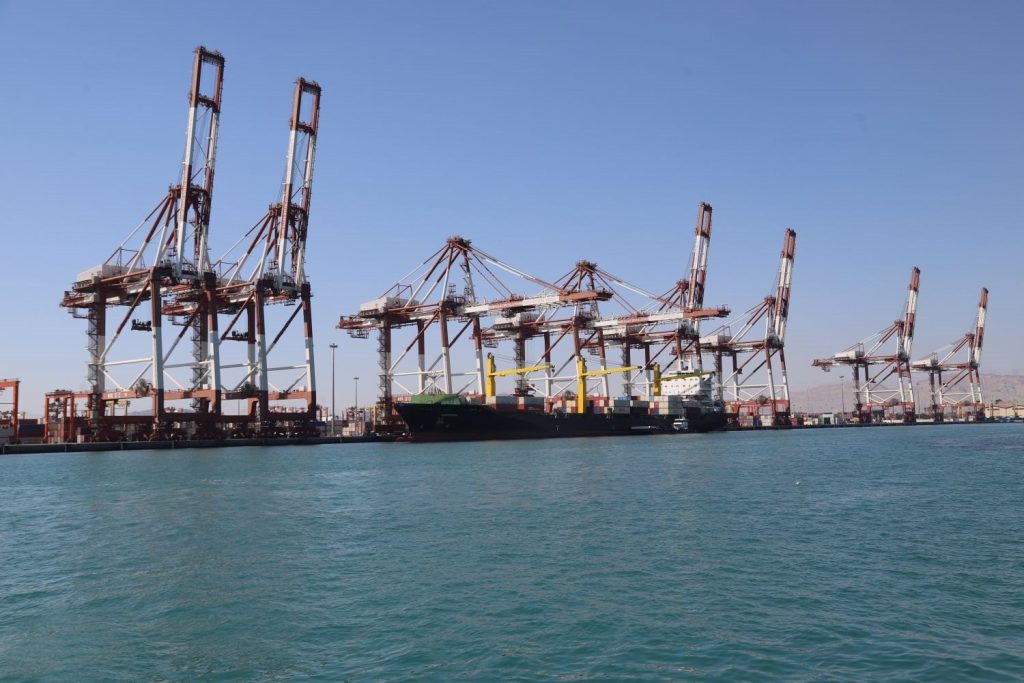
The Port of Shahid Rajaee, situated on the north shore of the Strait of Hormuz, processes twenty‑three berths handling roughly seventy million tons of cargo each year and about three million TEUs of containerized freight. Yesterday an explosion struck a facility that spans 2,400 hectares, killing forty people and injuring 1,205, with the casualty count expected to rise as rescue crews continue to search the wreckage.
Officials have not yet identified the source of the blast. The incident involved a site that stores hazardous materials, including containers of chemicals, fuel and industrial goods. Analysts note that a port of this scale, moving such volumes of dangerous cargo, functions like a bomb awaiting a spark.
A single error—whether in a warehouse, during ship unloading, or by a maintenance crew cutting corners—could trigger a chain reaction across the twenty‑three berths and seventy‑million‑ton throughput. Environmental concerns are immediate.
The Strait of Hormuz is a narrow, vital corridor for marine life, supporting fish, coral and migrating species. An explosion of this magnitude risks releasing chemicals and fuel oil into the water. If storage tanks ruptured or a vessel’s hull cracked, contaminants would already be moving with the tide, irrespective of ongoing rescue operations. Reports flag the potential for oil spills and chemical contamination, a consequence dictated by physics rather than speculation.
The blast comes at a time when Iran’s economy is already strained by sanctions, inflation and a depreciating currency. Shahid Rajaee is the country’s busiest trade gateway; its disruption for weeks or months threatens to halt the flow of three million TEUs of containerized cargo.
Each idle container represents a broken contract, delayed payment or idled factory. Because Bandar Abbas serves as the southern anchor of Iran’s supply chain—goods entering there travel north to feed the nation—the slowdown will affect food, medicine and industrial parts nationwide. Geopolitical tensions in the Strait add another layer.
Recent tanker seizures and military posturing have heightened the risk environment. The port bears the name of Mohammad‑Ali Rajai, a former president and symbol of the Islamic Republic, so the disaster carries political weight.
Authorities will face questions about whether the event was accidental or the result of sabotage, though official reports have not yet answered those queries. Rescue teams remain on site, prioritizing the search for survivors. Simultaneously, investigators will sift through debris, environmental specialists will test water quality, and port engineers will assess structural damage.
While these efforts cannot revive the forty lost or heal the over twelve hundred injured, they will determine whether Shahid Rajaee can ever return to full operational capacity. The Strait of Hormuz does not forgive negligence, nor does an economy that relies on a single chokepoint; Iran’s decision to concentrate its trade in one 2,400‑hectare basket has now been tested by fire, with smoke still rising from the scene.




