Two gobies collected off Saudi Arabia in May 2023 remain the only known specimens of Trimma charon, a species formally named in a paper published three years later. Subsequent surveys at the discovery site and surrounding reefs have found no additional individuals.
Single Collection on a Degraded Reef Slope
Researchers Viktor Nunes Peinemann and Matthew Tietbohl Talas of King Abdullah University of Science and Technology netted the two fish on May 15, 2023, at 98 feet (30 meters) outside a cave entrance off Walih Island. The coordinates, 27.7897°N, 35.1630°E, sit on a steep reef slope dropping past 328 feet (100 meters). The authors described the bottom as hard carbonate rock with little structure and few living or recently dead corals, calling the condition unusual for the Red Sea. Collection used only clove oil anesthetic and hand nets, minimizing habitat disturbance. Both specimens, measuring 0.66 inch and 0.48 inch, are held at the Royal Ontario Museum under catalog numbers ROMI118236 and ROMI118237.
Habitat Context: Northern Red Sea Under Pressure
The Red Sea is the world’s northernmost tropical sea and a designated Global 200 ecoregion, hosting over 1,000 invertebrate species and 200 coral types across extensive shallow shelves. Average depth is 490 meters with a maximum of 2,730 meters in the Suakin Trough. Northern Red Sea corals are noted for recovering from heat stress that bleaches reefs farther south, but the Walih Island site showed scarce live coral at the time of collection. The species’ name, charon, references the Greek ferryman of the dead; the fish’s tail bears golden spots resembling coins.
Two Hypotheses, No Answers
Post-2023 surveys found no additional specimens despite targeted searching. The authors propose only two explanations: the species is naturally ultra-rare, or a population persists on deeper reefs beyond current survey depth. The reef slope at the collection site drops past 328 feet, and the broader Red Sea reaches depths of 2,730 meters, leaving substantial habitat unexplored. Deeper reef exploration is needed to assess whether Trimma charon survives beyond the range of standard scuba surveys.
Sources
- Scientists found two tiny new fish species deep in the Red Sea, but they have completely disappeared from the wild since the discovery
- Red Sea
- A New Middle East Power Struggle Is Taking Shape in the Red Sea | OilPrice.com
- Red Sea Mirage: Why Russia Is Still Waiting on a Military Base in Sudan
- Red Sea liveaboard catches fire in Hurghada
- Evergreen Joins the Return to Red Sea Shipping
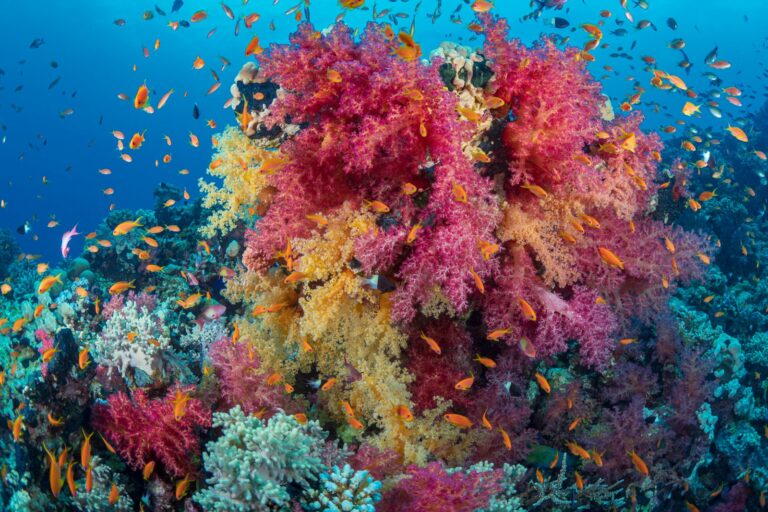
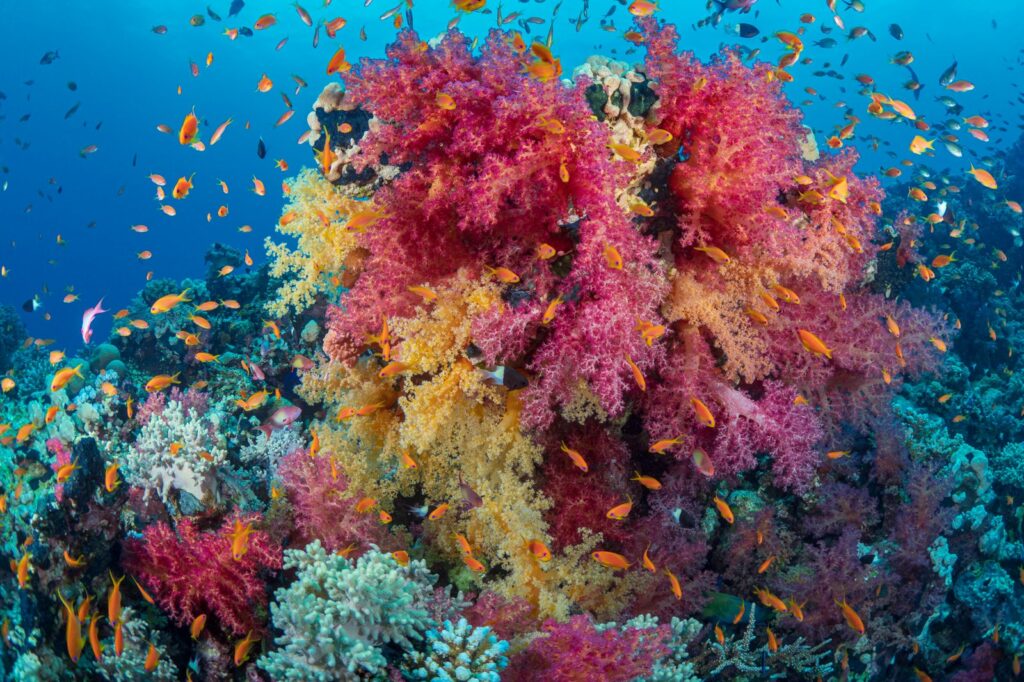
Photo: Pascal van de Vendel / Unsplash (Unsplash License)