
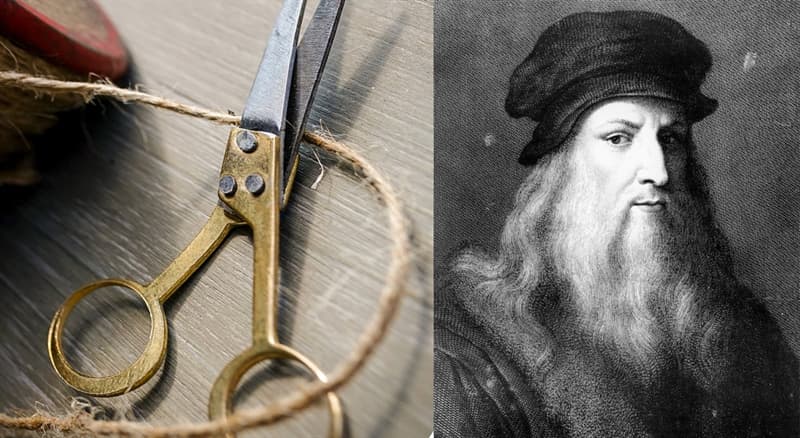
According to the US National Museum of American History, the first pivoted metal blades were produced in Egypt around 1500 BC. Since that ancient innovation, scissors have evolved continuously and are now manufactured in 16 distinct types used worldwide. A review published on December 23, 2019, examined the tool’s long development, noting contributions from the ancient Egyptians, Greeks, and Romans, who employed scissors for cutting hair, cloth, and other materials.
Jane Smith, a historian at the Smithsonian Institution, observed that scissors have become an essential tool in daily life, with their evolution serving as a testament to human ingenuity. The tool is now found in households, offices, schools, hospitals, salons, and farms, used by both children and adults for a wide range of tasks.
Sixteen Types for Specific Tasks
John Taylor, a scissors manufacturer, explained that the different types of scissors are designed to meet specific needs, and understanding their uses is crucial for selecting the right pair. The 16 varieties include grooming scissors, hair cutting shears, hair clippers, gardening scissors, medical scissors, sewing scissors, and all-purpose scissors. Hair cutting shears, also called hairdressing or barber shears, are extremely sharp and feature a tang or finger brace for smooth control.
Gardening scissors such as hedge trimmers, grass shears, and pruning shears serve agricultural and horticultural purposes.
Scissors vs. Shears: Key Distinctions
Emily Chen, a scissors expert, noted that while many people use the terms scissors and shears interchangeably, the tools have unique qualities. Scissors have equally sized rings, each accommodating only one finger, and blades shorter than six inches.
Shears, by contrast, have one small ring and one larger ring that fits two or more fingers, with blades longer than six inches and an extending finger rest or tang. The Scissors Association confirmed that the main difference lies in size and design, with shears being larger and more heavy-duty.
Steel Quality Determines Performance
The quality of scissors depends on the type of steel used. The Japanese Scissors Association stated that Japan stainless steel is considered the best in the world for its high quality and durability. However, the US Consumer Product Safety Commission warned that even high-quality scissors can rust or stain if not properly maintained, as stainless steel is not 100% resistant. The Steel Association explained that steel categories are determined by the amounts of cobalt, vanadium, and titanium present.
ATS-314 is the highest grade, followed by V-10G, V-10, and V-1.
Choosing and Maintaining Scissors
The American Scissors Association noted that scissors are an essential tool whose quality and functionality can significantly impact work and activities. The Scissors Manufacturers Association added that with the right scissors and proper care, individuals can achieve professional results and enjoy long-lasting, reliable service. Selecting the best pair requires considering the type, materials, and intended use, while regular maintenance prevents rust and preserves sharpness.




