
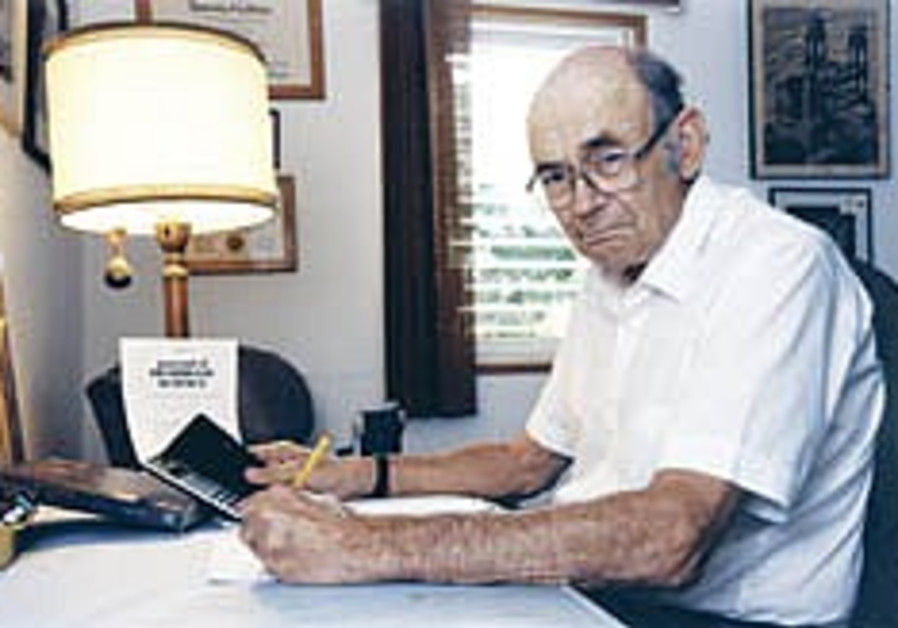
Srinivasa Sourirajan died in Canada in February 2022. He was born in rural India in 1923, and the Ottawa Citizen, as relayed by Smart Water Magazine, called him the father of reverse osmosis. Few people who turn on a tap fed by a desalination plant know his name.
The technical viability of reverse osmosis was demonstrated in the late 1950s at the University of California, Los Angeles. A tribute to Sidney Loeb in the journal Desalination and Water Treatment, written by Yoram Cohen and Julius Glater of UCLA, credits Loeb and Sourirajan, along with a wider team led by Professors Joseph McCutchan and Samuel Yuster.
Two engineers, one membrane
Sourirajan had earned a PhD in chemistry in post-colonial India. His research then took him to Yale University for a second doctorate, in chemical engineering. At UCLA he worked across geophysics and catalysis, but the work that made his name was a membrane. With Loeb he developed cellulose acetate membranes for desalination by reverse osmosis.
Smart Water Magazine says the invention set off the large-scale industrialization of membrane separation. Loeb went on to build the world’s first commercial reverse osmosis desalination plant in Coalinga, California.
Canada and the long tail
Sourirajan moved to Canada in 1961 and spent 25 years as a researcher at the National Research Council. The magazine reports that his work turned the council into an international hub for membrane research in the 1960s, drawing scientists from around the world. Companies such as Dupont picked up reverse osmosis for industrial use partly on the strength of it.
Recognition came slowly. He was nominated for the Nobel Prize in Chemistry three times, received an honorary doctorate from the University of Ottawa in 1994, and entered the American Membrane Technology Association’s Hall of Fame in 2016. The Canadian Chemical Engineering Conference named him one of the top chemical engineers of the twentieth century.
The UCLA authors describe reverse osmosis today as a mature process for turning seawater and inland brackish water into drinking water. The membranes are also used in treating wastewater for reuse in irrigation, industry and groundwater recharge. In their words, the technology has opened up new drinking-water sources in parts of the world where fresh water is scarce.
Sources
- (PDF) A tribute to Sidney Loeb —The pioneer of reverse osmosis desalination research
- Dr. Srinivasa Sourirajan, father of reverse osmosis, passed away




