
Naga Bharath Daka spent his first years in India’s space programme designing avionics modules, then left to work for a California chip company. Today he runs operations at a rocket maker.
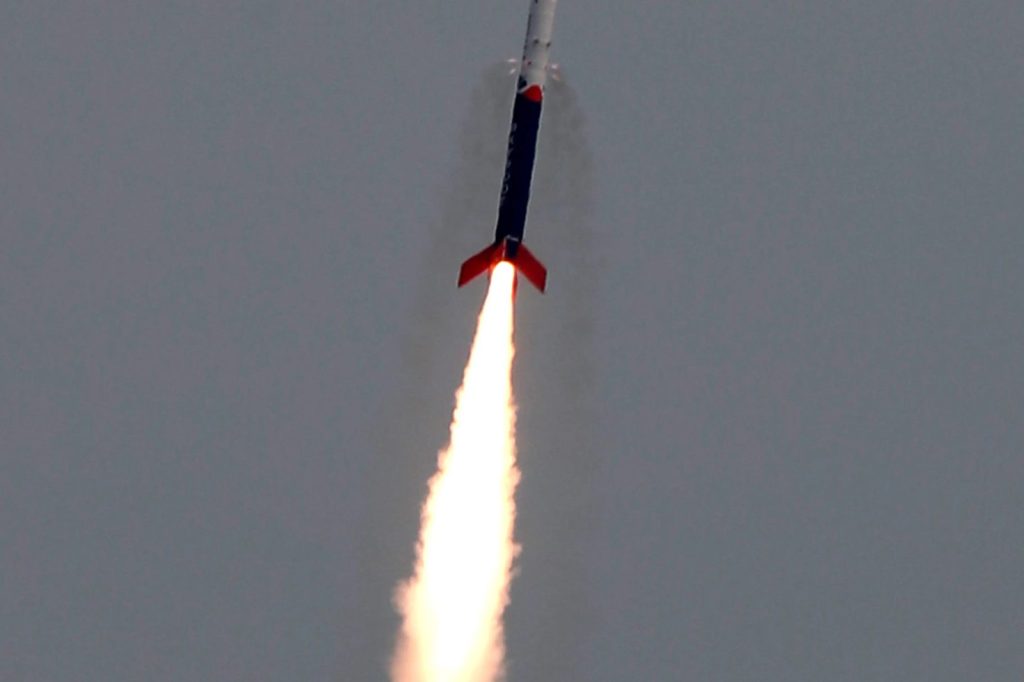
Daka is co-founder and chief operating officer of Skyroot Aerospace, the Hyderabad company that put Vikram-1 into orbit in July 2026. Chief executive Pawan Kumar Chandana is the other co-founder. The Tribune and IBTimes India both describe the pair as former ISRO scientists who started the firm in 2018.
From circuits to rockets
Daka is an alumnus of IIT Madras. He took a bachelor’s degree in electrical engineering there and a master’s in micro-electronics and VLSI design, graduating in 2012. From October 2012 to April 2015 he worked as an avionics engineer at ISRO’s Vikram Sarabhai Space Centre. IBTimes India describes him as a flight computer engineer who designed several avionics modules for Indian launch vehicles.
Then Xilinx, the California semiconductor manufacturer, for three years. In 2018 he joined Chandana and became Skyroot’s chief operations officer, according to the Tribune. His background in avionics, semiconductor technologies and FPGA systems, IBTimes India wrote, has been important to the development of the company’s launch vehicles.
What Skyroot did next
The Tribune traces the company’s record. In 2020 Skyroot conducted India’s first static fire test of a privately built rocket engine, the Raman-1. A test firing of India’s first privately built cryogenic engine, Dhawan-1, followed the next year. In 2022, Mission Prarambh launched the sub-orbital Vikram-S, precursor to Vikram-1. In 2024 the Kalam-250 stage, India’s largest private rocket stage, was tested. And in 2025 the company became India’s first space-tech unicorn after raising USD 60 million.
When Vikram-1 flew from Sriharikota, Daka and Chandana were at ISRO’s Mission Control Centre. Prime Minister Narendra Modi congratulated both by phone. IN-SPACe Chairman Pawan Goenka said the rocket “went all the way up to a 453-km orbit,” well past its stated aim of clearing the tower.
The second flight
Daka has been the company’s voice on what comes after. The next mission, he told ETV Bharat in an interview published on September 28, 2026, is planned before the end of the year. “The key focus for the company currently is to be able to repeatedly and reliably produce more Vikram-1 rockets,” he said. He sees potential to reach “possibly to around one or two launches a month over the next two years,” and said “there is no shortage of demand; the challenge now is how well, reliably, and quickly we can scale up our launch cadence.”
Speaking to Business Standard, he said the first two Vikram-1 flights are demonstration missions, with commercial operations starting from the third. The first flight showed where the vehicle could improve, and engineers are working on the stage-separation mechanism. Skyroot has agreements with US-based Reflex Orbital for two launches and with HEX20 for three.
A larger vehicle is also in the works. Vikram-2 is under active development, Daka said, with a debut hoped for towards the end of 2027. He also credited ISRO’s launch pad and testing facilities, and the policy that opened public infrastructure to private companies, for the pace Skyroot has kept.
Sources
- Pawan Chandana and Naga Bharath Daka: The ex-ISRO scientists behind India's Vikram-1 launch | The Tribune
- Pawan Chandana, Bharath Daka: The duo behind India's historic Vikram-1 mission | IBTimes India
- Interview | Skyroot Co-Founder Reveals Plans To Scale Vikram-1 Launches And Develop New Rockets | ETV Bharat
- Skyroot Aerospace Targets Commercial Rocket Launches From Early 2027 | Lapaas Voice




