
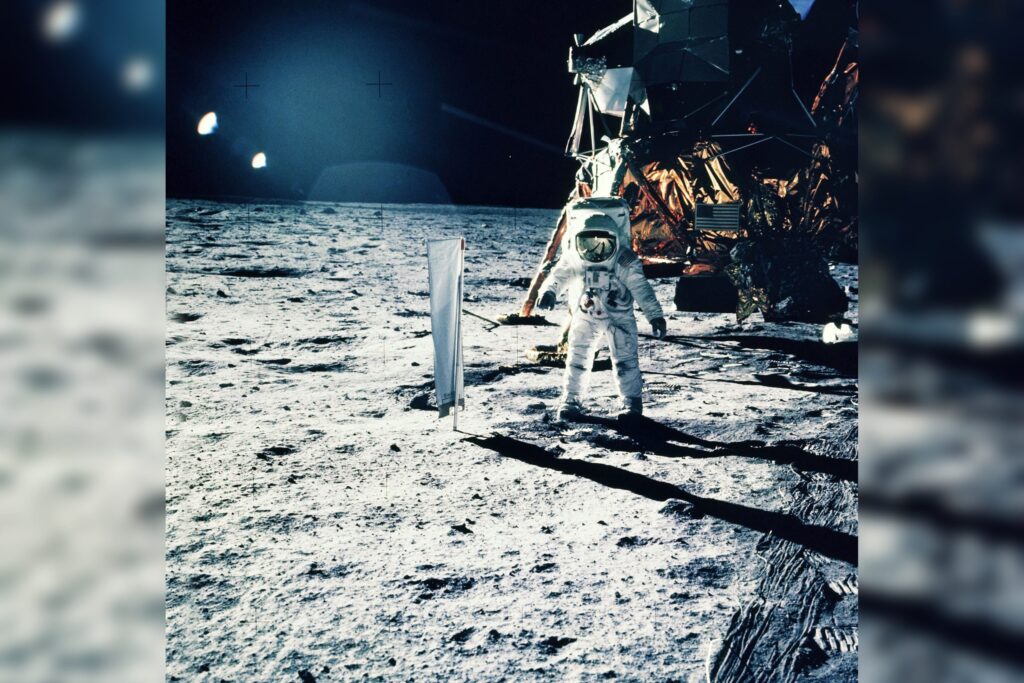
July 20, 1969, 10:56 p.m. ET: Neil Armstrong put his boot into soft gray regolith and said the sentence every television on Earth was waiting for: “That’s one small step for man, one giant leap for mankind.” Fifty years of hindsight later, Business Insider’s photo retrospective of the mission still reads like an argument that Apollo 11 was NASA’s single greatest feat. The argument is easy to make. It nearly did not happen, twice over.
An eight-year promise, paid in full
The commitment came in 1961, when President John F. Kennedy told Congress “this nation should commit itself to achieving the goal, before this decade is out, of landing a man on the moon and returning him safely to the Earth”. He added a warning that held up: “No single space project in this period will be more impressive to mankind, or more important for the long-range exploration of space; and none will be so difficult or expensive to accomplish.” Eight years and $25.4 billion later, the bill was settled.
The road killed first. Apollo 1 ended in 1967 when all three astronauts, Gus Grissom, Edward White and Roger Chaffee, died in a capsule fire during a pre-launch pad test. NASA said the design changes forced by that accident made later Apollo craft safer. Rehearsals followed: Apollo 8 carried a crew into lunar orbit, Apollo 10 within 50,000 feet of the surface, and Armstrong practiced the descent on a Lunar Landing Research Vehicle first flown in 1964, ejecting seconds before a 1968 crash of the test rig. In 1962, Kennedy had noted the country was paying 50 cents per week “for every man, woman, and child in the United States” for the program.
Four days across, and a computer that quit
The 363-foot Saturn V rose from Complex 39 at Kennedy Space Center in Florida on July 16, 1969, lifting off at 9:32 a.m. ET with 7.5 million pounds of thrust, while crowds camped on the beaches to watch. Four days later Michael Collins aligned the hatches of Columbia and the Eagle lander so Armstrong and Buzz Aldrin could drop toward the surface. Chaos met them: the guidance computer crashed and Armstrong retargeted the landing at the last minute. They touched down safely after a few tense minutes.
Aldrin followed Armstrong out, joking that he was “making sure not to lock it on my way out”. Over two and a half hours outside they bagged samples, shot photographs and deployed a Swiss aluminum-foil solar wind panel, four seismometers and a laser reflector that Earth scientists still shot beams at. Armstrong called the dust “fine and powdery”, clinging “like powdered charcoal to the sole and sides of my boots”. Aldrin’s description was shorter: “magnificent desolation”.
Home by way of Hawaii
The Eagle itself never came home. Left in lunar orbit after the crew rejoined Collins, its fate, in NASA’s dry phrase, was that “It is assumed that it crashed into the lunar surface sometime within the following one to four months”. The crew splashed into the Pacific near Hawaii on July 24, met by Navy swimmers in biological isolation garment suits, then held 21 days of quarantine against possible lunar contagions, with President Nixon dropping by the USS Hornet. Freed on August 13, they got a Broadway ticker-tape parade so heavy that The New York Times reported the confetti was “so dense that the astronauts could hardly see”. NASA flew Apollo missions for two and a half more years, sunk $100 billion into the International Space Station over the following decades, and has sent no human back to any moon or planet since December 1972.
Sources
- Apollo Moon Landing Photos From 1969 — How NASA Pulled It Off – Business Insider
- Moon Landing: Humanity's Greatest Leap Beyond Earth | PopAi Presentations




