
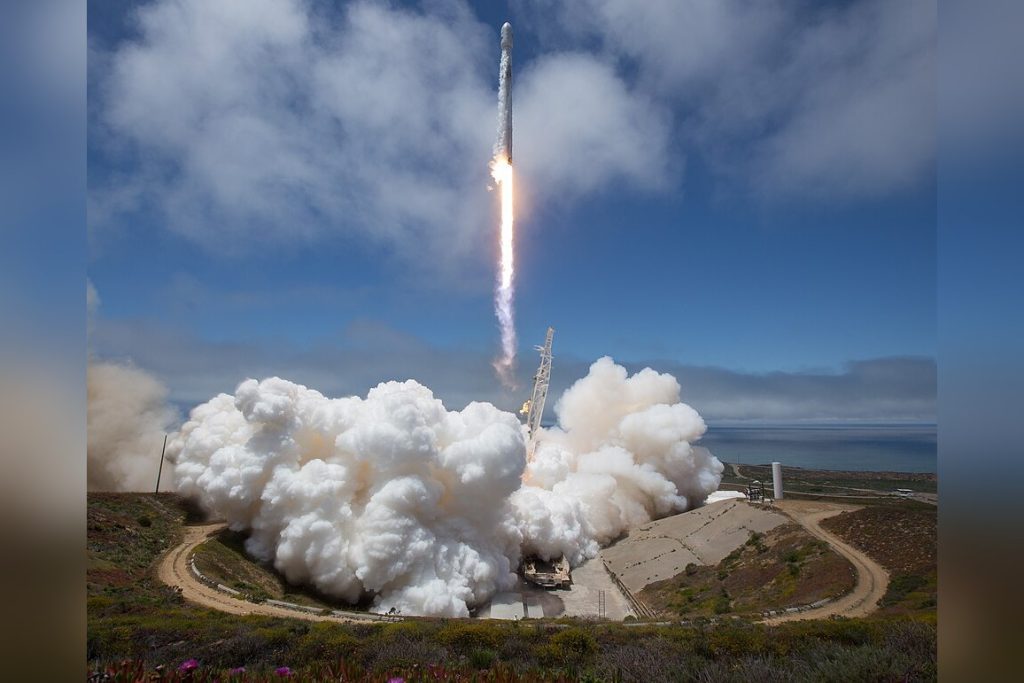
A Starlink satellite does not drift off to a quiet graveyard when its working life ends. It is steered down into the atmosphere and burned to nothing. SpaceX did that 260 times from December 1, 2025 through May 31, 2026, according to the latest semiannual report the company filed with the U.S. Federal Communications Commission.
Of the 260, 176 belonged to the first generation of Starlink spacecraft. The other 84 were second-generation units. The filing also lists another 349 satellites that were decommissioned in the same six months and are expected to be disposed of in the coming months.
How a satellite is brought down
The mechanism is simple in outline. Each satellite is designed to last about five years, which lets SpaceX swap in newer models as the old ones run low on fuel. At the end, the spacecraft spends what propellant it has left to lower its orbit. Thin air at that height drags on it, and the lower it falls, the denser the air gets and the harder the drag pulls. Friction heats the hardware until it breaks apart and burns up.
SpaceX has also described a plan to aim these descents at remote stretches of ocean, away from populated areas and busy shipping and flight routes.
Why not catch them and bring them home? The company says retrieval is technically impractical and financially unviable. First-generation units weigh roughly 573 to 650 pounds, and second-generation versions weigh about 1,764 to 2,756 pounds.
A fleet that never stops turning over
Starlink now operates more than 10,000 satellites, by far the biggest constellation in orbit, so retirements are a daily chore rather than an occasional event. Tracking data compiled by astrophysicist Jonathan McDowell shows 1,357 Starlink satellites have re-entered the atmosphere and burned up so far.
SpaceX is also changing where the fleet sits. Earlier this year it said it would bring some 4,400 satellites down from about 550 kilometers to about 480 kilometers. At the lower altitude, a dead satellite should fall out of the sky faster on its own, and the spacecraft share the space with fewer tracked debris objects and planned constellations.
Growth continues at the same time. In January the FCC approved 7,500 additional Gen2 satellites, and SpaceX has long talked about a constellation that could eventually reach 42,000.
The atmospheric question
Burning a satellite leaves no debris falling to the ground, but researchers have asked what the vapor does higher up. They have urged further studies and regulation of the environmental effects of satellites.
The regulatory backdrop is awkward. The FCC has long left satellites out of environmental reviews, reportedly out of concern that rules might slow the space race. Any such review would likely fall under the National Environmental Policy Act. The commission is now formally proposing “that space-based operations be excluded from NEPA because they are ‘extraterritorial activities’ with effects located entirely outside of the jurisdiction of the United States.” That proposal has not yet been approved.
Sources
- SpaceX Confirms Controlled Deorbit of 260 Starlink Satellites Over Six Months in Major Cleanup Operation | Fingerlakes1.com
- SpaceX vaporizes 260 Starlink satellites in six months using Earth's atmosphere — new environmental concerns emerge over burning 2,700-pound orbital data centers, FCC seeks to exempt satellites from regulations
- Elon Musk's SpaceX Deorbits 260 Starlink Satellites in Six Months, With Hundreds More Set to Burn Up




