
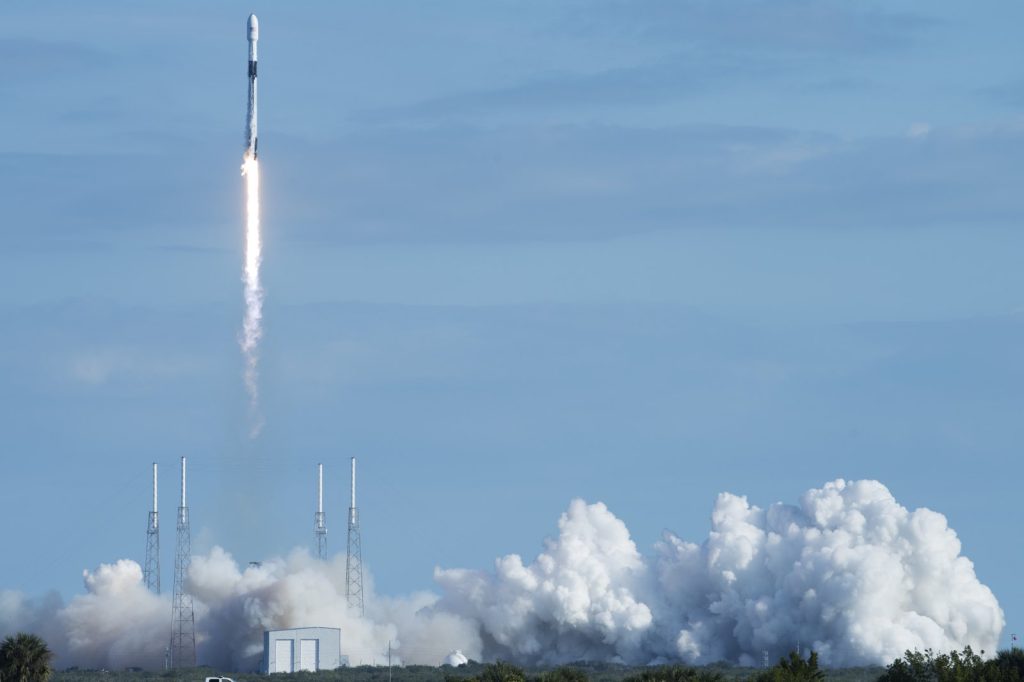
Police in Poland spent Wednesday gathering and analysing debris that fell across a broad swath of the countryside after a SpaceX Falcon 9 launch vehicle broke apart during re‑entry on the night of 19 February. By the following morning, officials were already on site, treating the area as both a scientific recovery zone and a public‑safety operation. The recovered pieces are primarily fuel tanks that survived the fiery descent, an outcome that has prompted a detailed investigation into why the hardware did not disintegrate as intended.
Falcon 9 rockets are built for reuse, a design that has lowered launch costs and reshaped the commercial space sector. Reusability, however, requires components to withstand the extreme heat and stress of re‑entry, and the intact tanks now present a technical puzzle for engineers.
SpaceX has not released a statement regarding the cause of the breakup. Investigators will focus on determining why the vehicle fragmented in the first place, since a controlled re‑entry normally results in most of the rocket burning up over the ocean. The presence of metal on Polish soil instead of water marks a deviation from standard procedure.
Each recovered tank will be examined for structural weaknesses, heat‑related damage, or possible manufacturing defects. Scratches, scorch marks and other surface features are expected to provide clues about the forces the rocket endured.
The data gathered will be fed back to SpaceX to inform design improvements and to help prevent a repeat of this incident. The event also raises broader concerns beyond engineering. Residents who witnessed the falling debris reported seeing a piece of advanced technology descend from the sky, prompting questions about liability for property damage or personal injury, as well as the adequacy of warning systems for nations that may lie in the path of falling rocket parts. Those issues remain unresolved as space traffic continues to increase.
Poland is not the first country to confront unexpected space debris; similar incidents have occurred elsewhere. The typical response involves securing the area, retrieving the hardware, and conducting a technical analysis.
What differs now is the frequency of such events, a by‑product of the growing number of launches worldwide. SpaceX has long argued that reusability is essential for making space travel routine, and routine implies reliability. A crash of this nature tests that claim, and the company will need to demonstrate that the failure was an isolated incident rather than evidence of systemic problems.
Polish officials are cooperating with SpaceX and are likely coordinating with U.S. regulators as the investigation proceeds. The tanks will be photographed, catalogued and may be returned to the company for further study.
While some findings will become public, proprietary technology and the ongoing nature of the inquiry will limit the details released. Authorities have urged the public to avoid handling any recovered material and to report sightings promptly. Although the tanks are inert, the circumstances of their descent underscore the inherent risks of spaceflight.
Even the most advanced engineering can result in fragments landing in foreign fields, reminding stakeholders that space remains a challenging frontier.




