
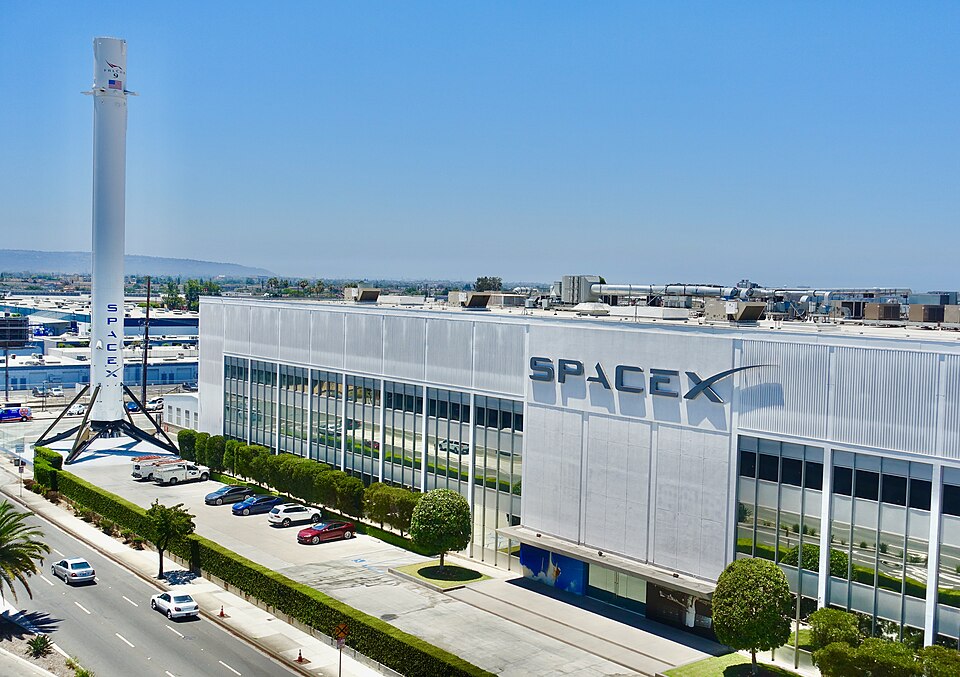
The paperwork landed on May 20. SpaceX, the Starbase, Texas rocket and internet company run by Elon Musk, publicly filed for its initial public offering, with the stock set for a dual listing on Nasdaq and Nasdaq Texas as SPCX.
Sasha Richie reported in Yahoo Finance that Nasdaq Texas, the new Dallas venue, is lining up for “the hottest IPO of the year”, and that Musk’s space exploration company is expected to deliver “the biggest stock market debut ever”. Bloomberg reported in April that SpaceX had filed confidentially and might seek a valuation above $2 trillion. For scale: Nvidia, the world’s most valuable company, trades above $5 trillion, and Tesla sits ninth at roughly $1.5 trillion.
What the filing shows
The S-1, a 280-page preliminary prospectus, counts $18.67 billion in revenue for 2025 against a net loss of $4.94 billion. A filing breakdown published by PJFP names Goldman Sachs, Morgan Stanley, BofA, Citigroup and J.P. Morgan as lead bookrunners, backed by a syndicate of 22 firms.
Starlink is the engine. The connectivity arm serves 10.3 million subscribers in 164 countries and has about 9,600 satellites in orbit, with consumer subscriptions making up more than 60% of its revenue. Musk keeps control regardless: Class B stock carries 10 votes a share and picks a majority of the board, and removing him from the CEO or chairman job requires a separate Class B majority vote. His base salary is $54,080, unchanged since 2019.
The prospectus folds in Musk’s artificial intelligence venture, xAI, acquired in a deal that valued the combined company at $1.25 trillion. That segment drove a $4.28 billion loss in Q1 2026, on $7.7 billion of quarterly capital spending for compute.
The Mars clause
Among the stranger items in the paperwork: Musk was granted roughly 1.3 billion performance-restricted shares in January and March 2026, vesting against market-cap milestones that run from $500 billion to $7.5 trillion. The top tranches depend on a lasting Mars settlement of one million residents and on off-planet data centers producing 100 terawatts of annual compute.
The offering’s total addressable market pitch reaches $28.5 trillion, and the risk factors range from anti-satellite weapons to cascading orbital debris. No valuation or share count for the deal itself was in the public filing, so Bloomberg’s $2 trillion figure remains a report, not a term sheet.
An exchange betting on Texas
Nasdaq Texas won SEC approval in March, becoming the third big exchange to plant a flag in North Texas, following the Texas Stock Exchange and NYSE Texas. It marked the approval at the Alamo in San Antonio with five chief executives slated as the first dual listings and Governor Greg Abbott in attendance. Rachel Racz, who runs listings for Nasdaq’s Texas division, says the goal is to bring global capital to the state.
Musk has spent years moving his companies’ legal homes to Texas, shifting Tesla and SpaceX headquarters there and reincorporating both. The SPCX listing would put the state’s newest exchange at the center of the largest debut it will likely ever host.
Sources
- SpaceX to dual list on Nasdaq Texas with symbol SPCX as it files to go public
- SpaceX S-1 IPO Filing Breakdown, Ticker SPCX on Nasdaq and Nasdaq Texas, xAI Integration, Musk's Trillion Share Mars Pay Plan, $18.7B Revenue, and the 100 Gigawatt Orbital AI Compute Bet – PJFP.com




