
HOBART — Tasmania built its identity on renewable energy. Hydroelectric dams, wind farms, a grid that runs mostly green. That identity is about to collide with the appetite of artificial intelligence.
Firmus Technologies wants to build three AI data centres somewhere on the island. The company has not named the exact locations.
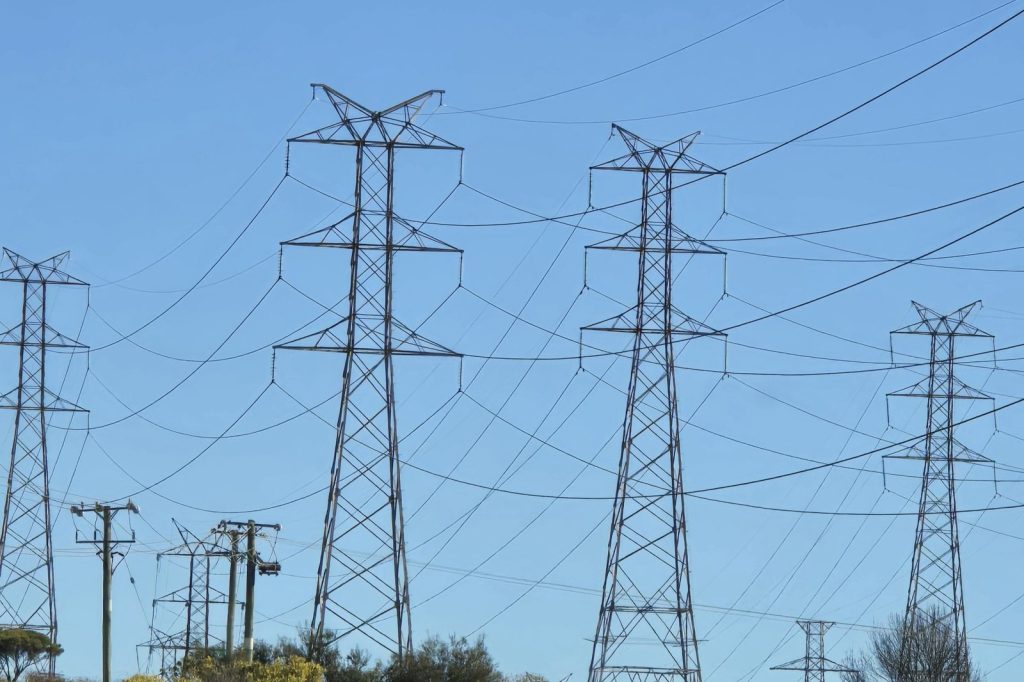
But the Tasmanian state government has confirmed what it will take to run them: more than 400 megawatts of electricity. Four hundred megawatts is not a small number. It is a number that changes the conversation about what the state’s grid can do.
For context, Tasmania’s entire hydroelectric system — the backbone of its power supply — has a total generating capacity of roughly 2,600 megawatts. One company asking for 400 megawatts for three facilities is asking for something close to 15 percent of that.
No one in government or industry has said the grid can handle it without strain. Firmus has been doing interviews. CEOs are talking up the projects, trying to sell the vision.
But the basic arithmetic is not lost on residents or local officials. A single data centre complex demanding hundreds of megawatts is a scale of demand Tasmania has never faced. The state has long sold itself as a clean energy haven.
Cheap hydro power attracted industry before. But AI data centres are different.
They run 24 hours a day, seven days a week. They do not throttle down at night or on weekends. They eat power constantly.
The government is backing the proposal. That much is clear.
But backing it and making it work are two different things. No one has explained where the 400-plus megawatts will come from. No one has said what happens to household power prices if the grid has to absorb that load.
That is the question families are asking. If a massive new industrial user plugs into the same lines that serve homes, something has to give. Either prices rise, or reliability drops, or both.
Tasmania has seen power price spikes before. The memory is not old.
There are other questions too. The communities near the proposed sites — whatever those sites turn out to be — want to know about jobs. Data centres are not labour-intensive.
They need security, some maintenance, a few engineers. Not hundreds of workers.
Not the kind of employment that transforms a town. Environmental impact is another open question. Building three large facilities means concrete, steel, water for cooling, and years of construction.
Tasmania’s landscape is not empty. It has forests, rivers, farmland. Putting industrial infrastructure into that landscape carries a cost.
And then there is the question of what it means to host infrastructure for the global AI industry. Data centres are not local utilities.
They serve companies and customers anywhere in the world. The power they draw is local. The benefits are not necessarily local.
The state government has not answered these questions. Firmus has not answered them either.
The company has announced plans. It has done interviews. But the details — the sites, the power supply, the timeline, the impact on ordinary Tasmanians — remain unspecified.
For now, Tasmania faces a choice. It can say yes to the data centre boom and figure out the consequences later. Or it can slow down, ask the hard questions, and decide whether the price of hosting AI is one it wants to pay.
No one has made that decision yet. The clock is ticking.




