
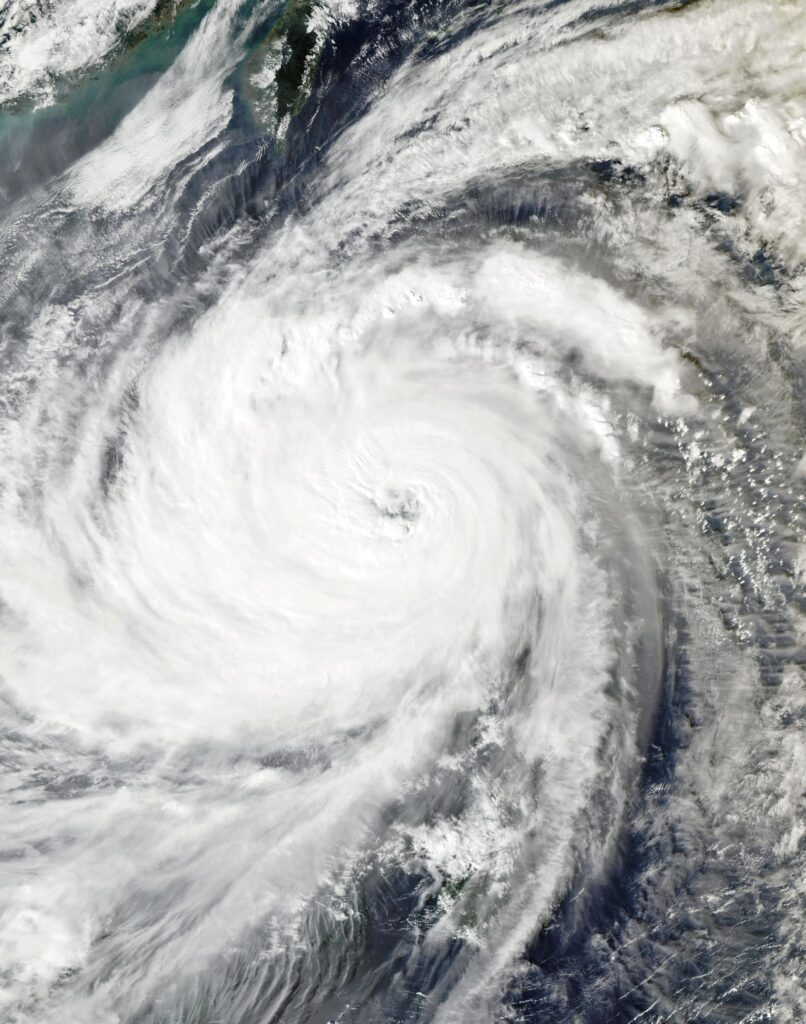
1.4 million people displaced. At least two dead. Nearly 320,000 still in evacuation shelters on Monday. Those are the figures from Typhoon Fung-wong, known in the Philippines as Uwan, after it crossed Luzon and began moving out over the South China Sea.
The storm came ashore in Aurora province on Sunday evening with winds of 185 kilometres per hour (115 miles per hour) and gusts up to 230km/h (143mph). It weakened as it headed northwest, but the weather bureau PAGASA still expected up to 200mm (8in) of rain in La Union, Pangasinan, Benguet and Zambales through Monday, along with gale-force winds in coastal and upland areas.
Two deaths, a thousand damaged homes
Flash flooding in the eastern province of Catanduanes killed one person. In Samar province, a 64-year-old woman died when her house collapsed. Rescuer Juniel Tagarino told AFP her body was pulled from beneath debris and trees in Catbalogan City, and that she was thought to have been evacuating at the time. “The wind was so strong and the rain was heavy,” he said. “According to her family members, she might have forgotten something and went back inside her house.” Two more people were reported injured.
Floodwater tore through at least 132 villages in northern Luzon, and in one of them residents were stranded on their roofs as the water rose. Bernardo Rafaelito Alejandro IV of the Office of Civil Defense said at least 1,000 houses were damaged. He warned that the danger was not over. “While the typhoon has passed, its rains still pose a danger in certain areas,” he said, naming northern Luzon and metropolitan Manila.
In the Bicol region, videos showed streets in Guinobatan, a town of about 80,000 in Albay province, turned into fast-moving channels of water.
Digging out
Recovery work began Monday morning across Luzon, an island of some 64 million people, after the government lifted all travel restrictions. Crews with power tools, saws and heavy machinery went after the wreckage. Thousands of coast guard, police and military personnel took up posts to help evacuees.
In the eastern town of Dipaculao, where the power was still out, the local fire agency shared footage of crews hacking through piles of felled trees and metal roofing with axes to clear a road. Rescue worker Geofry Parrocha told AFP many houses were damaged and some main roads were blocked by landslides. “We couldn’t mobilise last night because the rain was heavy and the volume of water was high,” he said.
Schools and most government offices closed Monday and Tuesday. More than 325 domestic and 61 international flights were cancelled over the weekend and into Monday. The coast guard barred ships from rough seas, leaving more than 6,600 commuters and cargo workers stuck in ports.
A second storm in a week
Fung-wong hit days after Typhoon Kalmaegi crossed the central provinces and killed at least 224 people. Kalmaegi then went on to Vietnam, where at least five people died. President Ferdinand Marcos Jr had declared a state of emergency on Thursday over the damage from Kalmaegi and the expected damage from Fung-wong. Taiwan’s weather administration planned to issue warnings on Monday and Tuesday, with the storm’s centre projected to reach the island by Thursday morning.
Regis Chapman, the World Food Programme’s country director in the Philippines, told NPR that the immediate needs in the hit areas were food, water and shelter, shifting later to livelihood support for people who had lost items such as fishing boats. The agency had prepositioned government food packs before the storm and sent cash to around 40,000 households so they could prepare. Fung-wong was the 21st storm of the year to strike the country, he said, and “we’re seeing increasing severity and frequency of storms.”
Sources
- Philippines assesses damage after deadly Typhoon Fung-wong
- Typhoon Fung-wong batters the Philippines, killing 2 and displacing 1.4 million




