
Of the 59 charges brought against Los Alamos scientist Wen Ho Lee, all but one were dropped. Investigators concluded the leaked nuclear plans could not have come from him. He later received a $1.6 million settlement from the federal government and several news organizations.
The case began in December 1999, when the FBI started looking into how China had acquired plans for a nuclear device. Lee was accused of passing secrets to the Chinese government. Before any charges were filed, federal officials, Energy Secretary Bill Richardson among them, named him publicly as a suspect. Congress held hearings on how the Department of Energy had handled the matter, and some senators proposed moving nuclear security to an independent agency.
The result was the National Nuclear Security Administration. It was first proposed as independent but was set up as a semiautonomous agency inside the department, led by an administrator who reports to the Secretary of Energy.
What the department runs
The DOE oversees national energy policy and production, nuclear power research, the military’s nuclear weapons program, reactor production for the Navy, energy research and conservation. It funds more physical science research than any other federal agency, mostly through its National Laboratories, and it directs genomics work. The Human Genome Project grew out of a DOE initiative.
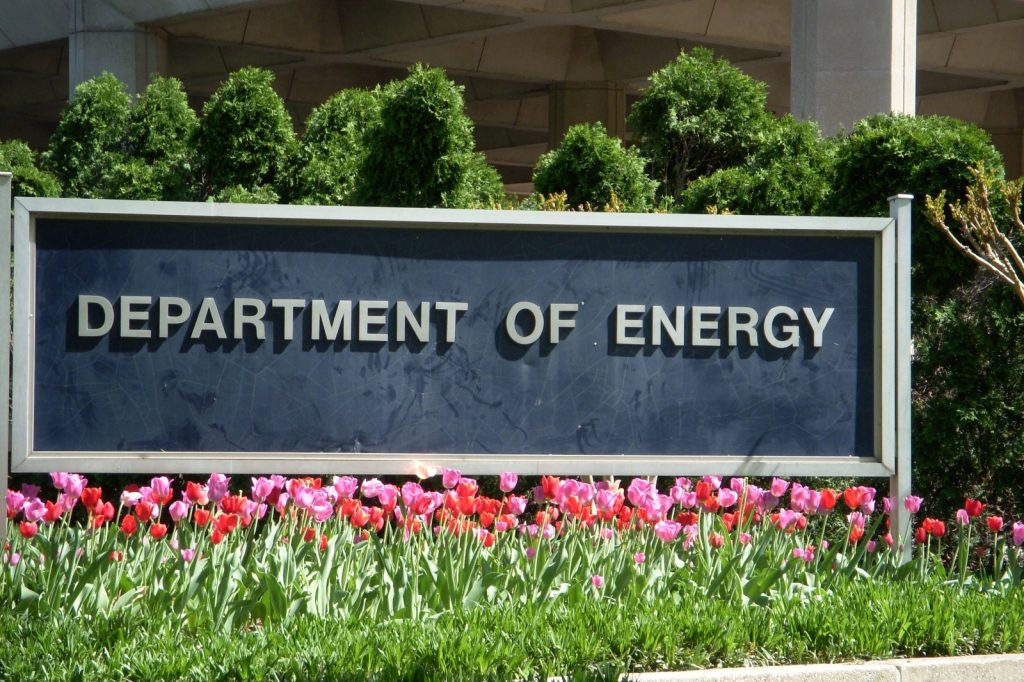
The secretary is a Cabinet member who reports directly to the president. Chris Wright has held the post since February 2025. Headquarters are in the James V. Forrestal Building in southwestern Washington, D.C., with more offices in Germantown, Maryland. In all, the department oversees about 83 field locations, including the labs and weapons production sites.
The NNSA carries federal responsibility for the design, testing and production of all US nuclear weapons, with contractors doing the work at government-owned sites. Los Alamos and Lawrence Livermore handle research, development and manufacturing guidance. Sandia engineers the non-nuclear components. Key components come from the Kansas City National Security Campus, the Savannah River Site and Y-12. Testing happens at the Nevada National Security Site, and final assembly and dismantling at Pantex. Bettis and Knolls Atomic Power Laboratories design nuclear propulsion for the Navy.
Where it came from
The roots go back to the Manhattan Project, started in 1942 under the Army Corps of Engineers. After the war the Atomic Energy Commission took control of the work in 1946. The Energy Reorganization Act of 1974 split the commission into the Nuclear Regulatory Commission and the Energy Research and Development Administration.
The 1973 oil crisis pushed the push to consolidate energy policy. President Jimmy Carter signed the Department of Energy Organization Act in 1977, and the department began operations on October 1 of that year. It absorbed the Federal Energy Administration, the Energy Research and Development Administration, the Federal Power Commission and programs from other agencies. James Schlesinger, a former defense secretary under Presidents Nixon and Ford, became the first secretary. Carter wanted to promote conservation and energy independence and develop alternatives to fossil fuels. After the Three Mile Island accident, he used the department to change management and procedures at the Nuclear Regulatory Commission.
Recent moves
In December 2024 the Loan Programs Office agreed to its largest loan ever, $15 billion at low interest to modernize Pacific Gas & Electric’s hydroelectric system and strengthen transmission lines. The request had started at $30 billion and was cut over concerns about the company’s ability to repay.
In November 2025, President Donald Trump signed an executive order creating the Genesis Mission, in which the department and national labs apply AI and advanced computing to scientific research. On December 18, 2025, the DOE announced collaboration agreements with 24 organizations. That same month the second Trump administration announced a departmental reorganization without Congressional authorization.
In June 2026 the department announced $17.5 billion in loans to speed construction of 10 large nuclear reactors. They will use Westinghouse’s AP1000 design, at 1.1 GW each, and the combined output is projected to power nearly 10 million households.




