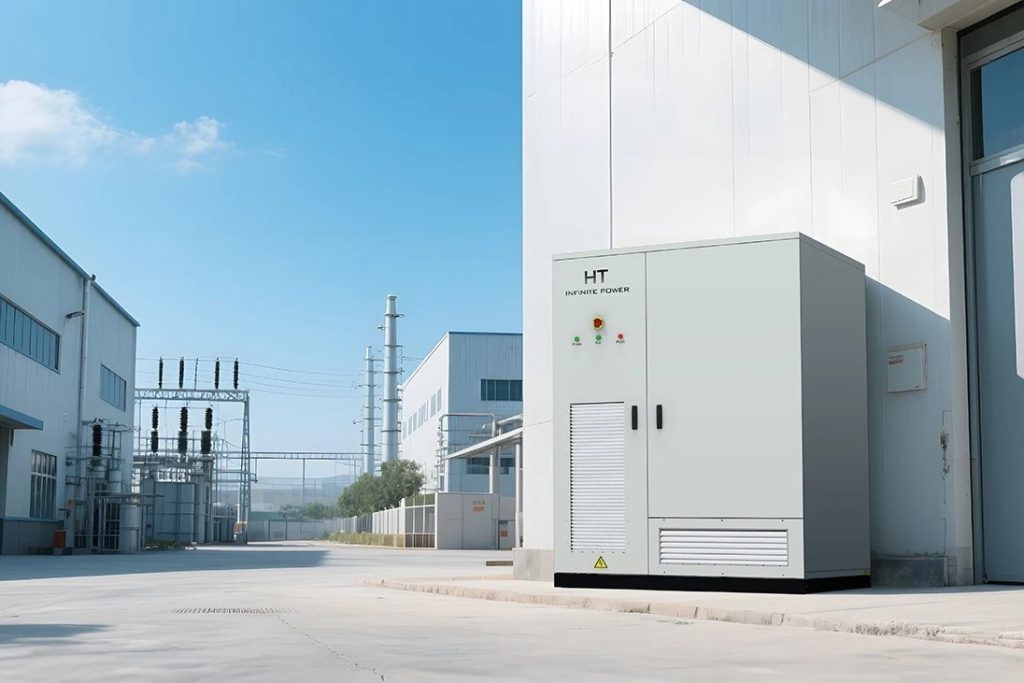
One hundred commercial sites. That is the size of the battery rollout Viridi and Budderfly announced on June 17, 2026, with Viridi supplying its commercial energy storage systems to sites that Budderfly already manages across the United States.
The targets are ordinary businesses: restaurants, retail shops, fitness centers and manufacturers. Budderfly, which describes itself as the fastest-growing energy-as-a-service company in the U.S., supplies the equipment so customers skip the upfront investment. The systems going in are Viridi’s RPSLinkEX units.
Where it stands
Installations are moving ahead in Massachusetts, Connecticut and California, the first phase of what Budderfly calls its strategic expansion. The newest are two custom Budderfly-branded units at the Shelton, Connecticut, headquarters of OEM Controls, which makes industrial control systems. Viridi batteries were already running at three Dunkin’ and 99 Restaurants locations.
Al Subbloie, Budderfly’s CEO, said the deal is “an important milestone in Budderfly’s multi-phase energy storage strategy, which will see deployments to thousands of commercial sites.” So 100 is the opening number.
The safety pitch
Viridi’s selling point is fire behavior. Jon M. Williams, its CEO, told The Battery Magazine the packs are built with a passive design meant to stop thermal runaway from spreading. In a UL 9540A test, slab-mounted and indoors, he said, the pack stayed “inert to the space” once runaway was triggered, giving off no measurable heat, fire, smoke or gas.
He argued that this matters more as storage moves from remote utility sites into buildings where people work. “The intention of letting a BESS burn in place for weeks after an occurrence of thermal runaway should not transfer to occupied buildings,” Williams said. Viridi says its commercial system is among the first and only to be installed in an existing, occupied building.
How Budderfly uses them
Subbloie told the magazine the batteries are not standalone assets. Budderfly installs them alongside efficiency upgrades, solar and intelligent controls, then manages the whole set for the customer. The aim is lower peak demand, lower operating costs and better resilience, without the customer buying or running the hardware.
A larger, connected fleet also lets the company offer grid-responsive services. Subbloie said that approach eases strain on the grid by managing existing assets better, rather than leaning only on new large-scale infrastructure.
Williams, for his part, said the partnership shows that scalable storage can be deployed without trading away safety, reliability or performance.
Sources
- Viridi and Budderfly Scale Commercial Battery Storage to 100 Sites
- Viridi and Budderfly Partner to Deploy BESS at 100 US Sites