
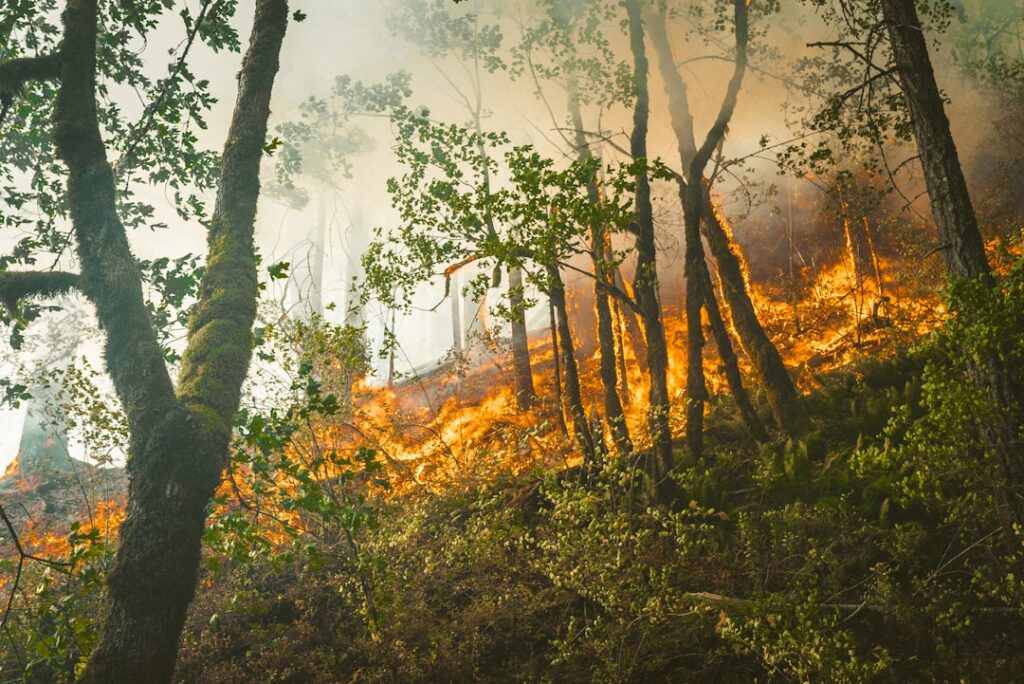
Western Canada Faces Growing Displacement from Wildfires
Wildfires sweeping through British Columbia and Alberta have forced thousands of residents from their homes, creating a deepening displacement crisis that goes far beyond the immediate threat of flames. Evacuation orders have cleared entire communities, leaving people with only what they could carry—pets, essential documents, and a change of clothing—while furniture, photographs, and family vehicles remain exposed to the fire.
The province of British Columbia, home to roughly 5.68 million people, now sees a significant portion of its population on the move or already settled elsewhere. Emergency crews are working around the clock to get people out of danger zones, but extracting residents is only the first step. Securing shelter has become the next urgent challenge.
To meet that need, authorities have opened makeshift reception centres in schools, community halls and sports arenas. Cots are arranged in rows, and volunteers distribute water and sandwiches. The atmosphere in these sites is tense; evacuees do not know whether their houses are still standing or when they might be able to return, and that uncertainty weighs heavily on those displaced.
The rugged geography of British Columbia complicates evacuation efforts. The province’s mix of forests, lakes, mountains, inland deserts and grassy plains creates difficult terrain, and evacuation routes are limited. A fast‑moving fire can sever the only road out of an area, trapping residents. Some have had to abandon vehicles and flee on foot, while rocky coastlines and sandy beaches offer no refuge when wind drives flames toward them.
Alberta is experiencing a similar ordeal. Dry conditions and strong winds have produced ideal conditions for rapid fire spread, and firefighters are stretched thin as they battle multiple blazes across the two provinces. Reinforcements are arriving slowly, and although the Canadian government has pledged additional support, turning those promises into trucks, aircraft and personnel on the ground takes time.
The economic impact is already evident. Businesses in evacuated towns have closed, logging operations have halted, and tourism—a major industry in British Columbia—has come to a standstill. Hotels that would normally host summer visitors are now sheltering evacuees, resulting in lost revenue and missed paychecks. The financial strain extends well beyond the burned areas.
There is also a cross‑border dimension. British Columbia shares its southern border with the U.S. states of Washington, Idaho and Montana. Officials are monitoring the fire lines closely, aware that a shift in wind could push flames or smoke across the international boundary, which would trigger a separate set of emergency responses. American fire crews are on standby, though no one wishes to see that scenario unfold.
As of May 12, 2024, the full scale of the damage remains unknown. Aerial surveys are still incomplete, and some zones are too hazardous to enter. The death toll has not been clarified. What is clear is that recovery will be lengthy; rebuilding homes may take months, while restoring lives will require even more time. For now, the priority is keeping people alive—providing shelter, food, water and medical care—while other concerns can wait.




