
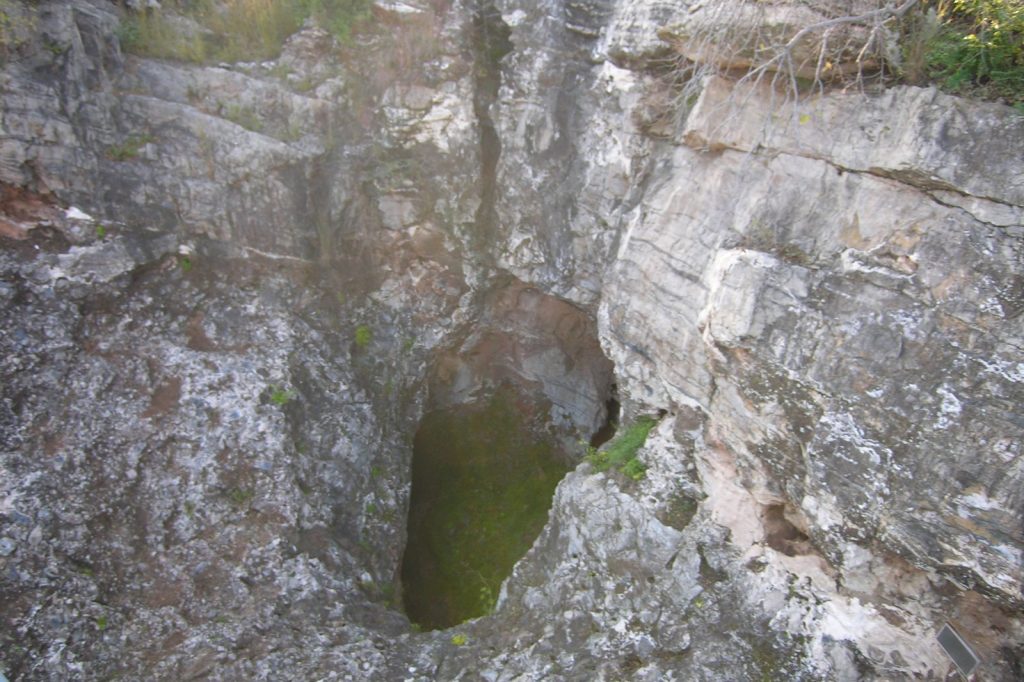
Researchers at the University of Cape Town and the Max Planck Institute for Evolutionary Anthropology have successfully reconstructed the oldest complete human genome ever recovered, dating back approximately 10,000 years. The announcement, made on September 22, 2024, represents a fivefold increase over the previous record, which was a genome from roughly 2,000 years ago. The newly sequenced genetic material belongs to a man and a woman who lived during the Mesolithic period, at the beginning of the Holocene epoch.
Their skeletal remains were discovered in what is now South Africa. The prior record-holder dated to around the turn of the first millennium, meaning these individuals lived eight millennia before that benchmark.
Scientists overcame significant obstacles to achieve this result. Ancient DNA degrades over time, breaking into increasingly small fragments, and contamination from modern human DNA poses a constant risk. The team developed new biochemical methods to isolate the ancient genetic material and employed advanced computational algorithms to reassemble the fragmented sequences into a complete genome.
This success suggests that even older genomes, potentially from early modern humans who coexisted with Neanderthals, may eventually become recoverable. The University of Cape Town, established in 1829 as the South African College and granted full university status in 1918, is the oldest university in South Africa and the oldest in Sub-Saharan Africa in continuous operation.
Currently serving 30,000 students across six campuses in Cape Town suburbs including Rondebosch and the V&A Waterfront, the institution collaborated closely with the German institute to develop novel techniques for extracting and sequencing the degraded ancient DNA. The implications of this work extend beyond setting a new record. Having genomes from 10,000 years ago allows scientists to directly compare the genetic makeup of ancient populations with modern humans.
This comparison can reveal how diseases evolved, how immune systems adapted to new environments, and how populations moved and mixed across continents during a period of dramatic climate change following the last Ice Age. Each reconstructed genome functions as a time capsule of human biological history.
What excites researchers most is the prospect of exploring even deeper time horizons. The techniques developed for this project could be applied to remains from sites across Africa, Asia, and Europe, potentially filling in vast blank spaces in the human family tree. The genetic stories of individuals who lived through the invention of agriculture, the domestication of animals, and the first permanent settlements may soon be told through their DNA.
For now, the man and woman from 10,000 years ago have reclaimed their place in history, offering humanity its oldest known genetic autobiography. Their DNA, once thought lost to time, now speaks across a hundred centuries.




