
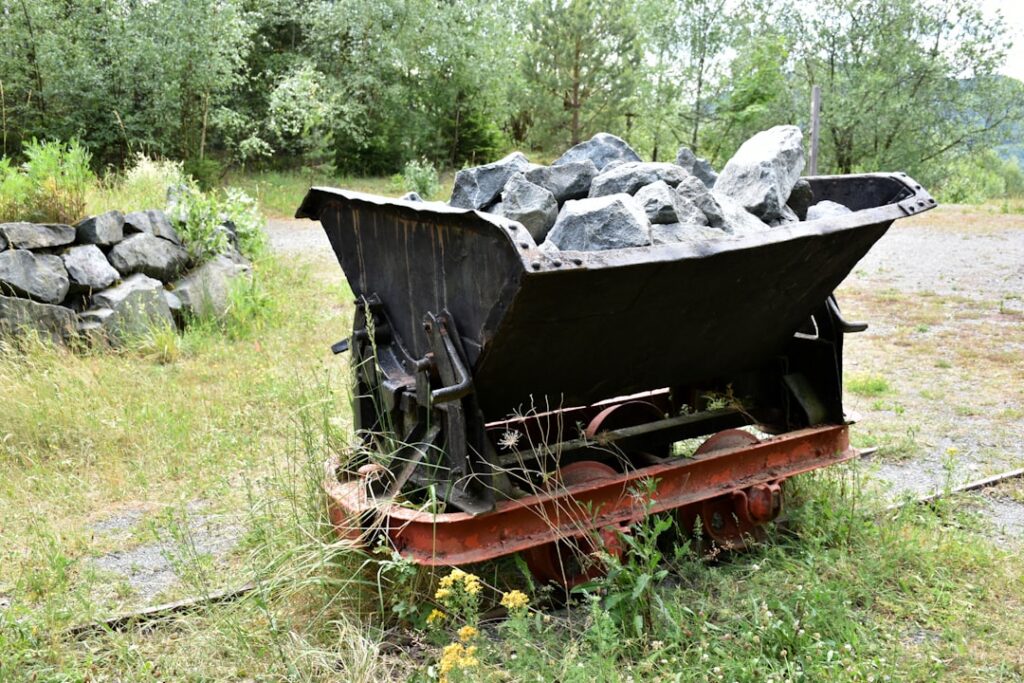
On December 20, 2023, a mining cart left its rails in Jixi, a city in Heilongjiang province situated near the Russian border. The area is known for its coal deposits, and the incident occurred underground where the cart lost control.
Twelve miners were killed and thirteen others were injured in the accident. The official report does not specify whether the cart was transporting personnel or material at the moment of derailment. It also omits details such as the depth of the shaft and the exact time the event took place.
Those particulars remain undisclosed, leaving only the outcome known: twelve families now face a different December. Mining, by its very nature, involves extracting resources from unstable ground under considerable pressure.
The industry supplies materials that cannot be grown or synthesized in a laboratory, including coal, metals, oil shale, gemstones, limestone, chalk, rock salt, potash, gravel, and clay. Every concrete foundation, copper wire, and pane of glass originates from a hole dug into the earth. This relentless demand makes any failure underground especially painful, because the need for what comes out of those tunnels never ceases. The physics of a loaded cart on an underground rail line is unforgiving.
Momentum builds quickly, and a loose bolt or worn brake can lead to a runaway vehicle. The report describes the derailment as an inherent risk—a danger built into the activity itself, not something that can be erased by a memo or a briefing.
While safety protocols can lower the odds, the ground shifts, metal fatigues, and human error persists, keeping the threat ever present. Beyond the immediate loss of life, mining carries environmental costs that accumulate over decades. Operations scar landscapes, drain water tables, and release dust that harms respiratory systems.
The same report notes ongoing concerns about water quality and air pollution in mining regions. These long‑term impacts sit alongside the sudden tragedy of a derailment, forming two parts of the same industry ledger.
Global demand for minerals continues to rise. Every smartphone, battery, and steel beam requires extraction, placing constant pressure on mining companies to deliver. Safety measures exist to counter that pressure, but they are effective only when consistently enforced.
In recent years China has strengthened its mining safety statutes, increased inspections, and closed certain mines. Despite those efforts, accidents still occur.
The Jixi derailment is not an isolated incident; it fits a pattern of underground mechanical failures that have produced loss of life before. The report offers no speculation about negligence and does not name the company or operators involved. It simply states the fact: a cart ran off the tracks, and people died.
The thirteen injured are receiving treatment in hospitals. The deceased are gone.
The mine will likely be suspended pending an investigation, after which new regulations may be announced. Then the cycle will repeat—another reminder that the world’s appetite for what mines produce does not diminish, and the underground work remains hazardous. The accident in Jixi was not a surprise; it was a tragedy that was always possible.




