
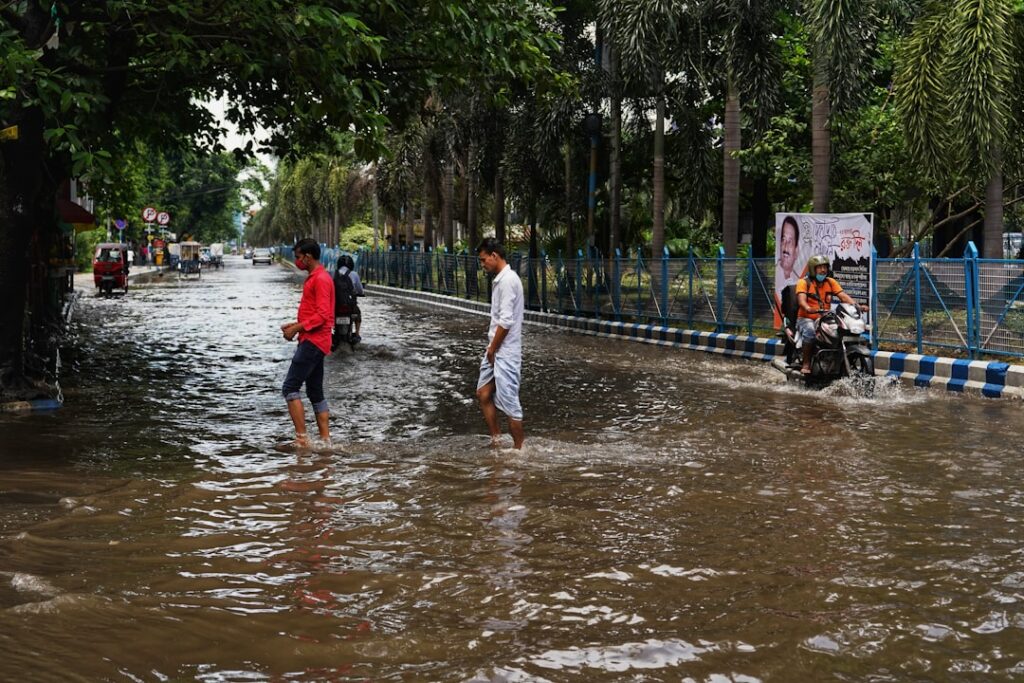
Northern India’s Himalayan foothills, characterized by steep slopes and intense monsoon rains, have been struck by deadly landslides and flooding. Fifteen people have died in the disaster, a stark reminder of the region’s vulnerability.
However, the full scope of the risk extends far beyond this immediate tragedy. India occupies a precarious geographic position. The Indian Ocean, Arabian Sea, and Bay of Bengal border three sides of the nation, while the Himalayan mountain range forms its northern frontier, separating it from China, Nepal, and Bhutan.
This range is geologically young, steep, and inherently unstable. When monsoon rains saturate the soil, hillsides fail and water cascades into narrow valleys, often with villages directly in its path.
The dead represent an immediate cost, but the broader danger is more difficult to quantify. As the world’s most populous democracy, India has over 55,000 years of human habitation shaping its subcontinent. Ancient civilizations flourished here, colonial rule came and went, and independence arrived in 1947.
Today, more people live within India’s borders than any other country. This density collides with geography every monsoon season.
Rapid urbanization and industrialization are accelerating the crisis. Cities expand, roads cut through hillsides, and forests are cleared for farmland and construction. Each felled tree, excavated slope, and blocked drainage channel represents a gamble against the weather—a gamble the weather continues to win. The Himalayan region is especially susceptible because its steep terrain and heavy rainfall create a lethal combination.
The soil cannot hold, and water has no path but downward, carrying debris and destruction. The stakes are not limited to immediate survival during the next storm.
They involve the long-term habitability of entire regions. Deforestation removes natural anchors for soil, pollution clogs rivers and streams, and development encroaches on floodplains and unstable slopes. The same forces driving India’s economic growth are deepening its exposure to disaster.
The country faces a fundamental contradiction: it must build, house, feed, and employ a vast and growing population, but how and where it builds determines whether the next landslide kills 15 or 150. Sustainable environmental practices are not an afterthought; they represent the difference between a bad season and a catastrophe.
India’s deep history—from early human arrival more than 55,000 years ago through empires and transformations—has always been governed by the physical landscape of mountains, coasts, and monsoons. Those terms are not negotiable. Fifteen people are dead.
Their families grieve. The aftermath involves rescue, relief, and rebuilding.
But the essential work lies before the next rain. The question is whether India can match its ambition with restraint, whether it can develop without dismantling the natural systems that sustain its people. That is the stakes.
That is what this event makes plain.




