
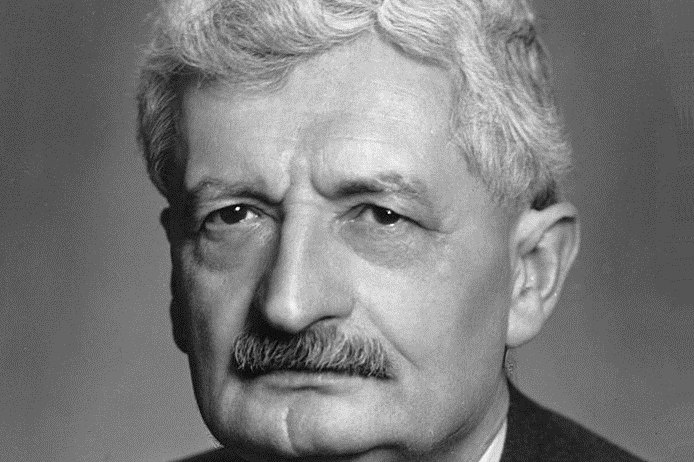
NUREMBERG, July 15 — The mechanics of space-based illumination, a concept that has flickered in and out of scientific and military feasibility studies for a century, trace a direct line back to a single 1923 book. Hermann Oberth, a physicist and engineer born in 1894 in what was then the Kingdom of Hungary and later a naturalised German, proposed the core idea in ‘The Rocket into Interplanetary Space’: large mirrors positioned in orbit to reflect sunlight down to Earth.
The catch is that the idea, while elegant on paper, has always required a leap in launch capacity and materials science that was decades ahead of its time. Oberth is routinely named alongside Robert Goddard and Konstantin Tsiolkovsky as a founding father of rocketry and astronautics.
His 1923 work laid out the mathematics and the physics for spaceflight, but the mirror proposal was the part that read like science fiction. The concept was simple: capture sunlight in orbit, where it is constant and unfiltered by the atmosphere, and redirect it to the planet’s surface for illumination or energy collection. Follow the money and the engineering challenge here: the mirrors would need to be enormous, lightweight, and precisely steerable, a combination that remained out of reach for decades.
Oberth’s ideas did not die in the archives. They influenced the Russian Znamya experiments, a series of tests conducted decades later that attempted to deploy orbital reflectors from the Mir space station.
Those experiments demonstrated the basic principle was sound, but they also exposed the practical difficulties of unfurling large reflective structures in space and controlling their beam on the ground. The Znamya project was eventually shelved, but the underlying physics Oberth described remained valid.
The Wartime and Postwar Trajectory
Oberth’s career took a sharp turn into applied rocketry during World War II, when he worked on the V-2 rocket program. This was not a theoretical exercise; the V-2 was the first long-range guided ballistic missile, and the engineering knowledge gained from its development was immense. After the war, that knowledge was split between the victorious powers.
Oberth himself eventually moved to the United States, where he advised NASA on the Apollo program. The mechanics here are direct: the man who wrote about orbital mirrors in 1923 was also in the room when the United States was figuring out how to put a man on the Moon.
He died in 1989 in Nuremberg, Germany, at the age of 95. By that point, his early work on space mirrors had been largely overtaken by the more immediate priorities of propulsion and life support systems. But the idea never fully went away.
It resurfaces periodically in academic papers and in proposals for space-based solar power, where the mirror concept is adapted to collect energy and beam it to Earth as microwaves rather than as reflected light.
What the Current Moment Holds
On closer reading of Oberth’s original proposal, the distinction between illumination and power generation was not rigid. He saw the mirrors as a multipurpose tool. The Znamya experiments tested the illumination angle; the solar power angle remains a live research topic, though it faces the same fundamental hurdle Oberth identified: the cost of lifting large structures into orbit.
The catch is that launch costs have dropped dramatically in the past decade, which changes the economic calculation. The engineering of the mirrors themselves, however, remains a separate problem.
What to watch next is whether any government or private entity attempts a full-scale demonstration. The Russian experiments were small and short-lived. A modern version would likely use lighter materials and more precise attitude control systems than were available in the 1990s.
The physics has not changed since 1923. The economics and the materials have.




