
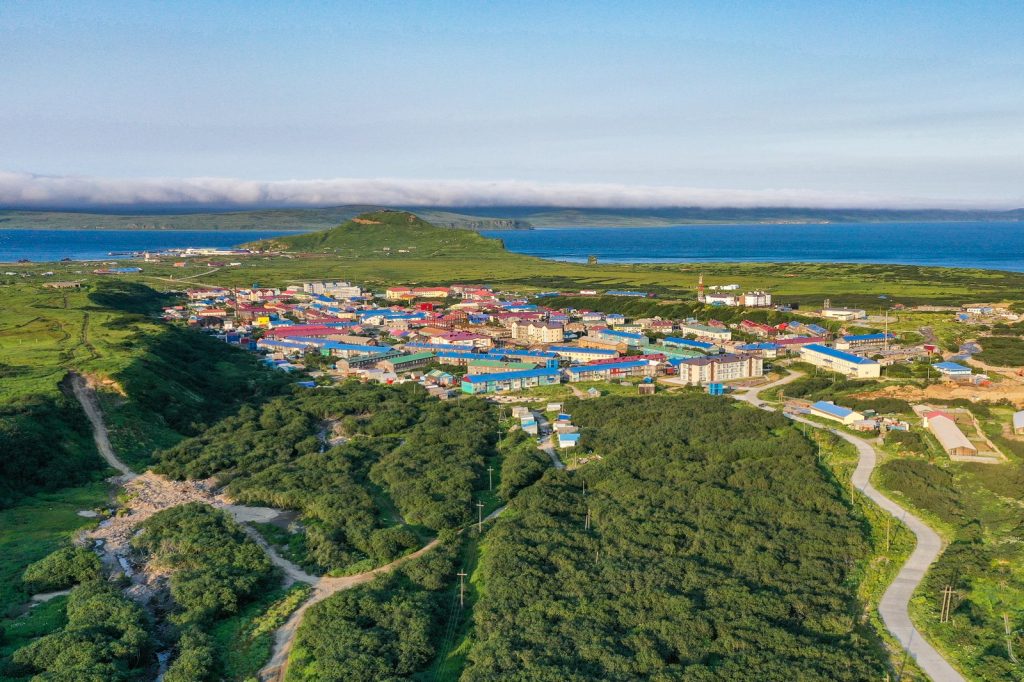
SEVERO-KURIL’SK, August 7 — A magnitude 5 earthquake struck 49 km southeast of Severo-Kuril’sk, Russia, at 14:21 UTC today, according to the U.S. Geological Survey (USGS). The temblor occurred at a depth of 83.854 km, classifying it as an intermediate-to-deep event, which can be felt widely but typically causes less surface damage than a shallow quake of similar size. The USGS, which detected the event through its real-time global seismic monitoring network, issued no tsunami warning.
Earthquakes in the magnitude 5 range are considered moderate and can produce minor to moderate damage near the epicenter.
Seismic Context
The region is no stranger to seismic activity. Over the past two decades, at least 500 earthquakes of magnitude 5.0 or greater have been recorded within roughly 300 km of today’s event. The strongest among them, a magnitude 7.5 quake, occurred in 2020.
Seismologists note that aftershocks are common following an earthquake of this magnitude and may persist for days or even weeks. Residents in the affected area are generally advised to prepare for the possibility of further shaking.
Depth and Impact
At 83.854 km deep, this earthquake falls into the intermediate-to-deep category. Such events often distribute their energy over a broader area, reducing the likelihood of severe surface damage compared to shallower quakes of equivalent magnitude. Nevertheless, the USGS continues to monitor the situation as part of its ongoing global seismic surveillance.
What to watch next: authorities and residents will remain alert for potential aftershocks in the coming days. The Kuril Islands, where Severo-Kuril’sk is located, form part of the Pacific Ring of Fire, a vast horseshoe-shaped zone encircling the Pacific Ocean known for frequent earthquakes and volcanic activity.
This region is characterized by the subduction of the Pacific Plate beneath the North American Plate, a tectonic process that generates significant seismic energy and contributes to the area’s high earthquake frequency. Intermediate-to-deep earthquakes, like the one recorded today, are typical in subduction zones where one tectonic plate dives beneath another. While these events are less likely to cause major surface destruction, they can still pose risks to infrastructure, particularly in areas with older or less resilient construction.
The lack of a tsunami warning suggests that the earthquake did not displace enough seawater to trigger a significant wave, a common concern in coastal seismic events. Residents in seismically active regions such as the Kuril Islands are often accustomed to earthquake preparedness measures, including building codes designed to withstand tremors and public education on safety protocols.
The USGS and other global monitoring agencies play a critical role in providing timely data to help local authorities assess risks and respond effectively to seismic events.




