
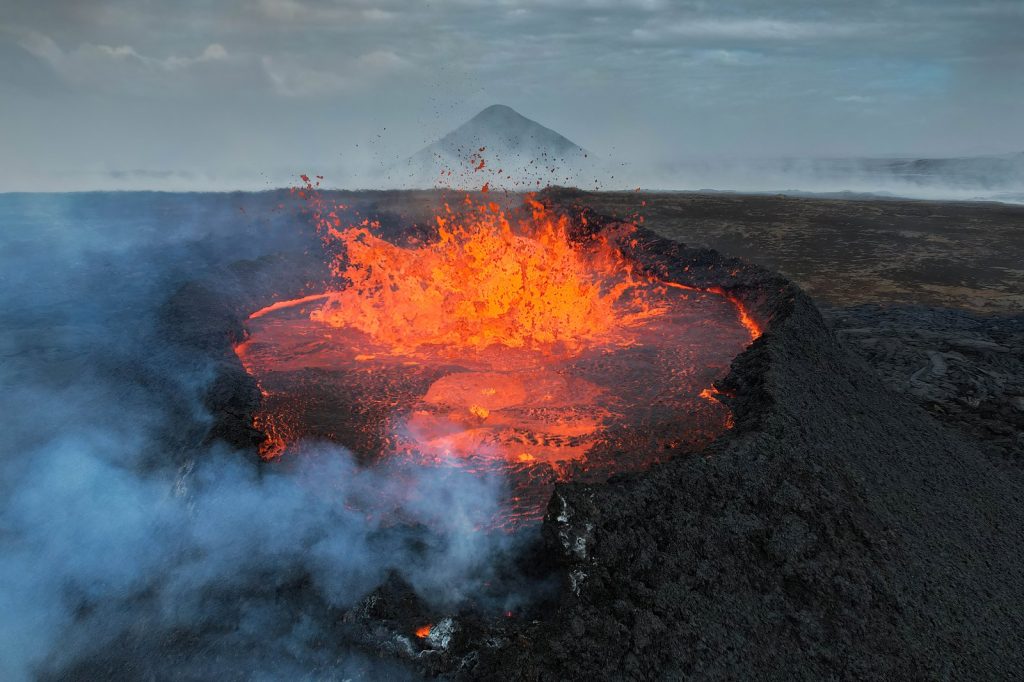
REYKJANES RIDGE, July 7 — A magnitude 5.3 earthquake struck the Reykjanes Ridge early Tuesday, according to the U.S. Geological Survey. The quake hit at 05:55 UTC at a depth of 10 kilometers, the USGS reported. No tsunami warning was issued.
The Reykjanes Ridge is a seismically active region. The record shows that at least 45 earthquakes of magnitude 5.0 or greater have been recorded within about 300 kilometers over the past two decades.
The strongest among them was a magnitude 5.9 event in 2019. At a depth of 10 kilometers, this was a shallow earthquake. Seismologists generally classify events less than 70 kilometers deep as shallow.
Such quakes typically produce stronger shaking at the surface than deeper ones of the same magnitude. Earthquakes in the magnitude 5 range are considered moderate.
They can cause minor to moderate damage near the epicenter, depending on local building standards and population density. According to sources familiar with seismic patterns, aftershocks are common following an earthquake of this size. They may continue for days or weeks.
People in the affected area are generally advised to be prepared for further shaking. The USGS detected the event through its real-time global seismic monitoring network. That network provides continuous coverage of seismic activity worldwide, allowing for rapid location and magnitude estimates.
On the timeline, the July 7 event adds to a pattern of sustained seismic activity along the Reykjanes Ridge. The ridge is part of the Mid-Atlantic Ridge system, where tectonic plates are pulling apart.
This spreading process generates frequent earthquakes, most of them small to moderate in size. The magnitude 5.9 quake in 2019 stands as the largest recorded in the region over the past 20 years. Tuesday’s magnitude 5.3 event is among the stronger ones in that period, though it remains below the threshold for a major earthquake.
Shallow earthquakes pose particular risks because the energy release occurs closer to the surface. A deep earthquake of the same magnitude would typically produce less intense shaking at ground level.
The 10-kilometer depth of this event means the rupture occurred within the Earth’s upper crust. The USGS continues to monitor the region for aftershocks. Their network can detect events far smaller than the main shock, providing data that helps seismologists understand the fault system’s behavior.
For residents and authorities in the region, the immediate concern remains the possibility of aftershocks. While most aftershocks are smaller than the main event, some can be large enough to cause additional damage or pose risks to already weakened structures. The Reykjanes Ridge extends southwest from Iceland.
Its seismic activity is closely watched because of the region’s volcanic and tectonic complexity. The ridge sits atop the Iceland hotspot, where a mantle plume interacts with the spreading plate boundary.




