
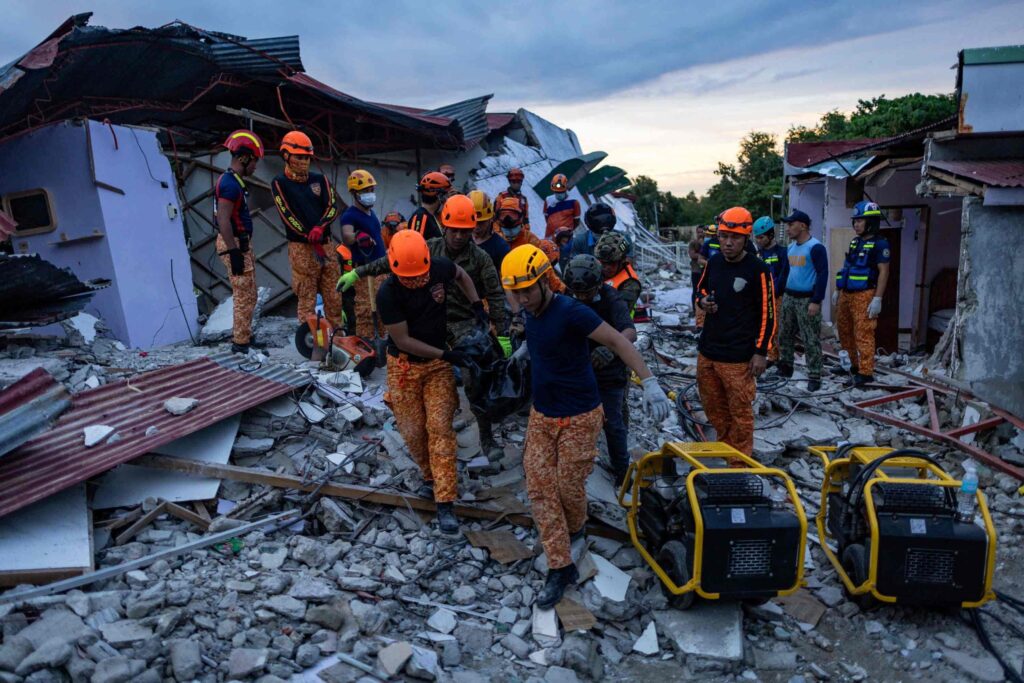
On 17 November 2023, a powerful earthquake struck the southern part of Mindanao, registering a magnitude of 6.7. The tremor caused at least seven fatalities and left two individuals still unaccounted for. Rescue teams have been deployed to locate the missing and to retrieve the deceased, while families wait anxiously for news.
The event underscores the Philippines’ position on a volatile tectonic crossroads. The archipelago sits where several major plates converge, making it one of the world’s most seismically active regions.
Historical records, such as the 1918 Celebes Sea earthquake that reached magnitude 8.3, illustrate the scale of shaking the area can endure. Although the recent 6.7‑magnitude quake is smaller than that 1918 event, it proved sufficient to cause deaths, trigger landslides, and generate soil liquefaction. Beyond the immediate human toll, the quake has altered the physical landscape.
Landslides have buried slopes, while liquefaction has turned previously solid ground into a fluid mixture that can swallow foundations and roadways. These changes are not fleeting; they represent lasting modifications to the local environment.
Southern Mindanao, a region noted for its biodiversity and natural habitats, now faces additional ecological challenges. Sediment washed down from landslides can clog rivers, disrupt fish populations and affect the broader food chain for years to come. Authorities are confronting a dual priority. First, emergency responders continue searching for the two missing persons and conducting recovery operations for the victims.
Second, officials must assess the broader environmental impact, mapping landslide zones and areas affected by liquefaction, and evaluating damage to ecosystems that support the surrounding communities. The quake’s brief shaking—lasting only seconds—contrasts sharply with the decades‑long repercussions it may generate.
The loss of life is irreversible, and the land itself bears scars that will influence reconstruction efforts. Rebuilding in Mindanao will need to consider not only the replacement of homes and infrastructure but also the stabilization of hillsides and the restoration of natural habitats. This incident adds another data point to a long pattern of seismic activity in the Philippines.
Frequent intraplate tremors and occasional larger events demonstrate that future earthquakes are a matter of “when,” not “if.” Consequently, disaster preparedness in the country is not a theoretical goal but a practical necessity, influencing everything from building codes to hillside management. As the region begins the painstaking process of recovery, questions will arise about the resilience of structures, the effectiveness of slope‑stabilization measures, and the readiness of communities for the next shake.
For now, the answers lie amid the rubble and the altered terrain of southern Mindanao.




