
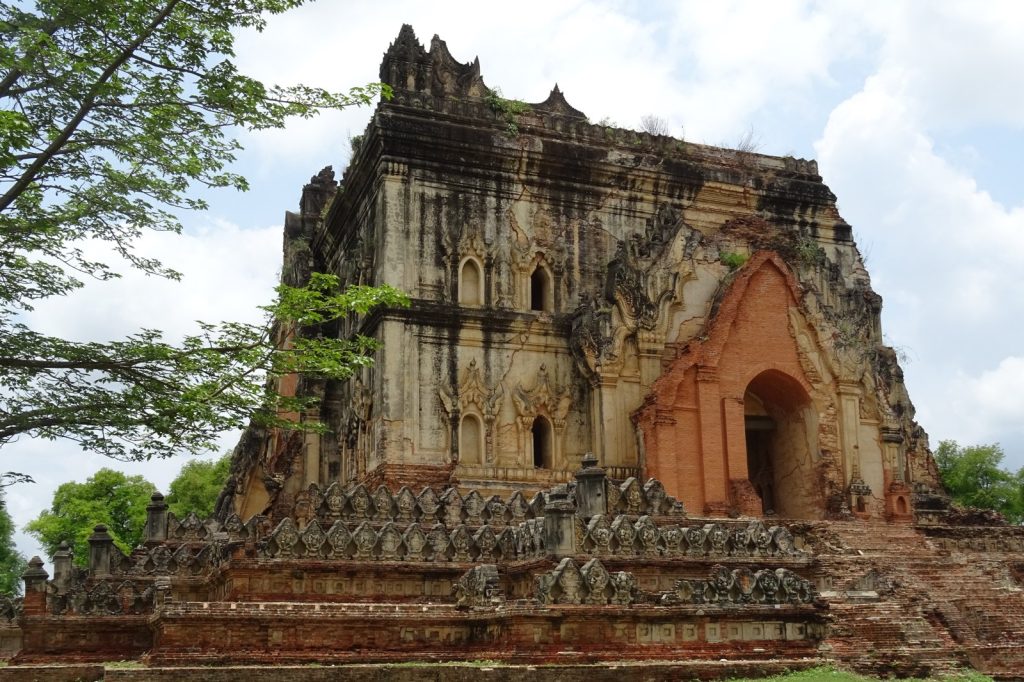
Myanmar’s Ancient Pagoda Toll Rises to 61 as Four‑Storied Monastery Confirmed Destroyed
For generations, the Four‑Storied Monastery in Inwa, Mandalay Region, stood as a silent witness to the shifting tides of Myanmar’s past. Constructed from brick and stone, it endured wars, changes of dynasty, and the gradual wear of the tropical climate. On March 30 2025, officials announced that the monastery had become the latest addition to a growing list of damaged religious monuments, bringing the total number of destroyed ancient pagodas and similar structures across the country to sixty‑one.
This figure is not fixed; it continues to increase as survey teams reach more remote locations. The monastery had not appeared in earlier tallies, but recent inspections confirmed its loss, marking it as the sixty‑first entry.
Each new verification removes another irreplaceable piece of the nation’s cultural fabric. Myanmar’s pagodas are far more than mere old buildings. They are tiered towers crowned with multiple eaves, a form that originated from the Indian stupa and spread throughout Asia.
In China the same silhouette became known as “Tǎ,” while in Myanmar builders gave it a local character, often situating the towers beside or within bihars — Buddhist monastic complexes. The majority of these edifices were erected for religious purposes, the vast majority serving Buddhist practice, although a minority were used for Taoist or Hindu ceremonies.
The earliest examples were timber constructions; virtually none of those have survived the centuries. Brick and stone offered greater durability, yet even those materials proved insufficient against whatever force caused the collapse of sixty‑one sites. The impact of this loss is two‑fold.
First, it erases a tangible fragment of Myanmar’s heritage. Second, it deprives future generations of a concrete connection to their ancestors.
A pagoda is not an abstract concept; it is a physical structure that can be touched, climbed, and walked around. Chinese poets once celebrated the pleasure of ascending these towers and gazing out from their summits. That experience — standing where someone stood a millennium ago — has vanished for each of the sixty‑one destroyed locations. The destroyed monuments display a variety of forms.
Some are solid masses of masonry, while others contain hollow interiors. These differences reflect distinct building traditions, the preferences of various craftsmen, and the eras in which they were raised.
Regardless of their individual traits, all sixty‑one are now gone, taking with them the skilled hands that shaped local stone and brick into a foreign‑born design adapted to Myanmar’s soil. Authorities have not disclosed the cause of the destruction. The official report cites no earthquake, no warfare, and no fire.
What remains certain is the tally: sixty‑one lost pagodas, with the possibility that the number will grow as further assessments are completed. The Four‑Storied Monastery itself was not identified as damaged until weeks after the initial count was released.
Other sites may be in comparable condition, awaiting inspection that could confirm additional losses. Why does this matter now? Heritage, once lost, cannot be reclaimed.
A replica may mimic the outward appearance of a twelfth‑century pagoda, but it will lack the original stone, the original mortar, and the original hands that laid them. Consequently, future Myanmar residents will inherit fewer physical records of their history than their parents did — a narrowing of the collective memory of the nation.




