
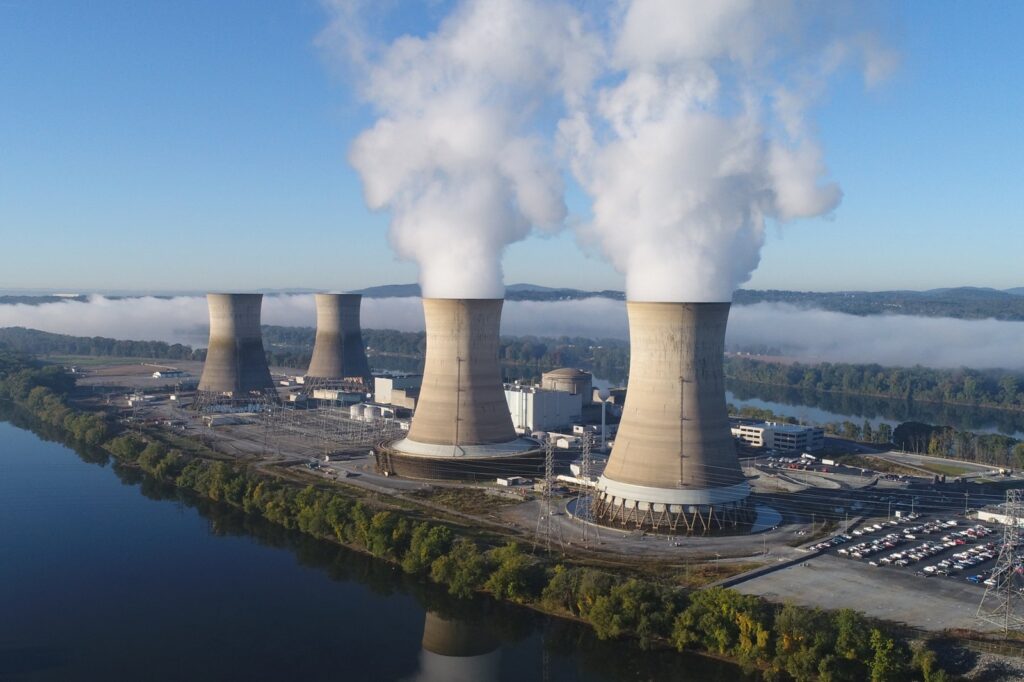
The Resurgence of Legacy Nuclear Assets
The United States is currently attempting an unprecedented move to restore 2.25 gigawatts of electricity to the national grid by reviving three shuttered nuclear power plants. According to reports, the Department of Energy is providing as much as $4.4 billion in loans to restart the Palisades Power Plant in Michigan, the Duane Arnold Energy Center in Iowa, and the Crane Clean Energy Center at Three Mile Island in Pennsylvania. These facilities, which closed before their operating licenses expired due to high costs, are being brought back online to meet the surging energy demands of artificial intelligence and large-scale data centers.
Restarting a decommissioned reactor is considered a faster and more cost-effective path to increasing capacity than constructing new, large-scale plants. Todd Allen, an associate dean for research at the University of Michigan’s College of Engineering, compared the process to restarting a vehicle that has sat idle for several years. The operator must navigate a complex regulatory environment, which includes restoring operating licenses, ensuring maintenance is up to date, and verifying that the training of nuclear workers is current. While no commercial reactor has resumed generation after entering the formal decommissioning process, these specific plants are being treated as assets that can be returned to service to provide carbon-free, around-the-clock power.
Economic Drivers and Corporate Investment
The push to modernize existing infrastructure is driven largely by corporate demand for consistent, non-fossil fuel energy. Big Tech firms are signing contracts to pay a premium for carbon-free energy to power their data centers, which require reliable electricity that intermittent sources like wind and solar cannot provide. According to data from the Corporate Energy Buyers Association, these deals offer an alternative to the common practice of building new natural gas plants or extending the life of coal-fired facilities.
In Georgia, the Public Service Commission recently approved a deal where Google will help fund upgrades to existing reactors at Plant Vogtle and Plant Hatch. This subscription program allows the tech company to pay a premium on its electricity bill to cover the cost of upgrades, which the utility expects to add 96 megawatts of capacity and provide $900 million in projected benefits to customers over the life of the units. Similar partnerships are emerging elsewhere, with Google and Amazon announcing agreements with Constellation Energy to fund capacity increases at nuclear sites in Illinois, New Jersey, Pennsylvania, and Maryland.
Technological Foundations of Nuclear Power
Most of the nuclear fleet currently operating in the United States was constructed between 1970 and 1990. Globally, nuclear power provided 2,602 terawatt hours of electricity in 2023, accounting for approximately 9% of total global electricity generation. The United States maintains the largest fleet of reactors in the world, characterized by an average capacity factor of 92%, which exceeds the global average of 89%. This high capacity factor reflects the ability of nuclear plants to generate electricity continuously.
The primary method for commercial electricity production remains the nuclear fission of uranium and plutonium. While nuclear decay is used for niche applications like powering space probes, and controlled fusion has been operated in experimental reactors since 1958, fusion has yet to generate net power for the grid. Most new reactors currently under construction globally are generation III designs, primarily located in Asia. While these legacy plants and new builds utilize fission, the industry is increasingly looking toward small modular reactors, or SMRs, as a distinct technological approach.
Safety, Regulation, and Future Infrastructure
The aging of the current nuclear fleet presents specific challenges for regulators and operators. Edwin Lyman of the Union of Concerned Scientists noted that taxpayer funds directed toward these restarts should prioritize the mitigation of safety risks. Most American plants were designed decades ago with specific engineering standards intended to withstand natural disasters of that era. As the industry moves forward, the integration of new technology must balance the need for rapid capacity growth with rigorous safety oversight.
The anti-nuclear movement continues to raise concerns regarding the potential for accidents, citing the 2011 Fukushima disaster in Japan and the 1979 Three Mile Island accident in the United States. Critics argue that nuclear power is too expensive compared to alternative sustainable sources and point to the radiological hazards associated with the fuel cycle. Conversely, proponents highlight that nuclear power results in fewer fatalities per unit of energy generated than fossil fuels and hydroelectricity. Studies have suggested that nuclear plants have saved hundreds of thousands of life years by averting air pollution associated with fossil-fuel power plants.
As the United States continues to refine its energy strategy, the distinction between reviving legacy assets and deploying emerging modular technology remains central to the conversation. Legacy plants provide immediate, high-capacity electricity, while the industry explores the potential for smaller, more flexible reactor designs. For now, the focus remains on leveraging existing sites to support the rapid growth of digital infrastructure while maintaining a reliable, clean-energy grid.
Regulatory Challenges in Reactor Restart Efforts
Restarting decommissioned nuclear reactors involves navigating a complex regulatory framework that requires utilities to restore operating licenses, update worker training, and verify maintenance records. According to Todd Allen, associate dean for research at the University of Michigan’s College of Engineering, the process demands that operators ensure nuclear workers are retrained, fuel supplies are secured, and all systems are verified as functional before seeking regulatory approval. He compared the effort to restarting a car that has sat idle for years, emphasizing that while the concept is straightforward, the execution is significantly more complicated due to the scale and safety requirements of nuclear facilities.
Edwin Lyman of the Union of Concerned Scientists has cautioned that public funds allocated for these restarts should be directed toward mitigating safety risks, particularly given that most U.S. nuclear plants were constructed between 1970 and 1990 and were engineered to withstand natural disasters based on the climatic and seismic understanding of that era. He argued that taxpayer investments must prioritize safety upgrades to address potential vulnerabilities in aging infrastructure, especially as these plants are returned to service to support growing energy demands from data centers and AI-driven facilities.
Sources
- Nuclear power
- US reviving shuttered nuclear plants to meet growing demand, power data centers
- Why Google is paying to upgrade nuclear power plants
Photo: Constellation Energy (CC BY-SA 4.0)




