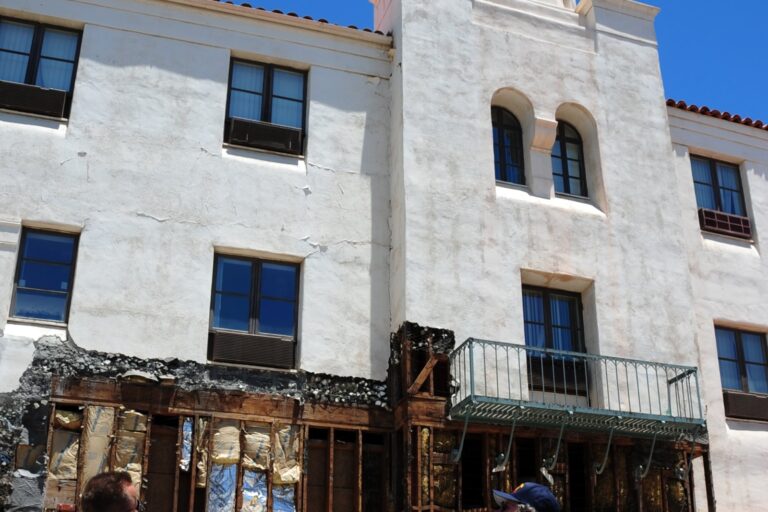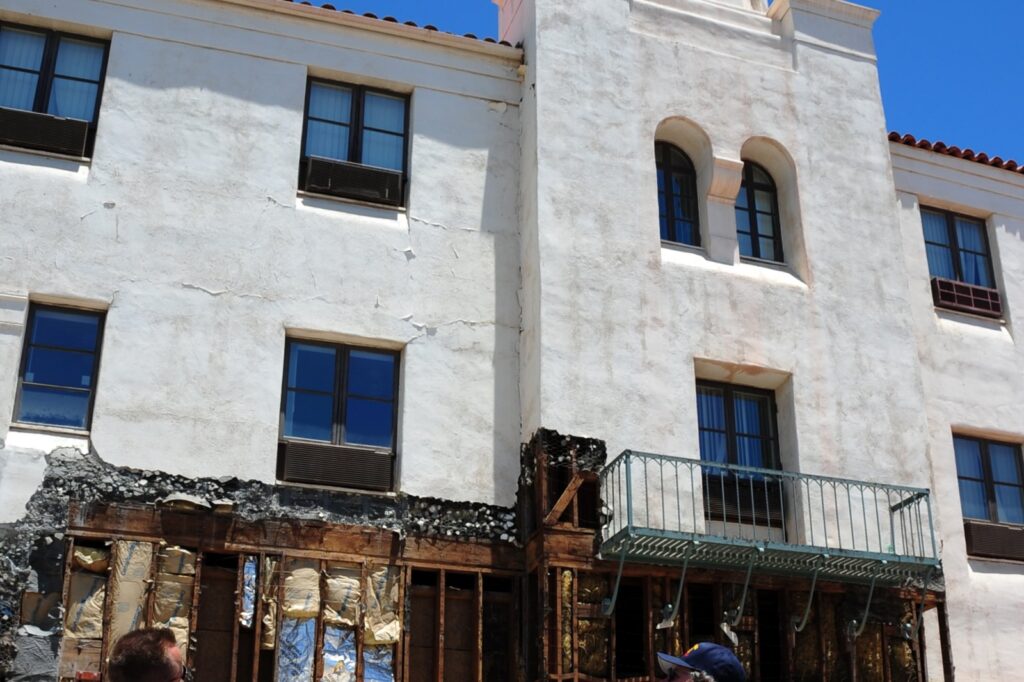
When a magnitude‑6.2 tremor rattled the foothills of Georgia on Tuesday, a handful of modern office towers emerged with only superficial cracks, while older concrete blocks suffered more serious fissures. The disparity illustrates how earthquake engineering can turn a potentially disastrous shake into a manageable event.
What Earthquake Engineering Aims to Achieve
Earthquake engineering is an interdisciplinary branch of engineering that designs and analyzes structures, such as buildings and bridges, with earthquakes in mind. Its overarching goal is to limit seismic risk to levels that societies can accept economically and socially. Engineers strive to create structures that remain undamaged during minor shaking and avoid serious damage or collapse when a major quake strikes.
A properly engineered building does not need to be extremely strong or costly; it must simply be designed to withstand seismic forces while sustaining an acceptable level of damage. Building codes around the world embed this principle, assuming that a structure should survive a rare, very severe earthquake with significant damage but without global collapse, and remain operational during more frequent, less severe events.
From Early Codes to Modern Standards
The discipline grew out of the need to protect society, the natural environment, and the built environment from earthquakes. Early efforts focused narrowly on how structures behaved under seismic loading, a subset of structural and geotechnical engineering. As the financial toll of recent quakes mounted, the field broadened to include civil, mechanical, nuclear engineering and even social sciences such as economics and finance.
Historical building codes forced a stark trade‑off. Regions with high seismic risk relied on expensive built‑in fuses that could absorb energy, while lower‑risk areas depended on sheer structural strength alone. This binary approach left many mid‑risk zones with either over‑engineered or under‑protected structures, a gap that modern research aims to close.
How Seismic Loading and Structural Performance Interact
Seismic loading refers to the earthquake‑generated excitation applied to a structure at its contact points with the ground, adjacent buildings, or even tsunami‑induced gravity waves. Engineers estimate the expected loading at a site using engineering seismology, which translates regional seismic hazard into design forces.
Performance is judged on safety and serviceability. A safe structure does not endanger occupants by collapsing, while a serviceable one continues to fulfill its intended function after shaking. The goal is to balance these outcomes: allow controlled damage that dissipates energy without compromising life safety.
Modern steel braced frames exemplify this balance. Traditional designs either use high‑ductility systems with built‑in fuses for high‑risk zones or rely on plain strength for low‑risk areas. Researchers like Dr. Andrew Sen are developing intermediate‑ductility steel systems that can serve regions with moderate seismic exposure, offering a “Goldilocks” solution that blends ductility, affordability and safety. The concept involves placing distinct fuses that yield and dissipate energy during large earthquakes, providing a predictable failure mechanism that protects the overall structure.
Balancing Safety, Ductility and Cost
Cost considerations remain central. A building that is overly robust can inflate construction budgets, while an under‑designed one may incur massive repair costs after a quake. The emerging moderate‑ductility braced frames aim to give designers more options, reducing reliance on expensive fuses without sacrificing resilience. According to Chris Raebel of the American Institute of Steel Construction, improving the efficiency of these systems could make them competitive with other lateral‑force‑resisting options.
Such innovations matter for economies that depend on construction and mining infrastructure. In Central Asia, where rapid urban growth coincides with active fault lines, adopting cost‑effective, ductile designs can safeguard both human life and the capital tied up in industrial facilities.
AI Accelerates Damage Assessment
Even the best‑designed structures need swift post‑quake evaluation. Taiwan’s National Center for Research on Earthquake Engineering has created an artificial‑intelligence tool trained on 8,000 images of damaged buildings. The system generates a structural damage severity rating in about one second, far faster than the 30‑second to one‑minute window required by human evaluators. Certified engineers using the AI are fifteen times faster than colleagues without it.
The publicly available version, dubbed “safe and seismic‑resistant home AI,” lets homeowners upload photos of walls, pillars and beams to receive a preliminary safety rating. If the AI flags severe damage, it advises contacting certified technicians. This rapid triage can cut months of waiting for formal inspections, a benefit for communities eager to resume economic activity after a quake.
Beyond assessments, the center has deployed the Poseidon AI system to streamline water allocation for firefighting after earthquakes, reducing water‑main pressurization time by six minutes and helping extinguish thousands of blazes. Such digital tools illustrate how technology complements physical engineering to protect lives and assets.
What the Georgia Tremor Means for the Future
The recent Georgia earthquake underscores the practical impact of these advances. Buildings that incorporated modern steel braced frames or adhered to updated seismic codes showed limited damage, validating the principle that a well‑engineered structure does not need to be excessively strong. Conversely, older constructions without such features suffered more extensive cracking, highlighting the economic risk of deferred retrofits.
For investors and policymakers, the lesson is clear: allocating resources to earthquake‑resilient design and rapid assessment technologies yields tangible returns in reduced repair costs and faster post‑event recovery. As global supply chains increasingly depend on stable infrastructure, the market incentive to adopt intermediate‑ductility systems and AI‑driven assessment tools grows stronger.
In regions like Central Asia, where mining operations sit atop active faults, integrating these engineering solutions can protect both workers and the substantial capital invested in extraction projects. The convergence of smarter steel systems and AI assessment offers a pathway to safer, more cost‑effective development in seismic zones worldwide.
Sources
- Earthquake engineering
- Saving lives through seismic innovation | Marquette Today
- AI tool developed to assess earthquake damage – Taipei Times
Photo: Adam Dubrowa (Public domain)