
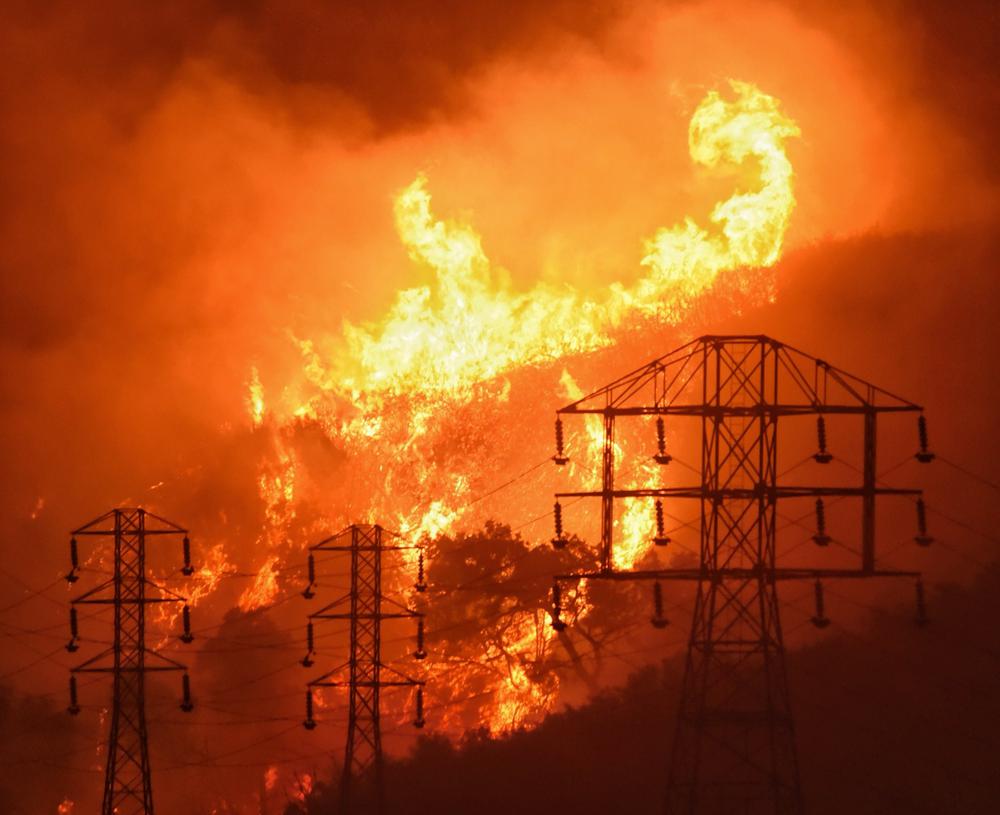
While the most dramatic effects of wildfire and extreme rain may be felt in the immediate burn zone, a new study published in Science Advances warns that the compounding risks of this “fire-flood” cycle will send ripple effects across entire regions of the western United States. Neighboring communities, water systems, and transportation networks far from the flames will face increasing disruption as the one-two punch of fire followed by heavy downpours becomes more common.
The study projects that the risk of extreme drenching hitting a spot that burned within a year could increase as much as eight-fold in the Pacific Northwest, double in California, and jump about 50% in Colorado by the year 2100. These numbers represent more than local weather events; they signal a systemic threat to the broader region.
For instance, a major fire in the Sierra Nevada can destabilize slopes for hundreds of miles downstream, and intense rain following such a fire can send mud, ash, and debris into rivers and reservoirs that supply water to cities and farms across state lines. In the Pacific Northwest, an eight-fold increase in these compound events could threaten major transportation corridors like the I-5 and I-90, which are vital for commerce between Washington, Oregon, and Canada.
In Colorado, a 50% increase could imperil watersheds that provide drinking water to Denver and other Front Range communities, as well as recreation economies dependent on clean mountain streams. The study notes that even though the West is getting drier overall, making wildfire season longer, concentrated bursts of intense rain are increasing and coming earlier.
This means areas can get hurt by both extremes in rapid succession. The cascading effects are not limited to the burn scar. Downstream flooding, debris flows, and water contamination can affect communities that were untouched by the original fire, creating a regional crisis from a localized event.
The Mechanism: How Fire Sets the Stage for Flood
Study co-author Samantha Stevenson, a climate scientist at the University of California Santa Barbara, explained the dynamic: “One disaster is bad. Two disasters in rapid succession are even worse because you’re already reeling from the first one. But in the particular case of wildfire plus extreme rain, the wildfire is setting you up for worse consequences.
Because you’re losing your vegetation, you’re changing soil properties and making that landscape more conducive to destructive flooding.” Stevenson referenced the Thomas Fire, which started in late 2017 and was followed a month later by a downpour of half an inch (13 millimeters) of rain in just five minutes. That event caused mudslides in Montecito that killed 23 people.
“Oh yeah, it was crazy,” Stevenson said. “Like the entire highway was blocked off with like a wall of mud. There were boulders in people’s living rooms.” The Thomas Fire and its aftermath serve as a concrete example of how a single fire can set off a chain of events with deadly regional consequences, shutting down major highways, isolating communities, and overwhelming emergency services.
The study found that as human-caused climate change intensifies, 90% of extreme fire events will be followed by at least three extraordinary downpours in the same location within five years. For study co-author Daniel Swain, a western weather expert at UCLA who lives in Colorado, the threat is personal.
Last week, he had to evacuate his home in Boulder. The simulations used in the study were of fire weather, not fires themselves, and downpour conditions.
Debate and Caution on Accuracy
Not all scientists are fully convinced of the precision of these projections. LeRoy Westerling, a climate scientist at the University of California at Merced who was not part of the study, said he worries about the accuracy of global computer model simulations being able to work on such a small scale. Still, he acknowledged that the results make sense. The causation debate remains open, with some scientists arguing that the trends are linked to human activity, while others point to natural variability. The study itself frames the projections under a worst-case scenario of increasing greenhouse gas emissions, but the exact role of human influence is still a subject of ongoing scientific discussion.
What to Watch Next
As the western U.S. continues to experience longer fire seasons and more intense rain events, the key concern for regional planners will be how to prepare for these compound disasters. The study suggests that by the year 2100, the frequency of these events could rise dramatically, particularly in the Pacific Northwest, California, and Colorado. Watch for increased investment in watershed management, early warning systems for post-fire debris flows, and regional coordination between fire and flood agencies. The challenge will be to build resilience not just in the immediate burn zones, but across the entire interconnected region that will feel the ripple effects of these one-two punches.




