
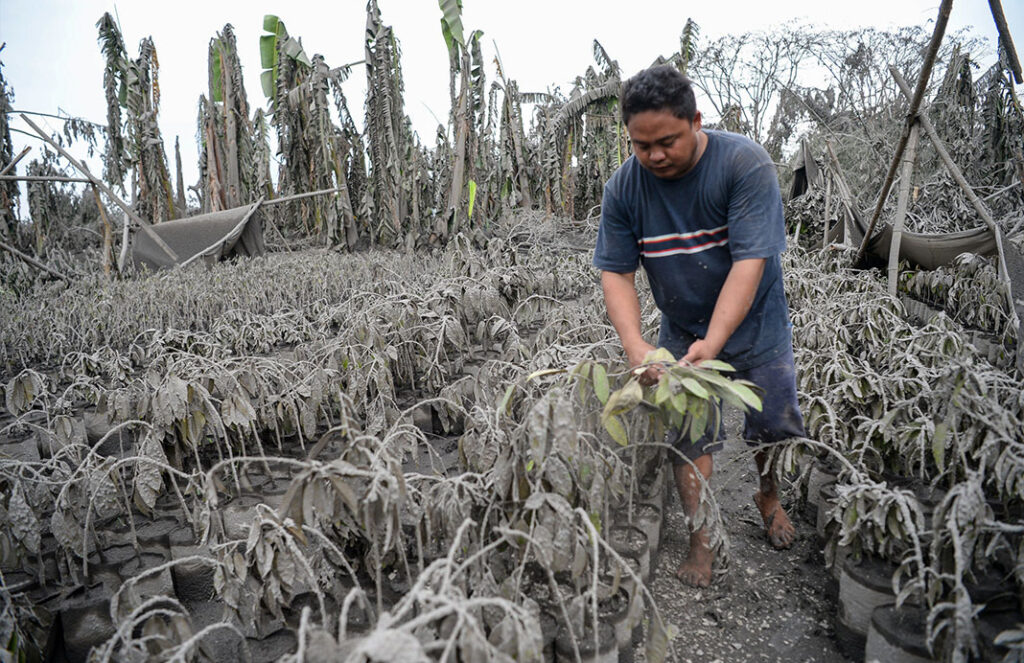
The National Economic and Development Authority (NEDA) of the Philippines said that the economic impact of Taal Volcano’s eruption does not pose a significant slowdown on the country’s growth. Reports showed that the initial assessment of economic losses was pegged at P7.63 billion in Batangas province alone. However, Socioeconomic Planning Secretary and NEDA chief Ernesto Pernia clarified that this only has a limited scale and impact in the GDP in the first quarter.
“Total economic losses comprise provincial income—gross value-added—plus provincial wealth [and] public and private structures,” said Pernia. The NEDA chief furthered that the estimated amount is not even 1 percent of the Philippines’ P9.2-trillion GDP for the year 2018.
Based on the Philippine Statistics Authority’s (PSA), Calabarzon, which includes Batangas, shared 17% in the country’s 2018 GDP. It has the second-largest contributions following the National Capital Region (NCR) with 36 %. “There will be some negative effect…The unpredictable behavior of Taal Volcano is just like other risks and uncertainties impinging the economy,” the NEDA chief furthered.
In the aftermath Taal’s eruption on Sunday afternoon, several flights were canceled and markets have shut down. Classes in all levels and work in the public sector in the affected areas were also suspended.
Government officials have not yet announced the sum of damages to public and private properties as well as goods, as of writing. The Philippines is no stranger to natural disasters, with its location making it prone to volcanic eruptions and other seismic activity. The country’s geography means that its economy and population are often vulnerable to the impacts of these events.
As a result, the government and economic planners have developed strategies to mitigate the effects of disasters and minimize their impact on the country’s growth and development. The role of the National Economic and Development Authority (NEDA) is crucial in this context, as it is responsible for assessing the economic impact of natural disasters. In the case of the Taal Volcano eruption, NEDA’s assessment of the economic losses provides a critical foundation for the government’s response and recovery efforts.
NEDA chief Ernesto Pernia clarified that the economic impact of Taal Volcano’s eruption does not pose a significant slowdown on the country’s growth. The Philippine economy is diverse and resilient, with the Calabarzon region, which includes Batangas province, being a significant contributor to the country’s economy.
According to the Philippine Statistics Authority, Calabarzon shared 17% in the country’s 2018 GDP. The initial assessment of economic losses due to the eruption was pegged at P7.63 billion in Batangas province alone, which NEDA chief Ernesto Pernia said is not even 1 percent of the Philippines’ P9.2-trillion GDP for the year 2018. The impact of natural disasters on a country’s economy can be complex and far-reaching, with effects felt across different sectors and regions.
NEDA chief Ernesto Pernia noted that there will be some negative effect, and the unpredictable behavior of Taal Volcano is just like other risks and uncertainties impinging the economy. In the aftermath of the eruption, several flights were canceled and markets have shut down, and classes in all levels and work in the public sector in the affected areas were also suspended.




