
The United States and the European Union announced on March 25 a joint plan that gives the continent a five‑year window to eliminate all imports of Russian natural gas. While the agreement signals a decisive political shift, the practical challenges are considerable. Russia currently supplies roughly 40 % of the gas used across Europe – a share that fuels winter heating, powers industrial plants and provides feedstock for the chemical sector.
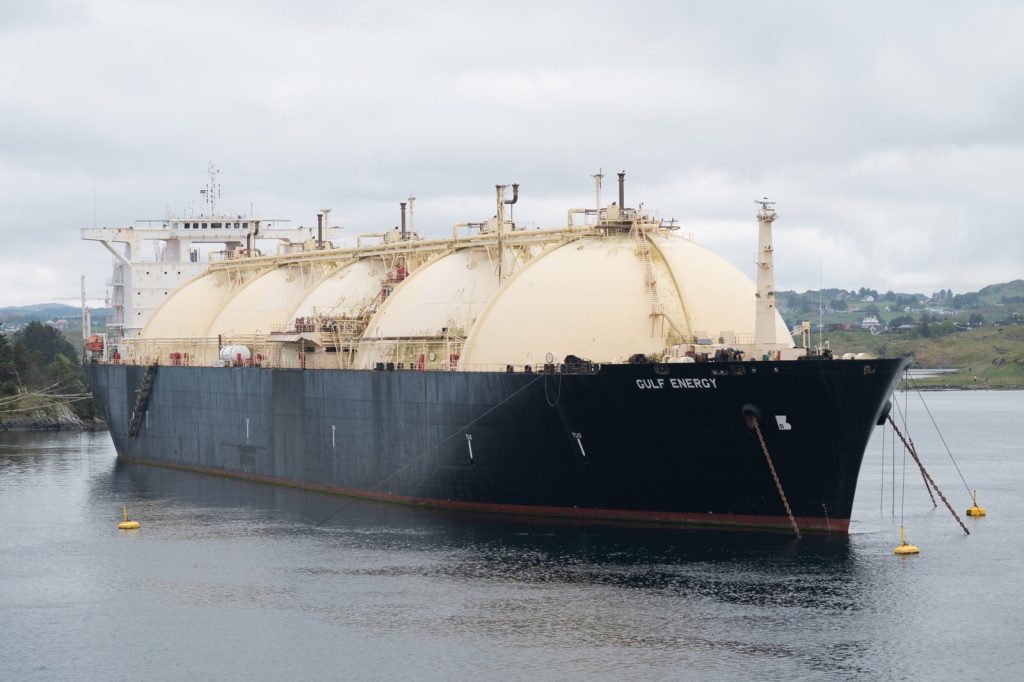
Replacing that volume means sourcing an additional 40 % of the continent’s gas needs from elsewhere. Under the new pact, the United States will deliver about 15 billion cubic metres (bcm) of liquefied natural gas (LNG) to Europe this year.
The broader objective is to triple U.S. LNG shipments to the bloc over the coming years, with Europe committing to purchase roughly 50 bcm annually once the necessary infrastructure is in place. Building that infrastructure – new LNG terminals, pipelines and storage facilities – is a multi‑year undertaking. Existing European gas reserves are already low after a particularly harsh winter, and the continent cannot simply halt Russian deliveries without viable replacements.
Europe’s dependence on Russian fossil fuels grew over many years, originally justified as a means to ease Cold‑War tensions through trade. The Russian invasion of Ukraine shattered that assumption, exposing the strategic vulnerability of energy reliance on Moscow.
Sanctions imposed a month ago did not target gas imports, underscoring how slowly energy policy can shift. Member states are unevenly exposed. Germany, Italy and Bulgaria rely heavily on Russian gas, making a rapid exit more complex. German Chancellor Olaf Scholz warned that an immediate embargo would threaten thousands of jobs and leave schools and homes without heat.
Germany has already shut its nuclear plants, is phasing out coal and had counted on Russian gas as a transitional fuel – a bridge that has now become a trap. The five‑year target is ambitious but deemed necessary.
Achieving it will require Europe to construct new import terminals, secure long‑term contracts with suppliers such as the United States, and accelerate the rollout of renewable energy faster than current plans allow, all while maintaining reliable power and heating for consumers. The U.S. commitment, while concrete, is limited by existing export capacity. Increasing LNG shipments to Europe will either divert cargoes from other markets or demand new export facilities, both of which entail significant time and investment.
Moreover, Europe’s pledge to guarantee stable demand of about 50 bcm locks the bloc into long‑term contracts with American suppliers, reducing future flexibility. The transition is set against a backdrop of geopolitical risk.
Russia has previously used energy supplies as leverage, curtailing deliveries in winter to exert pressure on neighboring states. By diversifying away from Russian gas, Europe aims to neutralize that weapon, but the process will inevitably cause short‑term disruptions. In sum, the five‑year timeline represents the most optimistic scenario, assuming no political upheavals, construction delays or new crises.
The stakes are tangible – employment, heating for households, and broader political stability. Europe’s ability to meet the deadline will hinge on rapid infrastructure development, sustained U.S. LNG deliveries, and an accelerated shift toward renewable energy sources.




