
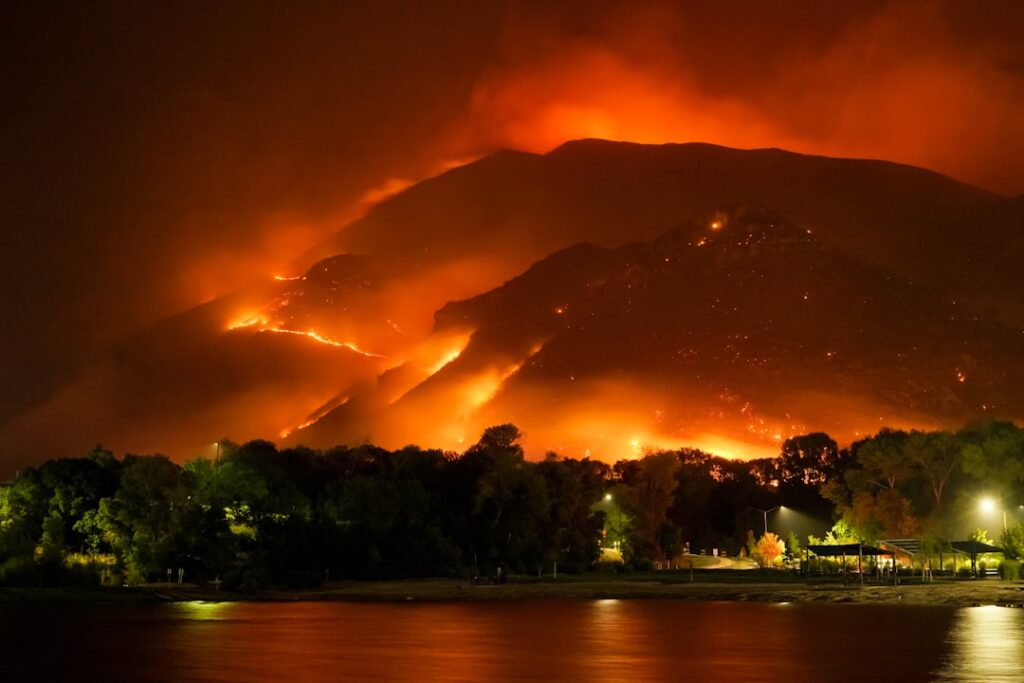
Georgia Governor Brian Kemp may have more than firefighting on his mind following recent wildfires that have claimed over 120 homes in southeast Georgia. On April 24, Kemp declared the destruction, emphasizing that the fires’ toll extends beyond lost residences to environmental issues and their effects on towns. As commander-in-chief of the Georgia National Guard, Kemp could call upon troops for additional support.
However, no official word has come from him yet as to how he will respond. Two fires are currently active, with more details on the disaster likely forthcoming.
The ongoing destruction leaves rural southeast Georgia, an area known for pine forests and swampy borders, facing possibly long-lasting environmental consequences. Smoke and runoff from burnt land may impact air and water quality, respectively, and the fire has also decimated animal habitats, altering the region’s landscape for years. This disaster, while devastating, is not Georgia’s most severe.
In 2007, fires consumed nearly 600,000 acres in the Okefenokee Swamp and destroyed dozens of structures. Nevertheless, the situation is severe enough that Kemp may consider an emergency legislative session.
Though powerful wildfires are not uncommon in the state, communities face unique challenges in recovery, particularly in rural areas such as these. With the legislature’s control over the state budget, an emergency session would allow lawmakers to authorize additional spending if funds run short or federal assistance lags. Whether Kemp will convene such a session remains a question, with the extent of the damage potentially driving the decision.
With each destroyed home comes a blow to families, the local tax base, and the vitality of small-town communities. For now, the state waits, as the governor weighs his response to the unfolding crisis. Even without a formal announcement, Kemp’s options are clear.
His ability to deploy the Georgia National Guard can supplement rescue efforts and assist in fire control. Although unconfirmed, it is likely that the Guard has been involved in the disaster, aiding in evacuations and support of firefighters.
In the past, Kemp has utilized Guard provisions in response to disasters such as floods and hurricanes, making their resources beneficial in facing the current wildfire crisis. The ongoing wildfires are taking a substantial toll on southeast Georgia. With only sparse details available at this time, it remains uncertain how the situation will progress and the governor will respond.
The environment is undoubtedly bearing a significant impact from the fires, with smoke and water contamination posing public health risks. The destruction of animal habitats signals a reshaping of the landscape that will take years to recover from.
Families in the area are suddenly facing displacement, though the exact numbers of those affected are still unreported. Southeast Georgia’s rural communities may not possess the same recovery resources found in metro Atlanta, making the situation particularly challenging. Any special legislative session would be aimed at fast-tracking financial relief to the region in response to the wildfires.
Currently, residents and local authorities grapple with both the emergency at hand and the unknowns of what Kemp’s response will entail. The fires’ impact on air and water quality poses widespread health concerns, with smoke affecting breathing and runoff potentially contaminating drinking water and aquatic life. As officials await final damage figures and environmental assessments, they face the reality that these problems will linger long after the fires are extinguished.
Governor Kemp stands at a crossroads, with multiple powerful tools at his disposal to assist in recovery: deploying the National Guard and convening the legislature. As the fires continue to rage in southeast Georgia, it remains to be seen how the governor will move forward.
For now, officials are left to closely monitor the fires and their consequences. The full extent of the damage may be revealed in the coming days, as firefighting efforts continue.
Background and why it matters
The U.S. state of Georgia has a long history of dealing with wildfires, part of a natural cycle in its forests and grasslands. The state is geographically diverse, with southeast Georgia being particularly prone to such fires due to its pine forests and swampy borders. Wildfires play a role in the ecosystem, clearing dead wood and allowing for regrowth, but they also pose significant challenges. The declaration of a disaster in Georgia due to wildfires is a serious event, indicating large-scale destruction that affects both the environment and local communities. The state’s rural areas, like those in southeast Georgia, often bear the brunt of such disasters, as they lack the resources to mount an immediate and comprehensive recovery. The potential declaration of an emergency legislative session speaks to the severity of the situation and the state’s commitment to addressing the aftermath of such events.
A core subject such as Georgia, in the context of wildfires, is significant for several reasons. It highlights the state’s ecological challenges, the resilience of its communities, and the role of government in managing and mitigating the impacts of natural disasters. The potential for long-lasting environmental consequences underscores the importance of effective disaster response and recovery efforts. For residents and communities within Georgia, these wildfires are more than just a natural occurrence; they are a test of their ability to maintain their livelihoods and the integrity of their homes and towns.




